
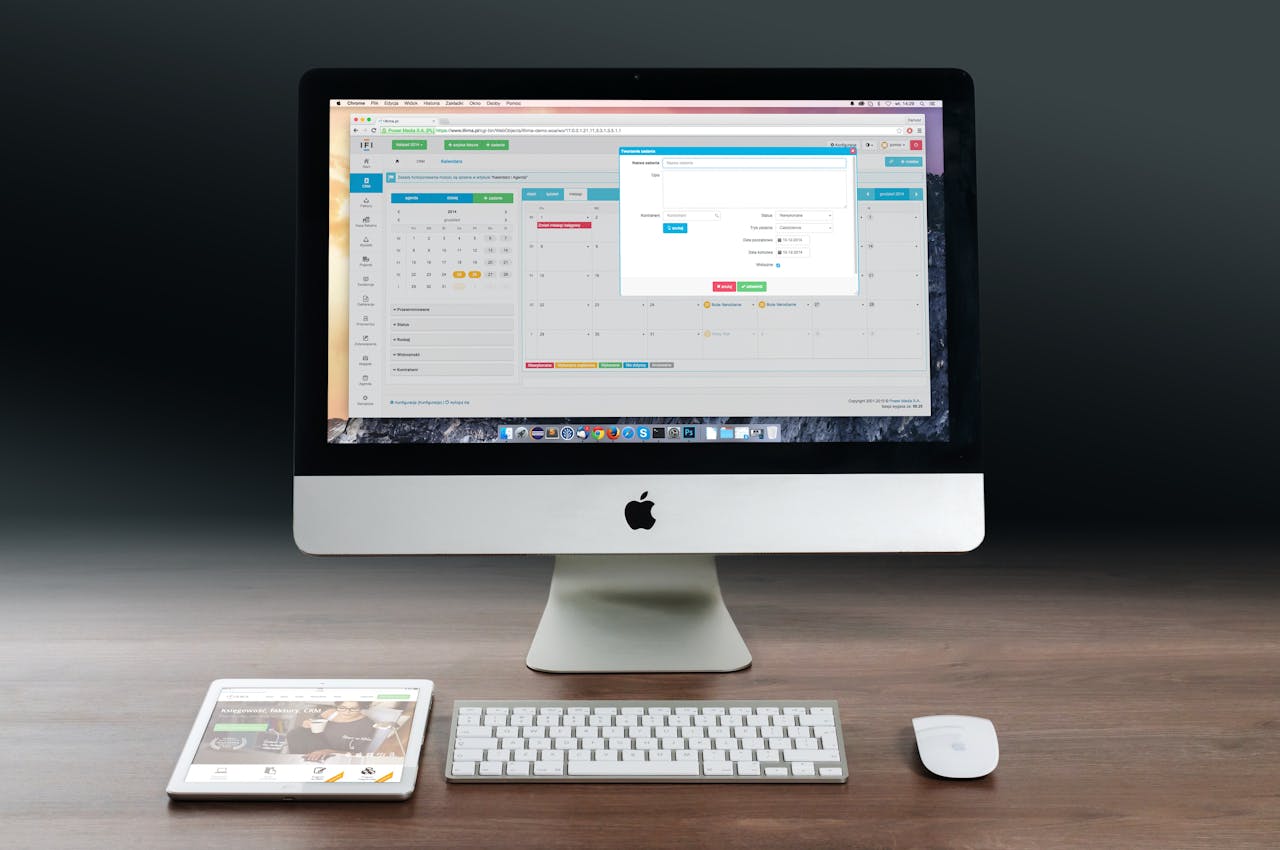
A CRM that includes financial planning tools is a relevant move that financial advisors should make in order to develop a more efficient and interconnected workflow. With such systems in concert, the process of data entry into the system becomes smoother, thereby eliminating the need of manual entries, and the possibilities of errors are reduced. This brings about a more comprehensive perspective of each client and relationship management and financial insight blend in a single coordinated setting.
Learning About System Compatibility
The question that needs to be asked before integrating systems is whether your CRM and financial planning tools are compatible. A lot of platforms have built in integrations or have third party connectors that will allow the data to be synchronized between systems. The compatibility assessment is performed to make sure that the integration process is seamless and the data transfer can be performed as accurately as possible without any interruption.
In the case of CRM for financial advisors, compatibility may be based on the tools in use and its configuration. It is possible to determine the most optimal path by checking available integrations, application programming interfaces or middleware solutions. This is one of the reasons why it is useful to evaluate these technical requirements at the initial stage to prevent the problems in the future and make sure that the two systems are able to communicate.
Underlying Data Pre-Integration
A successful integration requires clean and sorted data. Prior to attachment, the advisor is advised to screen their records about clients to eliminate duplicates, fix errors and standardize format. The lack of consistency or missing data may pose a problem in the process of synchronizing information in a CRM with financial planning tools.
Most of the best CRM software also has functions that allow them to ensure data quality, including validation rules and data automation. By making sure that there are no irregularities in client information in different systems, integrating the system becomes easier and reporting becomes more unambiguous. Effective data preparation is the key foundation of an efficient functioning system that can aid in the improved decision making.
Setting Up the Integration
After verifying compatibility and readiness of data, the next thing to do is to connect systems. This usually entails the setup of integration options, data access control, and the decision of the information to be shared among platforms. This process can be done as native integrations or external connectors depending on the tools involved.
In the setup, one must establish the way data is to traverse the CRM and financial planning instruments. As an example, client profiles, financial goals, and portfolio information can be required to be updated in both directions. Defining the data mapping would also make sure that every system is updated properly and advisors can count on the same information on different platforms.
Sustaining and Surveillance of Integration
Once the integration is done, there is a need to maintain it to make sure that nothing goes wrong. Periodical data synchronization monitoring will allow to recognize any problems early and avoid any workflow interruptions. Advisors also need to check updates in the systems because software modifications may interfere with the operation of integrations.
It is also important to maintain integration by questioning the accuracy of data as well as system performance on a periodical basis. As time passes there may be a need to make some changes to make it more efficient or to accommodate new features. It is through remaining proactive that advisors can be able to say that their integrated systems remain active and that they have provided a stable base on which they manage their clients and make financial planning.
The combination of a CRM and financial planning tools will enable financial planners to be more productive and have a clear and comprehensive picture of each client. When systems are well linked, data moves freely and this saves on manual work and also enhances accuracy on both systems. Such integration assists in improving the decision making, the client interactions, and facilitating a more streamlined advisory process. Through the appropriate setup and time invested preparing the data and also by maintaining the systems, the advisors can be assured that their systems will stay in line and will still generate efficiencies in the operations as well as the long term client success.