
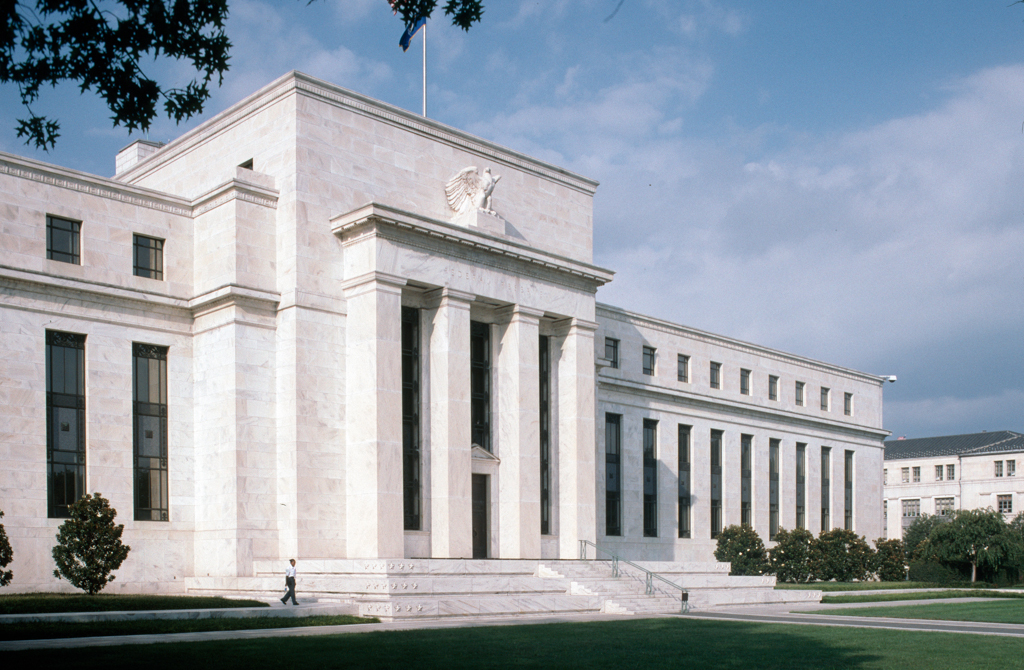
Trump’s Fed Pick Throws Central Bank Control Into Uncertainty
The balance of power at the world’s most influential central bank shifted this week, not because of an interest rate move, but because of uncertainty. President Donald Trump said he is preparing to announce a new nominee to lead the Federal Reserve, immediately placing the institution’s future direction — and its independence — into question.
Even before a formal announcement, the signal alone has been enough to unsettle markets, executives, and policymakers.
The chair of the Federal Reserve is one of the most powerful unelected roles in the global economy, shaping borrowing costs, liquidity, and confidence far beyond US borders. When that role appears conditional, control does not disappear — it hesitates.
Trump’s comments have fuelled expectations that Kevin Warsh will be nominated to replace Jerome Powell when Powell’s term as chair ends in May. Warsh is a familiar figure inside the institution, but the circumstances surrounding his potential return are what have drawn attention. The question for business leaders is no longer just who leads the Fed, but how firmly its authority is insulated from political pressure.
Why Control Shifted Before Any Decision Was Made

Former Fed Governor Warsh met with Trump on Thursday
No policy has changed. Rates remain where they are. Yet the process itself has altered the balance of control. The Federal Reserve’s authority has long depended on the expectation that leadership transitions are predictable, technocratic, and buffered from short-term politics. Once that expectation weakens, uncertainty enters decision-making immediately.
For executives, this matters because planning relies on stability more than outcomes. Borrowing, investment, hiring, and expansion decisions are often made months or years in advance. When leadership at the top of the monetary system appears subject to external influence, even temporarily, confidence narrows and caution replaces momentum.
That shift is subtle but powerful. Control erosion does not require intervention; it only requires doubt.
What This Means for CEOs and Long-Range Planning
Powell’s relationship with Trump has been openly strained since Trump began publicly criticising the Fed for resisting aggressive rate cuts.
The central bank’s refusal to follow those demands reinforced its independence, but it also made the institution a political target. The renewed focus on who leads the Fed reopens that tension.
For CEOs, the risk is not ideological. It is practical. Monetary policy shapes the cost of capital, currency stability, and market confidence. When leadership appears more exposed to political cycles, planning horizons shorten. Boards begin to ask not just where rates are heading, but how durable the decision-making framework behind them really is.
Markets reacted quickly to reports of the expected nomination. The dollar strengthened while gold fell sharply, reflecting a reassessment of risk positioning. These moves were not dramatic in isolation, but they signalled how leadership uncertainty can ripple outward even before authority formally changes hands.
The timing adds another layer of complexity. While Powell’s term as chair ends this year, his position on the Fed’s board extends until 2028, potentially creating overlapping authority and prolonged ambiguity.
At the same time, heightened scrutiny — including a justice department investigation linked to cost overruns at the Fed’s headquarters — has further blurred the line between institutional oversight and political pressure.
Why Central Bank Independence Is Back Under Pressure
This moment stands out because it is not driven by crisis. There is no inflation shock, no market collapse, no emergency intervention forcing change. Instead, power is being tested through process rather than policy. Historically, that is how institutional authority often shifts — quietly, before it becomes explicit.
Similar pressures are emerging globally. Governments facing slow growth and fiscal strain have increasingly questioned the autonomy of central banks. The Federal Reserve has long been treated as the benchmark for independence. Any perception that its discretion could narrow resonates far beyond the US.
Warsh’s past positions have reassured investors that he understands the importance of discipline and long-term stability. But recent alignment with calls for lower borrowing costs complicates that picture. The result is not clarity, but recalibration — as markets and executives weigh continuity against proximity to power.
In the weeks ahead, attention will turn to the formal nomination and the Senate confirmation process. Resistance from lawmakers concerned about central bank independence could emerge. Yet the broader shift has already occurred. The conversation has moved from what the Fed will do, to who ultimately defines its boundaries.
The Federal Reserve remains independent. Its mandate has not changed. But independence, once questioned, is harder to take for granted. In global finance, the mere suggestion that authority could become conditional is enough to alter behaviour long before any policy does.
FAQs
Why does the choice of Fed chair matter to businesses?
The Fed chair shapes interest rates, liquidity, and financial confidence, all of which directly affect borrowing costs and investment planning. Even before policies change, uncertainty around leadership can cause companies to delay decisions or reassess risk. Stability at the top of the Fed helps businesses plan with longer horizons.
Can a US president control the Federal Reserve?
Legally, the Federal Reserve operates independently, and the president cannot directly set interest rates. However, public pressure, leadership appointments, and political scrutiny can influence perceptions of independence. For markets and executives, those perceptions matter almost as much as formal authority.