
The High Cost of the Final Bow: Phil Collins and the Business of Legacy
Phil Collins has never been sentimental about his own decline. In a rare and candid interview with Zoe Ball for the BBC’s Eras podcast, the former Genesis frontman spoke plainly about the physical toll of a career that has stretched across five decades — five knee surgeries, a live-in nurse, and the slow, reluctant acceptance that the stage is no longer an option.
“I’ve had challenges with my knee,” he said. “I had everything that could go wrong with me, did go wrong with me.”
It was not said for effect. It was said as fact. And in that matter-of-fact admission lies a larger, more uncomfortable truth — not just about Collins, but about the modern music industry’s dependence on its ageing giants.
For years, legacy artists have been treated as renewable assets. Tours are announced, postponed, revived, extended. Farewell shows become reunion runs; final nights become multi-year residencies. The assumption is not only that the audience will return, but that the artist can too. Collins’ reality disrupts that assumption.
Now approaching 75, the conversation around him has quietly shifted. The questions are no longer about when he might tour again, but about what happens when a global music brand loses the physical capacity of the person at its centre.
The impact is not abstract. When Collins stopped performing in 2022, it didn’t just mark the end of a personal chapter — it effectively shut down the most lucrative arm of his business. Stadium touring remains the industry’s highest-margin machine, underwriting everything from promoters and crews to marketing pipelines that no streaming cheque can replace. When an artist can no longer “hold a drumstick”, as Collins once put it, that machine stops.
What remains is the catalogue — immensely valuable, heavily traded, and increasingly central to the music industry’s investment economy. Collins is a prized figure in that world, his songs already woven into films, advertising, documentaries and acquisition deals worth hundreds of millions. But even here, visibility matters. A living, present artist sustains interest in a way no balance sheet can.
That tension — between physical reality and commercial expectation — has become harder to manage. Last summer, Collins’ team were forced to deny social-media rumours that he was in hospice care. The episode was unsettling not because of its inaccuracy, but because of how readily it spread. In an economy that feeds on engagement, ill health quickly becomes content.
To his credit, Collins has chosen to confront that narrative himself. In the interview, he spoke openly about alcohol, hospitalisation, and two years of sobriety. “It’s just been a difficult, interesting, frustrating last few years,” he said. “But it’s alright now.”
There was no attempt to soften the edges. Instead, there was an insistence on control — over his story, his limits, and the terms of his public presence. By admitting that he would rather “relax and not do anything” than perform below his own standards, Collins has drawn a line that many artists never do.
The question now is what comes next — not just for him, but for a generation of musicians facing the same reckoning.
Increasingly, the answer lies in forms of longevity that do not require physical endurance: documentaries, archival projects, immersive digital experiences. ABBA’s virtual Voyage residency has already offered a template. Collins’ recent documentary and the Eras series point in a similar direction — allowing intimacy, reflection and cultural presence without the demands of the road.
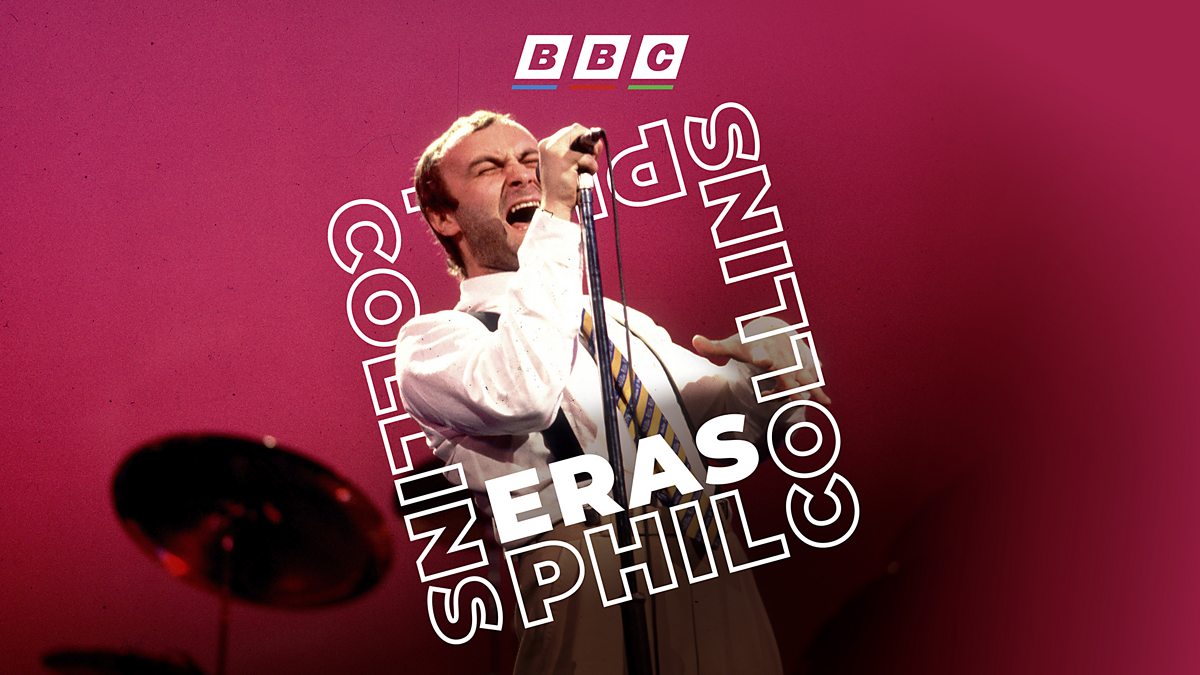
Artwork for BBC Eras: Phil Collins, featuring archive performance imagery from across the musician’s career.
There may yet be new music. Collins said he might “have a fiddle about” in the studio, if his health allows. But the centre of gravity has shifted. The business of Phil Collins is no longer about momentum; it is about stewardship.
What he now curates is not a tour schedule, but a cultural estate — one built on songs that continue to resonate, even as the man who wrote them steps back. His decision to prioritise sobriety and stability over one last run of dates may not maximise short-term returns, but it does something rarer: it protects the integrity of the legacy itself.
In the end, Collins’ story is a reminder that even the most powerful brands in music are bound by human limits. The final bow, when it comes, is not just an artistic moment. It is a business one — and how it is handled may determine how history remembers the act that follows.
The Collins Portfolio: A Masterclass in Legacy Liquidity
For the contemporary executive, Phil Collins represents a sophisticated global asset machine. Managing a musician’s "afterlife" while the principal is still living requires a pivot from active production to aggressive wealth preservation.
The Collins strategy focuses on three core pillars: intellectual property (IP) liquidation, high-yield commercial real estate, and digital brand protection—all designed to anchor a net worth currently estimated at $350 million.
The $300 Million IP Exit
In late 2022, Collins and his Genesis bandmates executed a landmark divestment, selling their music publishing and recorded music rights to Concord Music Group — a deal that echoed similar catalogue sales by peers of his generation, including Sting.
Valued at around $300 million, the sale allowed Collins to step away at the height of the acquisition boom, shifting his wealth from unpredictable royalty streams into immediate, diversified liquidity.
Speaking to the BBC about the physical toll that precipitated the decision, Collins was disarmingly blunt: “I’ve had challenges with my knee… I had everything that could go wrong with me, did go wrong with me.” In this case, physical limitation became the catalyst for converting a lifetime’s work into long-term financial certainty.
High-Yield Scottish Real Estate

Phil Collins’ Miami waterfront home, which the singer sold for around $40 million back in 2021
In September 2025, the "Collins Portfolio" signaled a move toward institutional-grade commercial property to protect his $350 million estate.
Collins acquired a £20 million office and retail block on George Street, Edinburgh, a prime asset in a dominant regional economy.
For a high-net-worth individual, this represents a shift into "long-income" assets providing inflation-linked returns. By diversifying into Scottish commercial property, his management is insulating his capital against the volatility of the streaming economy.
Reputation and Digital Asset Defense
Under the guidance of manager Tony Smith, the Collins brand has become a defensive moat.
This strategy involves aggressive litigation against unauthorized AI-generated content and the careful curation of his digital image. Collins told the BBC he would "rather relax and not do anything" than perform below his peak.
This scarcity play protects the brand's premium status and ensures the $350 million valuation remains tied to high-quality assets. By maintaining high quality-control over archival work, his team ensures the "Phil Collins" name remains a blue-chip asset in the luxury entertainment market.