
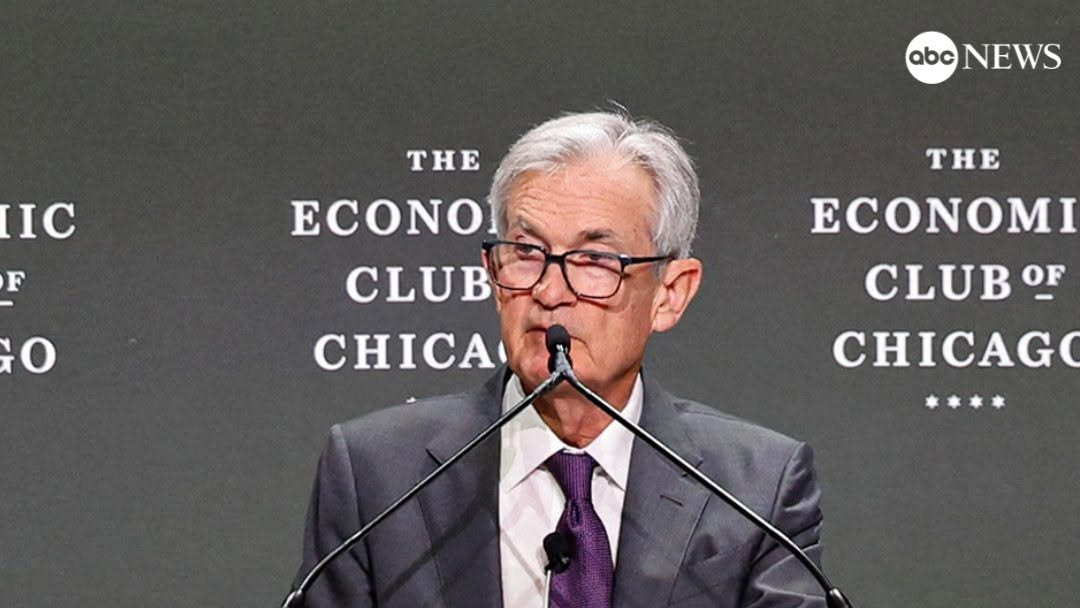
Global Central Bankers Stand With Powell: Political Pressure Meets Market Stability
When Politics Collide With Monetary Authority
A decisive power shift is unfolding in global finance. U.S. President Trump publicly challenged Federal Reserve independence, prompting coordinated statements of solidarity from central banks across Europe, Asia, and Canada. Authority and accountability are no longer solely domestic matters; global markets are now watching whether central bank coordination can withstand political turbulence. For CEOs and boards, the reputational and financial exposure is immediate.
Fed Chair Powell occupies the focal point of authority. Executives across financial institutions are absorbing the consequences of both political statements and market reactions simultaneously. Central bank independence is no longer abstract—it is a measurable variable that determines volatility, pricing, and investor confidence. Misjudging the signal risks margin erosion and reputational damage.
Markets have responded faster than humans can interpret. Treasury yields, short-term funding rates, and currency spreads shifted within hours of the announcements. Leadership decisions now directly influence capital allocation and client trust. Boards and CEOs must anticipate consequences before they materialize, not merely react. Historical context underscores the stakes. In 2018, political pressure on the Fed contributed to short-lived volatility and investor uncertainty, but markets were more insulated. Today, algorithmic trading, instant global news dissemination, and cross-border capital flows amplify every message. The consequences of misalignment are exponentially larger.
Institutional Friction: Old Assumptions vs 2026 Reality
Boards continue to operate under outdated assumptions. The pace of change is outstripping individual intelligence, creating strategic isolation for leadership. Whereas previous leadership logic assumed that political pressure could meaningfully influence rates, or that treasury volatility remained moderate, the reality in 2026 is very different. Central bank consensus prevails globally, markets respond instantly to coordination signals, and corporate planning must anticipate dynamic geopolitical shifts rather than rely on historic baselines. Investor patience no longer absorbs missteps; reallocation occurs within hours.
CEOs must navigate these tensions while maintaining board confidence. Even accurate forecasts can appear wrong if market reactions diverge, forcing leaders to shape outcomes under constraint, not merely issue statements. The challenge is simultaneous: respond to real-time market movement while maintaining credibility with internal and external stakeholders. Those who miscalculate may face immediate market punishment and longer-term reputational erosion.
Chokepoints and Market Movements: Entity Weaving Audit
Global coordination translates directly into market signals that corporate executives cannot ignore. The Federal Reserve’s assertion of independence stabilizes treasury yields, while the ECB and Bundesbank reinforce Eurozone stability, limiting EUR/USD volatility. The Bank of England monitors foreign exchange implications and signals subtle interventions when needed. Meanwhile, the People’s Bank of China manages RMB liquidity to buffer global spillovers, and the IMF issues confidence statements to mitigate sovereign risk exposure.
Institutional investors such as BlackRock and Vanguard adjust portfolios across rate-sensitive assets almost immediately, while exchanges like LSEG and CME execute algorithmic hedging in real time. The OECD Taskforce monitors systemic exposure and compliance, while global banks including JP Morgan and Goldman Sachs issue client alerts to help mitigate immediate market reactions. The World Bank assesses debt risk in emerging markets, creating indirect ripple effects that board-level decision-makers must anticipate. Each decision—whether hedging currency exposure, adjusting debt issuance, or realigning treasury positions—links directly to measurable market movements. Misinterpretation of signals now risks valuation shifts in the billions, forcing executives to interpret guidance with precision.
Cross-Industry Implications: Beyond Finance
The central bank solidarity story is not confined to financial institutions. CEOs of global corporations face direct exposure through multiple operational channels. Corporate debt costs fluctuate as treasury yields shift, affecting the margin and feasibility of leveraged operations. M&A activity may suddenly become uneconomical when interest rate assumptions change mid-deal. Multinational earnings are exposed to currency fluctuations, impacting both profitability and investor perception. Even commodity sourcing and supply chain strategies are indirectly affected, as volatility influences hedging strategies and the cost of global procurement.
For corporate leaders, the lesson is unmistakable: financial strategy and operational planning cannot ignore central bank signals. CFOs, treasurers, and CEOs alike must integrate real-time monetary developments into planning and risk assessment. Companies that fail to internalize these dynamics may misprice assets or overexpose themselves to volatility that could have been anticipated.

Second-Order Consequences: Leadership Under Stress
Immediate market reactions are visible and measurable, but subtle, long-term effects are more consequential. Misreading central bank solidarity can trigger margin compression for leveraged positions, erode investor confidence when corporate forecasts appear misaligned with global monetary policy, and amplify risk across sectors. Leadership is being measured not by optimism, but by accuracy, timing, and responsiveness. Boards must integrate these criteria into governance frameworks and risk assessment procedures, ensuring that strategy remains aligned even under extreme pressure. Executives who misjudge these signals risk not only financial loss, but also the credibility and authority of their leadership.
Risk Spectrum: Probable, Best, and Worst-Case Scenarios
Considering the spectrum of potential outcomes, the best-case scenario sees central banks maintaining consensus, volatility contained, and corporate exposure minimal, allowing strategic plans to proceed largely on schedule. The probable scenario includes short-term treasury yield and foreign exchange fluctuations, selective margin compression, and moderate portfolio reallocation by investors. The worst-case scenario emerges if central bank alignment falters, triggering amplified market stress, investor pullback, complications in debt refinancing, and potential liquidity shocks for corporations exposed to rapid shifts. Boards must stress-test their portfolios, forecasts, and operational plans across this spectrum. Success depends not on narrative framing, but on the ability to act preemptively and decisively.
Strategic Imperatives for Boards and CEOs in the Next 72 Hours
Boards must reaffirm risk protocols, ensuring that treasury, foreign exchange, and liquidity positions align with central bank guidance. Financial forecasts should be recalibrated to stress-test cash flows, leverage, and capital plans under realistic volatility scenarios. Investor, board, and market messaging must communicate alignment with central bank signals without speculation, preserving credibility and confidence. M&A activities sensitive to interest rate shifts require careful review and potential timing adjustments to avoid unanticipated costs. Finally, boards should audit internal decision-making speed, confirming that teams can react within hours to changing market signals. Effective strategy now depends on aligning corporate action with the global stability enforced by central banks.