
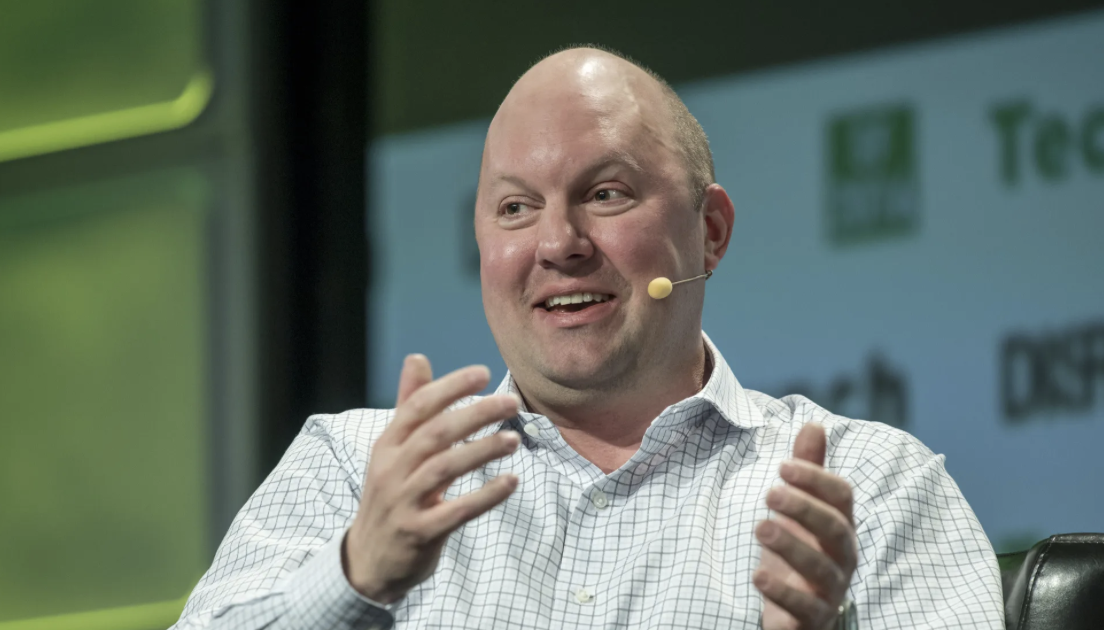
Andreessen Horowitz’s $15 Billion Bet Is a Warning to Public-Market CEOs
The Power Shift Happening Outside the Stock Market
A quiet power transfer is reshaping the technology economy.
Andreessen Horowitz’s newly raised $15 billion fund does not simply signal confidence in innovation. It confirms that influence is consolidating away from public markets and into private capital structures designed for endurance, not quarterly performance.
Marc Andreessen and Ben Horowitz are not reacting to volatility. They are engineering around it. Their fund reflects a calculated belief that the most valuable technology companies of the next decade will be built outside the glare of earnings calls, activist investors, and regulatory theater.
Public-market CEOs are losing leverage in this shift. Private-backed leaders are gaining it. The reputational exposure is asymmetric. Public companies face constant disclosure, political scrutiny, and social pressure. Private firms operate with speed, insulation, and narrative control.
This fund reframes who sets the rules.
It positions private capital as the gatekeeper of scale, particularly in AI infrastructure, defense-adjacent technology, fintech plumbing, and enterprise software. These are not speculative bets. They are choke points where regulation, compute cost, and capital intensity intersect.
Andreessen Horowitz is not predicting where growth will occur.
It is deciding who gets time to build it.
Why Venture Capital Has Become a Governance Tool
The venture model that dominated the 2010s has expired.
Back then, speed, user growth, and storytelling drove valuation. In 2026, capital rewards regulatory resilience, operational discipline, and margin control. This fund is a correction, not an escalation.
AI development now demands sustained capital outlays. Defense and infrastructure startups face compliance burdens that eliminate smaller funds. Fintech firms operate under tightening global oversight. Fragmented capital cannot survive these pressures. Concentrated capital can.
Andreessen Horowitz has responded by becoming less of a venture firm and more of a parallel governance system. Portfolio companies receive not just funding, but protection from volatility, regulatory navigation, and long build cycles that public markets will not tolerate.
For CEOs, this creates a strategic fork.
Remain public and exposed, or align privately and protected. Neither path is neutral. Employees want stability. Shareholders want liquidity. Regulators want accountability. Capital wants patience.
No CEO can satisfy all four simultaneously.
That tension now defines executive leadership.
The New Isolation of the Modern CEO
The speed of change in 2026 has outrun individual intelligence.
Agentic AI systems evolve faster than compliance frameworks. Geopolitical shocks reprice markets overnight. Even the most capable CEOs cannot personally arbitrate every strategic tradeoff.
This creates strategic isolation.
Boards expect certainty. Markets punish hesitation. Employees demand clarity. Regulators impose ambiguity. The traditional CEO playbook assumes control. The modern environment erodes it.
Andreessen Horowitz exploits this reality by offering something increasingly rare: time. Time to absorb regulatory friction without public backlash. Time to iterate AI systems responsibly. Time to restructure business models without daily valuation pressure.
CEOs who underestimate the value of that buffer mistake visibility for strength. In 2026, visibility is often liability.
The Ripple Effects Reshaping Markets
A $15 billion fund does not exist in isolation. Moves of this scale ripple through capital markets long before the money is deployed. Large allocators such as BlackRock, Fidelity, and sovereign wealth funds watch these commitments closely, treating them as directional signals rather than isolated bets. When capital concentrates inside private vehicles, marginal buyers quietly retreat from public equities. The effect shows up fast, with LSEG-tracked indices registering pressure as liquidity migrates off-market.
Regulatory attention follows capital. As private funds swell, the SEC intensifies scrutiny around disclosure standards and valuation practices. At the same time, the OECD Taskforce has turned its focus to concentration risk in AI, particularly where capital, infrastructure, and data converge. In Europe, the CMA and EU competition authorities are tracking vertical integration between AI providers and enterprise platforms, aware that private funding can accelerate dominance long before public markets react.
For boards, this environment leaves little room for abstraction. Every strategic choice now carries a market consequence. When high-growth startups delay IPOs, public comparables tend to reprice downward. When defense-tech firms secure deep private backing, incumbent contractors often face margin compression. And when AI-native companies sidestep hyperscalers, cloud incumbents lose negotiating leverage almost overnight.
Andreessen Horowitz structures its portfolio with these second-order effects in mind. The firm is not just betting on individual companies, but on how their collective gravity reshapes markets, regulation, and competitive balance. That dynamic, more than headline valuations, defines the strategy behind the fund.
The Second-Order Risks CEOs Rarely Model
Most executives focus on direct competition.
They underestimate capital externalities.
This fund reshapes labor markets. Engineers follow perceived stability. Compensation benchmarks reset. Public companies face talent leakage without compelling long-term narratives.
It reshapes M&A dynamics. Private-backed firms can wait. Public acquirers cannot. That asymmetry inflates premiums and accelerates deal timelines, often under suboptimal conditions.
It reshapes governance itself. Concentrated capital enables decisive boards. Diffuse shareholder bases slow response. Speed becomes a strategic asset, not a cultural trait.
Each of these dynamics links directly to valuation movement.
This is balance-sheet reality, not abstract theory.
What Boards Should Do Now
Boards have a narrowing window to respond with precision rather than reflex. The scale and intent behind this capital shift demand immediate attention, not as a headline event but as a structural change in where power now accumulates. The next 72 hours are less about sweeping decisions and more about disciplined recalibration at the top.
The first priority is a reassessment of capital dependency. Boards should identify which parts of the business require long-term funding stability over short-term liquidity, and where reliance on public markets may introduce unnecessary exposure. This is a moment to stress-test assumptions about access, cost, and control of capital under increasingly private conditions.
Second, boards must audit their AI exposure against emerging governance regimes. This includes understanding how data, model deployment, and third-party dependencies intersect with new regulatory expectations. What was previously a technical consideration is now a governance issue, with direct implications for liability, valuation, and strategic freedom.
Third, leadership teams should map competitive threats from privately backed challengers, not just listed peers. Capital-rich private firms can move faster, absorb losses longer, and reshape markets before public incumbents can react. Ignoring these actors creates blind spots that no quarterly earnings call can correct.
This is not about copying Andreessen Horowitz or mimicking venture behavior. It is about recognizing where authority, patience, and leverage now reside in the market. Boards that dismiss this shift invite strategic drift and gradual erosion of leadership. Boards that respond decisively preserve optionality—and with it, control over their future trajectory.