
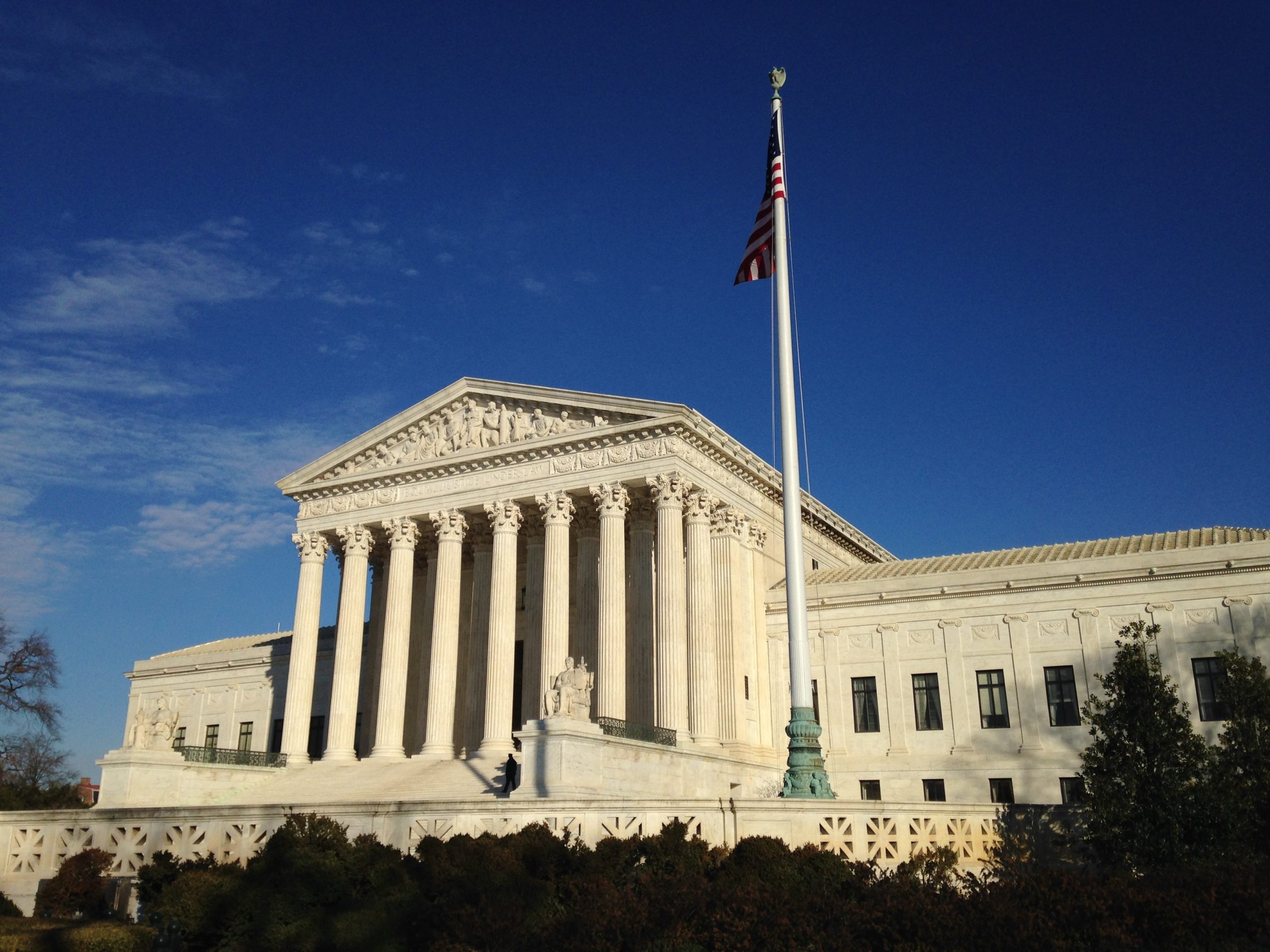
Supreme Court to Rule on Trump’s IEEPA Tariffs as $150 Billion in Corporate Refund Risk Comes Into View
The United States Supreme Court could rule any hour on President Donald Trump’s "Liberation Day" tariffs, placing thousands of global importers in a live valuation risk window.
This judicial intervention targets the administration’s use of the International Emergency Economic Powers Act (IEEPA) to bypass traditional congressional oversight of trade duties. A decision striking down these levies could trigger a massive capital reallocation, as the U.S. Treasury faces a potential $150 billion refund liability to corporate actors.
Retailers and industrial manufacturers have already shifted from passive observation to aggressive litigation to protect their balance sheets from permanent losses.
Major entities including Costco, Reebok, and Xerox have filed preemptive lawsuits in the U.S. Court of International Trade (CIT) to ensure they remain eligible for duty clawbacks. These filings represent a strategic defense against "liquidation," a customs finalization process that typically bars companies from recovering funds once the administrative window closes.
Institutional exposure is no longer speculative, as the Supreme Court enters a definitive opinion window this morning. While official government data from mid-December confirmed $133.5 billion in collections, the continuation of average daily deposit rates has pushed the total refund liability toward $150 billion as of the January 9 ruling window.
Recognizing this live threat, industry leaders have already established legal standing via protective CIT filings to ensure that if the IEEPA duties are struck down, the firms possess the immediate right to claw back capital already paid.
If the current bench majority confirms the skepticism expressed during November’s oral arguments, the administration’s core economic pillar could face judicial limits. This would force a rapid restructuring of supply chain costs and could spark volatility across equity markets tied to consumer discretionary and logistics sectors.
IEEPA Authority at a Crossroads and the Corporate Race to Preserve Capital
The pending verdict examines whether trade deficits and fentanyl trafficking legally qualify as national emergencies sufficient to trigger IEEPA’s sweeping executive powers.
Lower federal courts have already sided with a coalition of small businesses and state leaders, ruling that the president exceeded statutory boundaries.
These prior defeats indicate a high probability that the Supreme Court may similarly curb the administration’s ability to impose broad-based import duties without legislative consent.
Corporate strategy has fundamentally diverged from previous trade war responses, moving toward a "litigate-to-preserve" model that treats customs entries as potential assets. The complexity of the refund process means that a Supreme Court decision favoring importers would not unlock automatic treasury disbursement. Corporations must establish legal standing, demonstrate preserved entries, and seek CIT-ordered reliquidation before capital returns.
Strategic friction is intensifying as Wall Street financial firms begin purchasing refund rights from importers in exchange for immediate, guaranteed cash infusions. These secondary market deals allow companies like Peloton or Goodyear to de-risk their balance sheets while transferring legal recovery risk to specialized investors. These maneuvers underscore commercial pressure to secure liquidity before refund adjudication backlogs shape 2027 planning models.
Refund Infrastructure Strain, Treasury Risk, and Market Shock Modeling
The current regulatory deadlock places immense pressure on the U.S. Customs and Border Protection (CBP) as it manages the transition to electronic refund distributions.
The agency’s ACE portal is expected to complete its migration to digital payouts by February 6, 2026, creating a technical chokepoint for processing billions in claims at scale. Any infrastructure delays could impede cash flow recovery for major import plaintiffs including Diageo, EssilorLuxottica, and Kawasaki Motors, whose combined import exposure represents significant global market cap sensitivity.
Fiscal pressure is equally intense. The U.S. Treasury collected tariff revenues under the assumption of statutory legality. If the Supreme Court ruling narrows or strikes down the tariffs, the government could be forced into reliquidation, recalculating and refunding duties previously considered final.
The U.S. Court of International Trade has confirmed its authority to order reliquidation, ensuring that the executive branch cannot sidestep an adverse ruling to preserve revenue or deficit assumptions.
Institutional investors are tracking the Russell 2000 index, where small-cap firms are most sensitive to margin suppression caused by tariff permanence modeling.
Market movements on the New York Stock Exchange will likely reflect ruling timing, governance posture, liquidation suspension status, and refund prioritization disputes, not just ruling direction. Consumer staples, electronics, manufacturing, and logistics sectors remain poised for either re-rating or continued margin compression depending on the Court’s statutory interpretation.
International institutions, including the Reserve Bank of India and European competition authorities, are evaluating second-order consequences tied to trade transparency, governance posture, credit appetite shifts, and multi-region compliance expectations heading into 2027 planning cycles. If IEEPA tariff authority is constrained, the administration may pivot to Section 232 or 301 authorities, but these would likely apply prospectively and offer no retroactive refund relief.
The New Corporate Doctrine: Optionality, Standing, and Strategic Exposure
| Old Way | New Way |
|---|---|
| Passive acceptance of tariff costs as a fixed operational expense. | Aggressive judicial intervention to preserve refund rights via CIT filings. |
| Reliance on administrative protests after customs liquidation occurs. | Preemptive lawsuits to suspend liquidation before duty amounts become final. |
| Supply chain modeling based on executive-led trade stability. | Valuation adjustments reflecting the risk of sudden judicial tariff repeals. |
| Minimal coordination between legal departments and trade compliance. | Unified “Trade-as-Strategy” functions driving corporate resilience. |
Insurance exposure is rising for firms that failed to file protective lawsuits before their entries liquidated, as they face the "final and conclusive" nature of customs determinations.
Legal actors such as Mayer Brown and other trade-focused firms have cautioned that the two-year statute of limitations for IEEPA claims is rapidly approaching for 2024 entries. This creates an environment where governance failure to act becomes a liability for company boards, as shareholders may demand accountability for lost refund opportunities.
The Supreme Court’s decision could be nuanced, potentially narrowing the scope of IEEPA without mandating full removal, which would keep trade policy in a restrictive "gray area."
This would preserve negotiating leverage while muting the immediate economic impact of a total repeal. Even a partial strike-down would force the U.S. Department of Commerce to justify specific duties, adding bureaucratic friction to future trade enforcement.
Governance Timelines, Filing Windows, and Institutional Decision Lag
Boardrooms are currently experiencing intense friction as directors balance immediate cost-containment measures against long-term supply chain diversification mandates.
Investors in the J. Crew Group and Lane Bryant are demanding clarity on how a potential $150 billion refund pool would be utilized for debt reduction. This conflict between capital expenditure aggression and cash preservation discipline is shaping 2027 operational planning tension.
Auditors and supply-chain gatekeepers are questioning the "recoverable" status of tariff payments on corporate balance sheets, impacting earnings disclosures and audit sign-off timing. Decision lag between audit committees and trade counsel is generating fiduciary exposure pricing for 2027 forecasts.
Litigation timing friction in the CIT could extend capital recovery into Q4 2026. This delay vacuum is constraining financing appetite for high-import firms forecasting lower-duty environments in 2027. Corporations like Schick Manufacturing and Playtex are navigating partnership contract risk based on duty modeling assumptions.
Refund optics enforcement timing friction is influencing awards eligibility scrutiny and sponsor trust gravity. Reputation risk is rising for companies that passed tariff costs to consumers but are now pursuing private corporate reimbursements. Boards must frame refund litigation as governance duty, not capital opportunism, to defend 2027 reputation and fiduciary optics planning.
Global Capital, Credit Posture, and 2027 Institutional Confidence Metrics
The tariff dispute carries global institutional gravity beyond U.S. borders. Central banks and finance ministries are tracking the ruling as a trade stability signal through 2027. Judicial authority tension is pushing transparency standards upward, not trade statute assumptions alone.
Credit appetite for import-heavy firms is tightening for companies without protective CIT filing posture. Investor diligence is tightening for firms that failed to suspend liquidation. Capital recovery posture is now influencing affiliate contract trust and sponsorship optics resilience.
Valuation impacts are rippling through the S&P 500. Market sentiment is spreading faster than refunds can be adjudicated. Institutions must price propagation timing friction, not ruling direction alone, into 2027 planning.
Boardroom Imperative: Audit Posture, Capital Preservation, and Trade Defensibility
Company boards must immediately audit all import entries from the past 24 months to identify specific liquidation dates and preservation status. Management teams should coordinate with trade counsel to ensure that any unliquidated entries are protected by a Post-Summary Correction or active CIT litigation.
Failure to secure these rights now could lead to the permanent loss of capital, regardless of the Supreme Court's eventual determination on the constitutionality of the tariffs.
Institutional authority rests on the ability to navigate this period of extreme regulatory volatility with a data-driven, proactive legal strategy. The shifting trade landscape requires a fundamental move away from reactive compliance toward a model where trade departments drive operational resilience and profitability.
As the Supreme Court concludes its deliberation, the companies that have already secured their legal standing will be the primary beneficiaries of a $150 billion corporate windfall.
PAA
Who are the companies suing the Trump administration for tariff refunds?
Major import-reliant corporations have filed protective actions in the U.S. Court of International Trade to preserve refund eligibility. The most prominent confirmed plaintiffs include Costco, Reebok, and Xerox, with additional filings or refund-rights trading activity tied to companies such as Peloton, Goodyear, PopSockets, and Conair. These actions are not new disputes. They are preservation maneuvers to block customs liquidation from making duties final. The filings signal capital posture, not legal theory.
What is the Liberation Day tariff Supreme Court case?
It is a pending constitutional and statutory challenge to President Trump’s use of IEEPA emergency authority to impose sweeping import duties without congressional approval. The case tests whether the statute, historically reserved for targeted sanctions, can legally support economy-wide tariffs. The Supreme Court is evaluating whether the justification met the emergency threshold and whether Congress was unlawfully bypassed. The ruling is being treated as a live institutional catalyst.
How do companies file for tariff refunds in the Court of International Trade?
Refunds are not administrative protests. They are standing-dependent legal claims. Companies file protective lawsuits in the CIT to suspend liquidation on unfinalized customs entries. After a Supreme Court ruling that constrains or strikes down tariff authority, importers must still prove eligibility. Then they petition the CIT for reliquidation orders to force recalculation and refund of overpaid duties. The process is not automatic. It is hierarchical, sequential, and legally fragmented.
What is customs liquidation and why does it matter?
Liquidation is the moment Customs and Border Protection finalizes duty assessments on import entries, making them final and conclusive by default. Once liquidated, duties are typically unrecoverable, even if later found unconstitutional, unless liquidation was suspended through prior CIT litigation. It is not a filing deadline. It is a capital lockout event. Companies file protective suits to stop it from occurring.
When will the Supreme Court rule on Trump’s tariffs?
The Court has not issued the opinion yet. Multiple national legal and market outlets, including Forbes, reported that the Supreme Court could rule as soon as Friday, January 9. The decision may still land today, but it is not confirmed to have done so. The ruling will likely be part of a scheduled opinion release day, not a standalone emergency announcement. Markets are treating today as a pricing catalyst window.
How much money has been collected from the IEEPA tariffs?
The U.S. government collected tariff revenues assuming statutory legality. Importers and trade analysts estimate that refund exposure could reach $150 billion if tariff authority is narrowed or struck down. This figure is not confirmed refunds. It is confirmed exposure modeling. The refund pool depends entirely on preserved legal standing and unliquidated entries. The estimate signals scale, not settlement.
Can IEEPA be used to impose broad import duties?
Lower federal courts already ruled that the president exceeded the intended statutory boundaries of IEEPA when applying it to economy-wide import duties. The Supreme Court is now testing that same statutory perimeter question. If upheld, the authority would persist only prospectively, not retroactively. If constrained, the administration may retain tariff-use authority only in narrow or targeted applications.
What happens if the Supreme Court strikes down Trump’s tariffs?
A full or partial strike-down would not automatically refund capital. It would only unlock the right to seek refunds through CIT reliquidation petitions. The companies most likely to benefit first are those that suspended liquidation in advance via protective CIT lawsuits. The consequence is not legal collapse alone. It is margin re-rating, capital reversal eligibility, and governance accountability exposure into 2027 planning.
Which industries are most affected by the 2026 tariff ruling?
The most sensitive sectors are consumer discretionary retail, consumer electronics, logistics providers, import-dependent manufacturing, and small-cap firms operating on compressed margins, particularly those tracked within indices like the Russell 2000 and import-heavy segments of the S&P 500. The ruling impacts valuation modeling, credit appetite, affiliate contracts, and supply-chain assumptions for 2027.
Insight Feature: 👉 U.S. Energy Majors Demand Ironclad Guarantees Before Financing Venezuela Reconstruction