
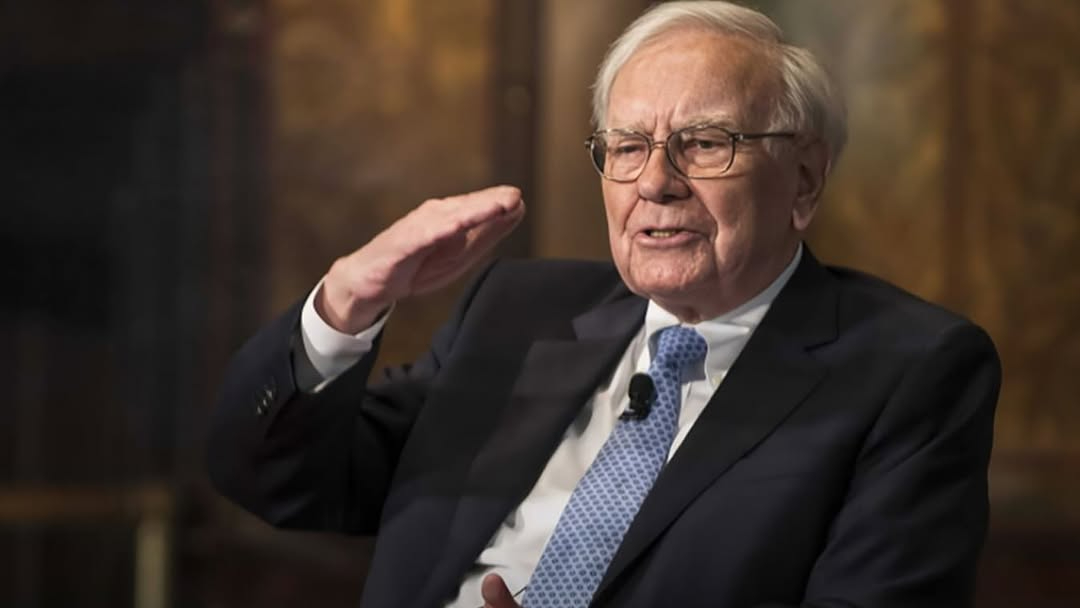
Warren Buffett’s Final Talent Lesson Reshapes How CEOs Think About Pay and Power
The people most affected by Warren Buffett’s final career lesson are corporate leaders competing for talent in high-cost labor markets, boards overseeing succession risk, and investors exposed to productivity erosion from wage-led hiring strategies. What changes is the assumed primacy of salary as the defining recruitment lever. The business exposure is direct: compensation inflation without cultural alignment compresses margins, increases turnover, weakens internal controls, and raises long-term execution risk at firms far removed from Berkshire Hathaway’s balance sheet discipline.
For Berkshire Hathaway, this philosophy has shaped decades of capital allocation and subsidiary autonomy, influencing earnings durability and governance credibility. For CEOs elsewhere, the consequence is reputational and financial. Talent decisions cascade into execution quality, compliance posture, and strategic patience. When hiring fails, remediation costs surface through restructurings, write-downs, and lost investor confidence rather than through HR metrics.
Buffett’s message lands amid generational workforce shifts, where Gen Z employees weigh meaning and relationships alongside compensation. The lesson reframes labor as a compounding asset rather than a cost line. Boards and shareholders now face a sharper question: whether leadership teams are building durable human capital or simply bidding up salaries in markets that punish short-term thinking.
The Berkshire Model and the Cost of Cultural Mispricing
Buffett’s career at Berkshire Hathaway reflects a consistent prioritization of trust, judgment, and long-term alignment over immediate financial incentives. That approach has insulated the conglomerate from the volatility that hits peers reliant on incentive-heavy cultures. The exposure for firms ignoring this lesson is not abstract. It manifests through operational slippage, control failures, and strategic drift that eventually surface in earnings volatility.
Berkshire’s decentralized structure depends on leaders who internalize stewardship without constant oversight. That reliance lowers monitoring costs and preserves capital for reinvestment. Companies that misprice culture pay twice: first through higher compensation, then through remediation when misaligned hires underperform or exit. The business consequence is a thinner margin of safety, particularly in regulated or capital-intensive sectors.
Buffett’s exit commentary reframes labor economics for executives facing wage competition from private equity-backed firms and venture-funded disruptors. The warning is structural. Paying more does not guarantee better outcomes if incentives distort decision-making. Over time, this misalignment affects valuation multiples as investors discount execution risk.
Talent Inflation Meets Governance Reality
The pressure to outbid competitors for talent has intensified across technology, finance, and healthcare. Boards approve compensation packages to secure perceived stars, often without equivalent scrutiny of cultural fit. Buffett’s lesson challenges that norm by tying talent quality directly to governance outcomes. Poor cultural alignment increases the probability of compliance failures, strategic reversals, and leadership churn.
At Berkshire, governance stability has translated into predictable capital deployment and steady shareholder returns. That stability attracts long-term investors who value consistency over growth spikes. Firms that chase talent through pay alone expose themselves to activist pressure when results disappoint. The consequence is not just higher costs but reduced strategic autonomy.
This dynamic affects Gen Z workers as well. When firms signal that pay outweighs purpose or collegial quality, they invite transactional relationships. Turnover rises, institutional knowledge erodes, and training costs escalate. The exposure extends to insurers and lenders who assess operational risk when pricing coverage or credit.
From Compensation Arms Race to Compounding Judgment
The business shift Buffett highlights is a move away from compensation arms races toward judgment compounding. Organizations that hire for values and decision quality reduce downstream costs tied to supervision and error correction. This approach aligns with Berkshire’s acquisition strategy, which favors founder-led businesses with embedded cultures.
For public companies, the implication is a recalibration of talent metrics. Boards must weigh cultural indicators alongside compensation benchmarks. Investors increasingly scrutinize human capital disclosures, linking workforce stability to earnings resilience. Buffett’s lesson gives that scrutiny a practical framework rooted in decades of performance.
The reputational impact also matters. Firms known for strong cultures attract partners and customers who value reliability. Those reputations translate into pricing power and lower churn. The consequence is a virtuous cycle that salary-driven strategies struggle to replicate.
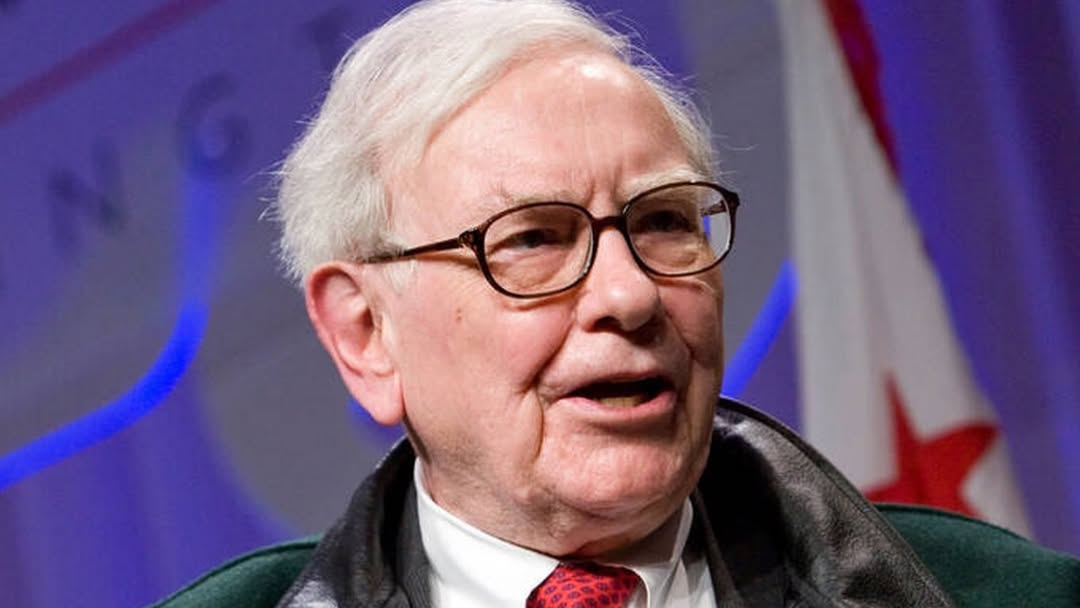
Compensation Strategy Before and After Buffett’s Lesson
| Old Way | New Way |
|---|---|
| Salary-led hiring to secure scarce talent | Culture-led hiring focused on judgment and trust |
| Incentive-heavy structures to drive performance | Autonomy and stewardship to sustain performance |
| Short-term retention through pay escalation | Long-term retention through alignment and purpose |
| Reactive turnover management | Preventive cultural investment |
Pressure Points for CEOs and Boards
CEOs now face dual pressure from employees demanding meaning and investors demanding efficiency. Buffett’s lesson reframes that tension by positioning culture as a risk mitigant rather than a cost. Firms that ignore this framing may experience higher volatility in earnings calls and greater scrutiny from proxy advisers.
Boards play a decisive role. Compensation committees that reward pay escalation without cultural accountability expose firms to governance critiques. Berkshire’s model shows that restraint can coexist with performance. The exposure for others is a credibility gap with long-term shareholders.
This pressure intensifies in global firms operating across regulatory regimes. Misaligned leadership increases the risk of inconsistent compliance and brand damage. Buffett’s emphasis on who you work with becomes a control mechanism as much as a motivational one.
Second-Order Effects Across Markets and Institutions
The implications extend beyond individual firms. Investors such as BlackRock and Vanguard increasingly factor human capital management into stewardship assessments. Central banks monitoring productivity trends see wage inflation without output gains as a macro risk. Buffett’s lesson intersects with these concerns by linking productivity to decision quality rather than pay.
On exchanges like the NYSE and indices such as the S&P 500, companies with stable leadership and cultures often command valuation premiums. Analysts at firms like Goldman Sachs and Morgan Stanley note that execution consistency supports multiple expansion. Berkshire Hathaway’s own performance reinforces that thesis.
Regulators also enter the frame. Agencies overseeing financial services and healthcare scrutinize governance failures tied to cultural breakdowns. Firms with high turnover face greater compliance risk, affecting insurance pricing and capital requirements. Buffett’s approach reduces those exposures through alignment rather than enforcement.
Private equity firms, including Blackstone and KKR, increasingly assess management cohesion during due diligence. Deals falter when cultural fractures threaten post-acquisition integration. Buffett’s lesson offers a heuristic for evaluating leadership durability beyond resumes and compensation histories.
Labor Strategy as Capital Allocation
Treating talent strategy as capital allocation changes boardroom conversations. Funds spent on escalating pay could instead support leadership development, succession planning, and internal mobility. Berkshire’s restrained compensation approach frees capital for acquisitions and share buybacks, reinforcing shareholder value.
For Gen Z workers, this approach signals investment in growth rather than extraction. Firms that articulate cultural priorities attract candidates aligned with long-term goals. The consequence is lower recruitment friction and stronger employer brands.
This shift also affects M&A outcomes. Acquirers with strong cultures integrate targets more smoothly, preserving deal value. Buffett’s acquisition record demonstrates how cultural compatibility reduces post-deal write-downs.
Authority Close: What Boards and CEOs Must Do Next
Boards should reassess compensation frameworks through a risk lens, evaluating whether pay structures support or undermine judgment quality. CEOs must articulate cultural expectations with the same rigor applied to financial targets. Investors will increasingly reward firms that demonstrate alignment between values and execution.
The directive is clear. Talent strategy must move from transactional to strategic. Buffett’s final lesson is not nostalgia; it is a governance playbook for volatile labor markets. Firms that internalize it protect margins, preserve autonomy, and build trust with stakeholders who value durability over spectacle.
Why did Warren Buffett prioritize colleagues over salary?
Buffett believed long-term success depends on judgment, integrity, and shared values, which cannot be purchased through higher pay and directly influence decision quality and risk outcomes.
How does culture affect company valuation?
Strong cultures reduce execution risk, turnover costs, and governance failures, which investors reward through higher valuation multiples and more stable earnings expectations.
What can Gen Z learn from Buffett’s career advice?
Choosing environments with principled leaders and supportive peers compounds skills and judgment over time, often delivering greater lifetime earnings than chasing early salary premiums.
How does Berkshire Hathaway manage talent differently?
Berkshire emphasizes autonomy, trust, and long-term stewardship, minimizing incentive complexity while selecting leaders aligned with ownership thinking rather than short-term performance targets.