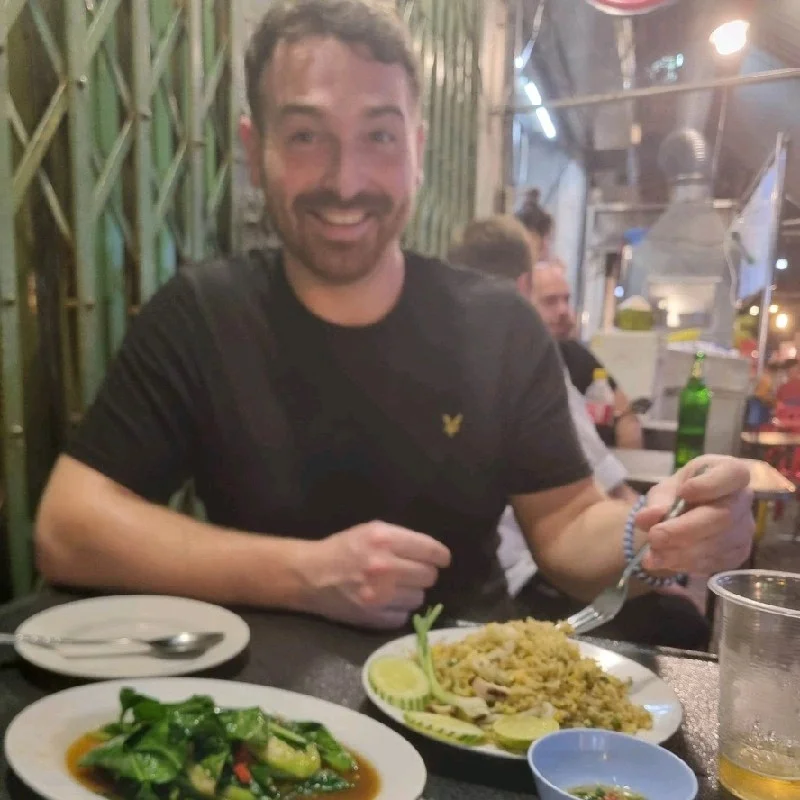
Robert Balzebre develops properties in Miami, Los Angeles, and New Orleans, three cities facing hurricanes, wildfires, and flooding. Construction techniques from each market inform projects across his portfolio, with disaster preparedness built into every development rather than added as an afterthought.
"I've obviously chosen some of the worst possible danger zones for natural disasters, but I love all these different places for their unique characteristics," Balzebre said. "These are the three cities where I focus my development, my business, and the different techniques we use in building."
Why Insurance Markets Now Demand Resilient Construction
Florida homeowners pay $6,000 annually for property insurance, four times the national average. Since 2020, more than a dozen insurers have gone insolvent or exited the state, forcing 1.3 million policyholders onto the state-backed Citizens Property Insurance program.
In January 2025, Los Angeles wildfires destroyed over 16,000 structures, with insured losses estimated at between $25 billion and $45 billion. State Farm had cancelled 1,600 policies in Pacific Palisades before the fires struck.
Louisiana lost twelve insurers to insolvency within two years after hurricanes Laura and Ida caused combined losses exceeding $30 billion in 2020 and 2021. Rates for the state's insurer of last resort increased by 164%.
Former California Insurance Commissioner Dave Jones summarized the national trajectory: "The insurance crisis in the U.S. is the canary in the coal mine, and the canary is dead."
Miami: Hurricane Preparedness as Second Nature
Balzebre has experience with hotels in Miami Beach, a region accounting for more than 70% of all U.S. hurricane-related insurance losses. Seven or eight hurricanes in South Florida made building for disaster his default approach.
"It's at the forefront of my understanding of real estate and how we have to develop it," Balzebre said. "In today's world, you can't escape it with respect to just the physical problems of the weather and issues that affect whether your building is going to be standing or not."
Miami Beach recently installed its first comprehensive pumping system in over a century, similar to infrastructure that has long protected New Orleans. Balzebre cited the pumps as evidence that rising tides have made theoretical risks tangible.
"It's almost prima facie evidence that you have rising tides," he said. "Anybody that's been a long-term visitor or resident there sees it, they know it, and it's definitely a risk."
How Did Fire-Resistant Construction in Los Angeles Precede State Mandates?
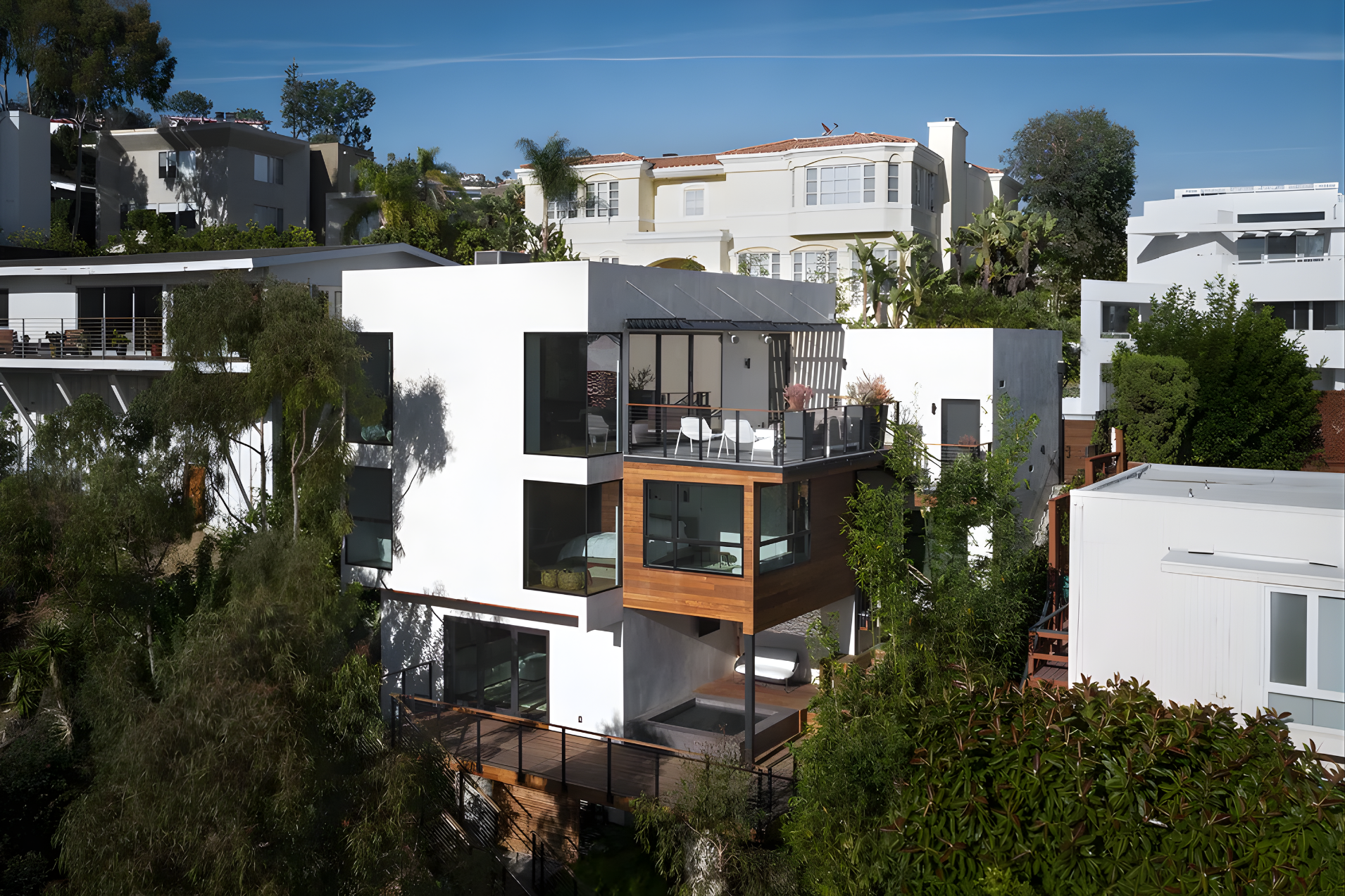
Balzebre's Hollywood Hills renovation from 2014-2018 incorporated an "envelope" protection system developed with designer Abeer Sweis of SweisKloss:
- Stucco cladding rated Class A for fire resistance, sealed at the base to prevent flames from entering underneath
- Flat roof membrane torched into place and wrapped to meet exterior walls, eliminating gaps where embers accumulate
- Tempered glass throughout capable of withstanding 450-degree temperatures
- Ipe Brazilian hardwood for decking, a material dense enough to match concrete in fire testing
California's 2025 building codes now mandate these features for wildfire zones.
Fires in the Runyon Canyon area during the 2025 Los Angeles wildfires approached Balzebre's neighborhood. Earlier Malibu fires six years ago required evacuation of his hillside.
Tempered glass carried premiums of 20% over standard options. Fire-rated wood cost double conventional alternatives. Both proved their value.
New Orleans: Lessons From the Poster Child of Disaster
Hurricane Katrina in 2005 caused $125 billion in damage, flooded 80% of New Orleans, and killed nearly 1,400 Louisiana residents when the federally built levee system failed. Civil engineers called the flooding "the worst engineering catastrophe in U.S. history."
"This is probably the poster child for big disasters after Hurricane Katrina," Balzebre said. "I was here at the time."
Balzebre's recent ground-up boutique hotel in the Garden District sits on elevated terrain that escaped Katrina's flooding. Large portions of Orleans Parish remain below sea level and sink at 0.15 to 0.2 inches annually.
What Makes Disaster-Zone Development Economically Viable?
Minimum-code construction creates exposure to cleanup costs, rebuilding expenses, and insurance increases that compound after each disaster.
"When you build something that is likely to fail from one of these disasters, then you increase the cleanup costs, you have to rebuild again," Balzebre explained. "Sometimes that's going to double all the costs that you just put out or more. And then you also increase the insurance premiums."
Fire-resistant homes receive premium reductions up to 30%. Fortified roofs in Louisiana qualify for discounts of 20% to 25%. These savings offset material premiums within several years as baseline rates continue climbing.
Why Do People Keep Building in Dangerous Places?
Coastal properties and hillside homes command premiums because they occupy positions humans have sought since prehistoric times.
"Since caveman times, we've been attracted as humans to places overlooking the water, sometimes on a high hill with a broad outlook," Balzebre observed.
Federal Reserve Chairman Jerome Powell predicted that within 10 to 15 years, some regions may become unmortgageable because insurance is unavailable. Building to exceed current standards offers one path to maintaining viability where others retreat.
Building for Tomorrow's Requirements
Balzebre's 2014 fire-resistant choices anticipated California's 2025 mandates by nearly a decade. His hurricane-resistant techniques in Miami preceded the pumping infrastructure now protecting Miami Beach.
With insurance markets contracting and codes tightening, exceeding minimum requirements protects against both physical disasters and market disruptions. Developers who wait for mandates find themselves catching up to standards that forward-thinking builders established years earlier.