I’m Trying to Stop Biting My Nails (And Here’s What’s Actually Helping)
If you bite your nails, you already know it’s rarely just about your nails. It’s something you do without thinking. When you’re bored. When you’re stressed. When you’re watching TV, replying to emails or lying awake at night. For many of us, nail biting is a coping mechanism disguised as a bad habit, and trying to stop can feel strangely emotional.
I’m currently trying to quit nail biting myself, and what I’m learning is this. It’s not about willpower alone. It’s about understanding why you’re doing it and giving your hands something else to do when your brain goes into autopilot.
Why Do People Bite Their Nails?
Nail biting, also known as onychophagia, is incredibly common. Studies suggest a large percentage of adults still bite their nails regularly, often starting in childhood and carrying the habit into adulthood.
For most people, nail biting is linked to emotional regulation. It can be triggered by stress, anxiety, boredom, frustration or even concentration. Some people bite their nails when they feel overwhelmed, while others do it when they’re understimulated. In both cases, it offers a brief sense of relief or grounding.
There’s also a perfectionism element for some nail biters. Uneven edges, dry cuticles or a chipped nail can trigger the urge to “fix” it with teeth, even if that fix makes things worse. Over time, the habit becomes automatic, happening without conscious thought.
Is Nail Biting a Stress Response or a Boredom Habit?
The frustrating truth is that it can be both. Nail biting often sits somewhere between stress relief and stimulation. During anxious moments, it can calm the nervous system. During boring moments, it provides sensory input and keeps your hands busy.
That’s why going cold turkey can feel impossible. You’re not just removing a habit, you’re removing a coping tool. Without a replacement, your body will usually default back to biting, especially during moments of emotional discomfort.
The “Cold Turkey” Question: Does It Actually Work?
For some people, quitting cold turkey works, particularly if nail biting is more occasional than compulsive. But for chronic nail biters, white knuckling it often leads to frustration and relapse.
A more sustainable approach is substitution rather than suppression. Instead of asking yourself to simply stop, the better question is what you can do instead when the urge hits. This shifts the goal from perfection to progress.
Tips and Tricks That Are Actually Helping Me
One of the biggest realisations I’ve had is that nail biting doesn’t disappear overnight. It fades when the habit loop is interrupted consistently.
Using a bitter tasting nail polish has been surprisingly effective, not because it stops the urge entirely, but because it brings awareness to it. That pause is often enough to stop automatic biting.
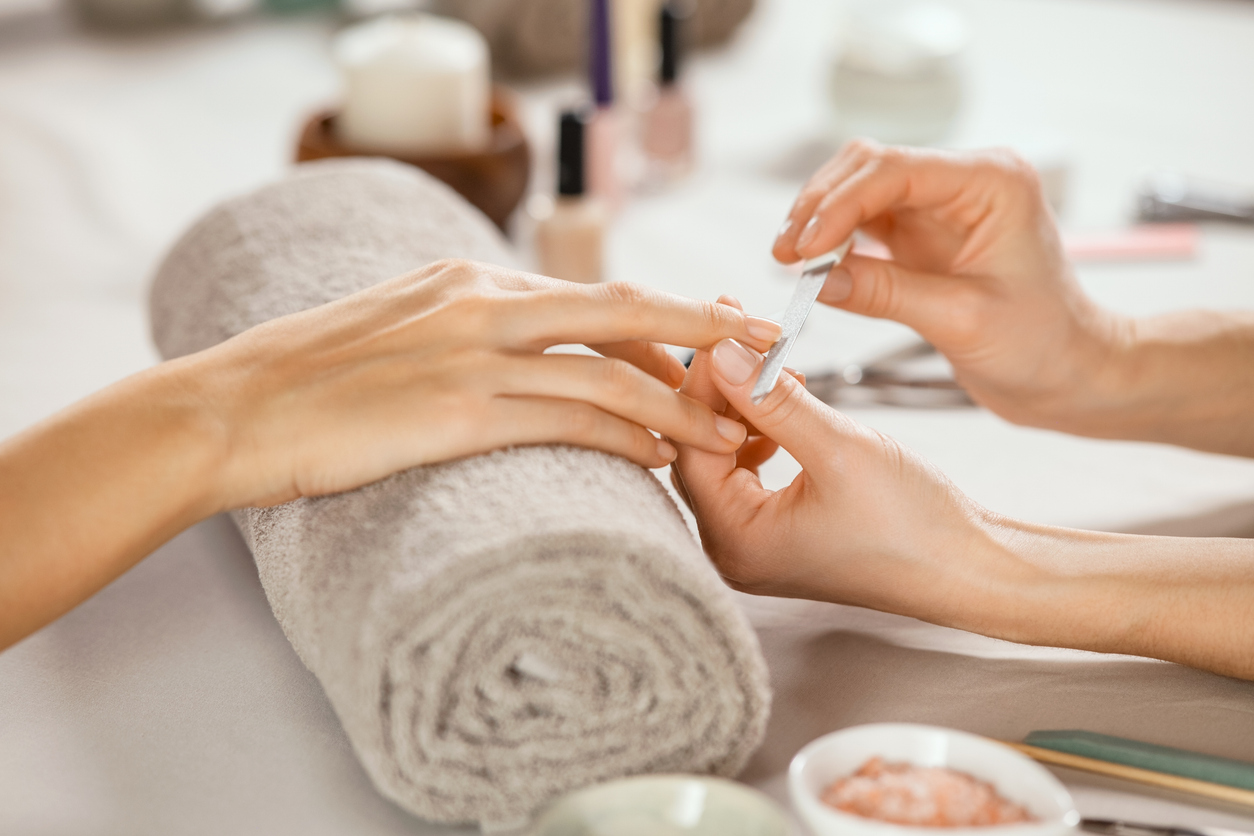
Regular manicures, even simple at home ones, also help more than expected. When my nails look neat, I’m less likely to destroy them. There’s also a psychological effect of not wanting to undo the effort I’ve just made.
Fidget toys have become my secret weapon. Stress balls, rings, textured objects or even hair ties around the wrist give my hands something to do during idle moments. Chewing gum works similarly by satisfying the oral fixation aspect of the habit.
I’ve also noticed that moisturising my cuticles regularly reduces triggers. Dry skin and rough edges are a huge temptation, and keeping nails smooth removes one of the main excuses to bite.
What to Do When You Slip Up
This is the part most advice skips, but it matters. Slipping up doesn’t mean you’ve failed. Nail biting habits are deeply ingrained, and setbacks are part of the process.
Instead of spiralling into guilt, it helps to get curious. Was I stressed. Bored. Overtired. Once you identify the trigger, you can plan for it next time. Progress comes from awareness, not punishment.
Can Stopping Nail Biting Improve Your Health?
Beyond appearance, stopping nail biting can reduce the risk of infections, improve nail growth and protect your teeth and jaw. Constant biting can damage enamel and introduce bacteria into the mouth, especially if the skin is broken.
Healthier nails also tend to reinforce the habit change. When your nails start growing, it creates positive feedback that makes you want to keep going.
The Mindset Shift That Makes the Biggest Difference
What’s helping me most is reframing nail biting not as a flaw, but as information. It tells me when I’m stressed, bored or overwhelmed. Learning to respond to those signals with kindness rather than criticism makes change feel possible.
You’re not weak for biting your nails. You’re human. And with the right tools, distractions and mindset, it’s absolutely a habit you can loosen your grip on.