
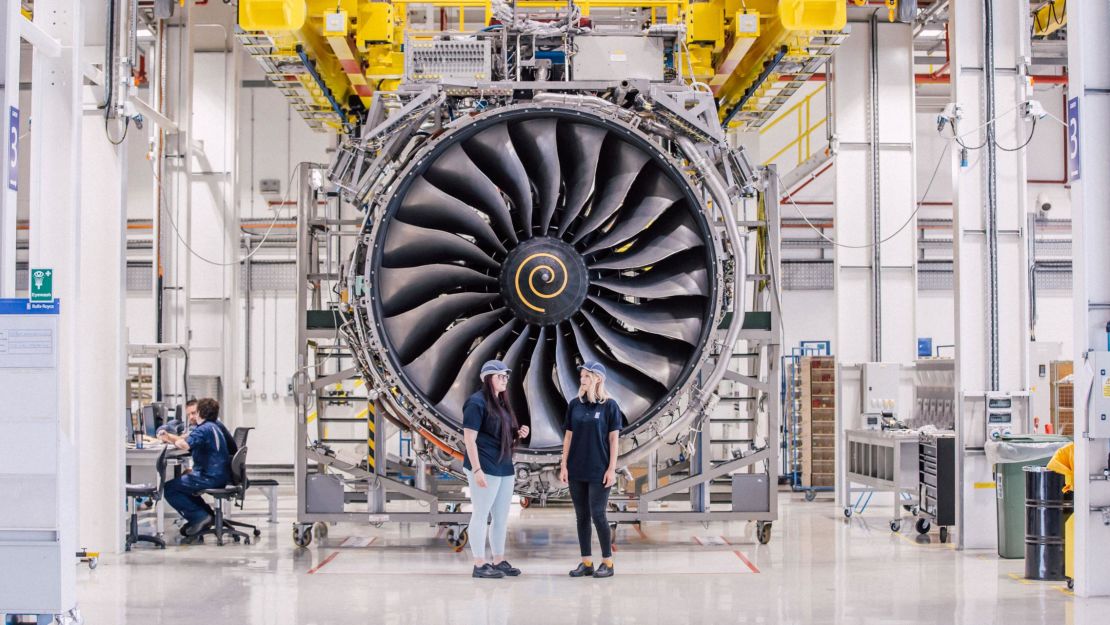
Rolls-Royce is facing public pushback from airlines over the cost of repairing and maintaining jet engines, just as carriers are dealing with tight aircraft supply and long maintenance queues.
At the Singapore Airshow, a senior executive defended recent price rises, saying they reflect higher costs across the supply chain rather than an attempt to profit from disruption.
The exchange matters because it lands at a sensitive moment for the engine maker’s civil aerospace business. Airlines want more reliability and faster turnaround, while Rolls-Royce is in the middle of a multi-year effort to improve durability on its largest long-haul engines.
What triggered this moment
The criticism came from the head of the International Air Transport Association, who said engine makers had raised repair prices even as airlines faced durability shortfalls and long waits for maintenance slots. Those comments put a spotlight on how costs are being passed through at a time when fleets are under strain.
In response, Rolls-Royce said pricing has followed higher input costs linked to post-pandemic supply chain disruption and broader instability. The company argues the increases mirror what it is paying to keep production and repairs moving.
Why this matters to Rolls-Royce
Civil aerospace is a core business for Rolls-Royce, and long-haul engines generate revenue over decades through servicing and overhauls. Tension with customers over pricing can affect relationships that are built around long service agreements.
The company is also trying to show that higher prices come with measurable improvements. Rolls-Royce says recent upgrades are already extending the time engines stay on wing between overhauls, a key metric for airlines managing costs and schedules.
What airlines are reacting to
Airlines are operating in an environment where new aircraft deliveries are constrained and existing fleets are flying more intensively. When engines need repairs more often, or spend longer in shops, it disrupts capacity planning and raises costs.
From the airline perspective, higher repair bills are harder to absorb if reliability has not yet fully recovered. That tension is what brought the disagreement into the open.
Where the technical work stands
Rolls-Royce says its improvement programme for the Trent XWB, used on the Airbus A350-1000, is delivering longer intervals between overhauls, with further gains expected later in the decade. The company plans to test the engine in harsh Middle East conditions in 2027.
Major customers are watching closely. Emirates, the world’s largest buyer of wide-body jets, has said it wants to see more progress on durability before committing to additional aircraft powered by the engine.
What investors are watching
For investors, the focus is on whether cost pressures ease as durability improves. Longer time on wing reduces the frequency of expensive shop visits and can stabilise margins over time.
There is also attention on future aircraft programmes. Airbus has floated the idea of expanding the A350 family with a larger variant, a move that could require further engine enhancements and investment from suppliers like Rolls-Royce.
How this is typically handled
In commercial aviation, engine pricing and maintenance terms are usually set through long-term service agreements tied to performance targets. Manufacturers adjust pricing when costs rise, while airlines expect reliability improvements in return.
When performance lags, disputes tend to play out through renegotiation rather than abrupt breaks. Public exchanges are less common, which is why this episode is being closely read across the industry.
The immediate issue remains unresolved. Rolls-Royce is pressing ahead with its upgrade programme, while airlines continue to press for faster gains, leaving the balance between price, performance, and patience still in play.