
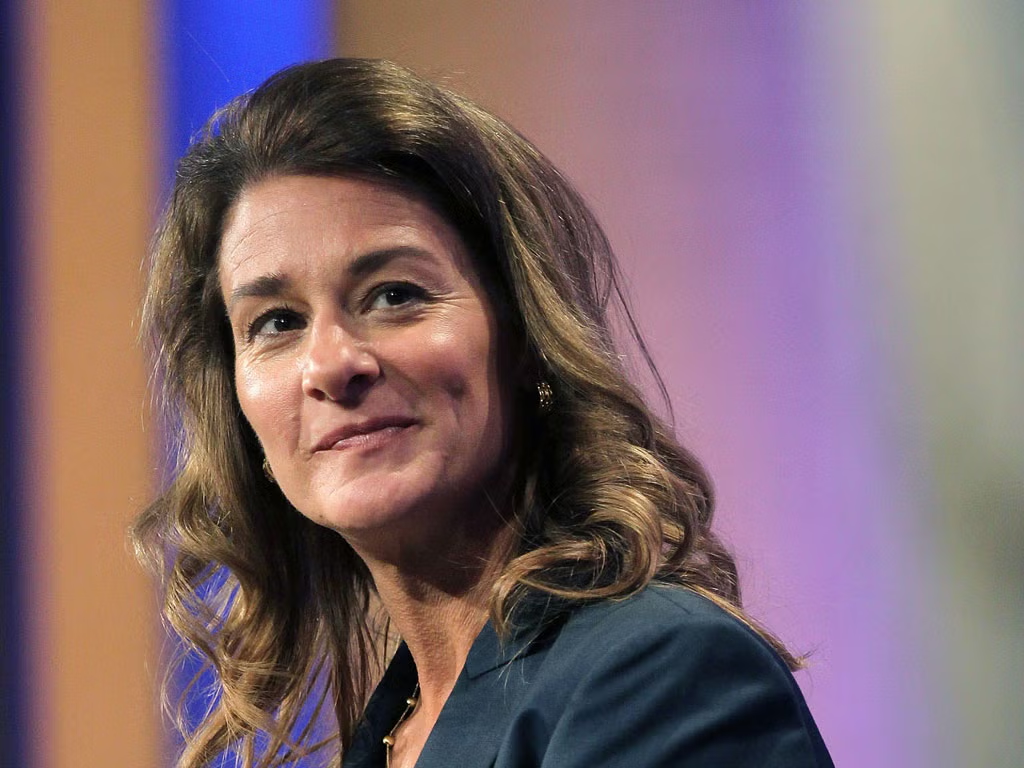
The pressure returned this week without warning. Days after a new batch of Epstein files resurfaced and her ex-husband’s name reappeared in headlines, Melinda French Gates spoke publicly about why she is no longer willing to engage with that chapter of her life.
Her comments came amid renewed attention tied to the document release and a podcast interview recorded this week. The timing mattered because it reopened a period she has repeatedly described as painful, personal, and finished.
What followed was not a rebuttal or a clarification. It was a refusal to participate.
Melinda did not contest claims or offer context. She said the questions raised by the files were not hers to answer, and that she was relieved to be away from what she called “the muck.” It was a clean line drawn between the life she has now and the one she left behind.
That line exists because money makes it possible.
Since her divorce from Bill Gates, Melinda has controlled her own capital, her own institutions, and her own public exposure. The multi-billion-dollar settlement that followed did more than divide assets. It created distance.
Distance from explanations. Distance from shared responsibility. Distance from the expectation that proximity requires participation.
When old material resurfaces, most people are forced to respond. Silence is rarely an option. For Melinda, silence is the choice, and money is what sustains it.
She spoke about emotional strain rather than allegations, describing how renewed attention pulls her back to a period she has already processed and exited. The emphasis was not on the content of the files, but on the cost of being asked to carry them again.
That cost is not financial. It is psychological.
Her wealth reframes the tradeoff. Money becomes insurance against obligation, a buffer that absorbs pressure before it reaches daily life. It pays for independence, security, and the ability to step back without consequence.
This is not indulgence. It is maintenance.
Melinda’s withdrawal is not passive. It is an active decision to disengage, supported by resources that make disengagement viable. She left a marriage, stepped away from a shared foundation, and rebuilt her public role on her own terms.
Those choices are rarely clean. They involve reputational risk, emotional fallout, and years of recalibration. Capital does not erase those costs, but it does prevent them from compounding.
The physical signals of that recalibration are subtle. Public appearances are controlled. Statements are measured. Interviews are rare and bounded. The contrast between vulnerability and polish is intentional.
In moments like this, money does not speak loudly. It quiets things.
Similar patterns have emerged among other high-profile women who exit powerful partnerships under strain. The story is not retreat from work, but retreat from obligation. Wealth allows them to narrow what they engage with and what they refuse to carry forward.
The pattern raises an uncomfortable question for readers. When money enables silence, is that avoidance, or is it self-preservation?
Melinda’s answer appears to be practical rather than philosophical. She has moved on. She has rebuilt. And she has no interest in reopening doors that lead backward.
The renewed attention does not change her present circumstances. It does not alter her access, her work, or her autonomy. It simply tests the boundary she has already set.
For people without that level of insulation, resurfaced scrutiny can force decisions quickly and publicly. Responses are demanded. Explanations are expected. Distance is costly.
At the top, distance is purchased once and maintained over time.
Melinda’s stance leaves little room for resolution, and that seems deliberate. She does not offer closure or clarity, only separation. The past can resurface, but it does not get to reclaim her attention.
What remains unsettled is not the story behind the files, but the broader implication of what wealth buys when pressure returns. Silence, in this case, is not emptiness. It is a choice made possible by resources few people ever have.
Whether that choice reads as strength or privilege depends on where the reader stands. What is clear is that the system around her keeps moving, even as she steps aside.