
U.S. Energy Majors Demand Ironclad Guarantees Before Financing Venezuela Reconstruction
The abrupt political rupture in Caracas has ignited a geopolitical chess match that few boardrooms ever expected to be forced to play.
The White House has publicly framed Venezuela’s crude reserves — particularly the vast Orinoco Belt — as a cornerstone for future global energy price relief.
Yet U.S. energy majors are holding firm: capital will not move without enforceable, sovereign-level guarantees and U.S.-backed financial protections. That resistance is rooted in institutional memory, a long and bruising history of asset expropriation, arbitration battles, and infrastructure decay that has erased billions in shareholder value since the Chávez nationalization wave reshaped Venezuela’s commercial landscape.
Markets are now pricing Venezuela reconstruction financing as a legal-first investment scenario, not a resource-first opportunity. Institutional investors, infrastructure lenders, and political-risk insurers see a country rich in reserves but poor in durable governance — a combination that has historically turned optimism into write-offs.
For energy boards, this moment is less about barrels in the ground and more about the rules that protect them — specifically, a commercial legal framework capable of surviving regime cycles and safeguarding capital from future seizure.
U.S. energy boards are resisting any model that requires reinvestment without indemnity, especially when compensation for past expropriation remains unsettled. Institutional capital desks from New York to Houston agree on one point: without enforceable reconstruction financing guarantees, Venezuela remains a stranded asset in commercial terms, no matter how vast its reserves appear on a map.
Venezuela Reconstruction Financing: The Legal Battle Behind the Barrels
The global energy sector has learned to treat Venezuela cautiously.
The legacy of state-led nationalizations under Hugo Chávez remains one of the most expensive governance lessons in modern oil history, shaping how companies now approach any reconstruction mandate tied to past compensation. The debate inside boardrooms is no longer about reserve size — it’s about ownership certainty, operatorship rights, indemnity, and repayment structure.
Institutional investors are signaling that the risk-reward profile of the Orinoco Belt remains untenable under present conditions. U.S. agencies, including OFAC within the Treasury, have suggested that companies seeking to unlock frozen assets and legacy arbitration awards may need to demonstrate new capital commitments as part of a broader commercial reset.
However, U.S. energy majors have not publicly agreed to such mandates, and capital committees continue to treat this as a policy signal, not a binding investment condition.
Chevron remains the only U.S. energy major with active upstream joint-venture operations through PDVSA. But even this commercial foothold does little to shield it from the immense capital requirements required to stabilize production, restore logistics, and rebuild export autonomy.
For the global energy market, the consequence of this impasse is straightforward: Venezuelan crude, despite its strategic potential, remains commercially theoretical, not financially actionable.
The Compensation Chokepoint and Capital Resistance
The White House investment messaging has emphasized accelerated production, but U.S. energy majors are resisting any linkage that places new capital at risk before sovereign guarantees exist. No U.S. oil major has publicly agreed to an invest-first model, and boards remain focused on capital protection over political timelines.
Credit institutions, infrastructure lenders, and multilateral energy analysts have circulated directional estimates exceeding $100 billion over 10 years to rebuild Venezuela’s oil infrastructure, including upstream well stabilization, refinery rehabilitation, pipeline reconstruction, and port repair. These figures are not formal bids, but institutional assessments based on the current state of infrastructure collapse.
Without sovereign guarantees or U.S.-supported political-risk insurance, lenders remain hesitant to provide the necessary credit lines. The tension between political objectives in Washington and fiduciary caution in Houston has become one of the most scrutinized capital allocation disputes in the energy sector.
| Old Way | New Way |
|---|---|
| Ad-hoc licenses under sanctions | Sovereign reconstruction financing guarantees backed by long-term investment code |
| Reliance on PDVSA infrastructure | Independent logistics, export autonomy, and full operational control |
| Slow arbitration for seizures | Production-linked reimbursement milestones |
| No federal insurance | U.S.-supported political risk insurance and credit protection |
| Minority stakes in broken JVs | Majority ownership or operatorship of Orinoco Belt oil field assets |
Infrastructure Decay and Second-Order Market Exposure
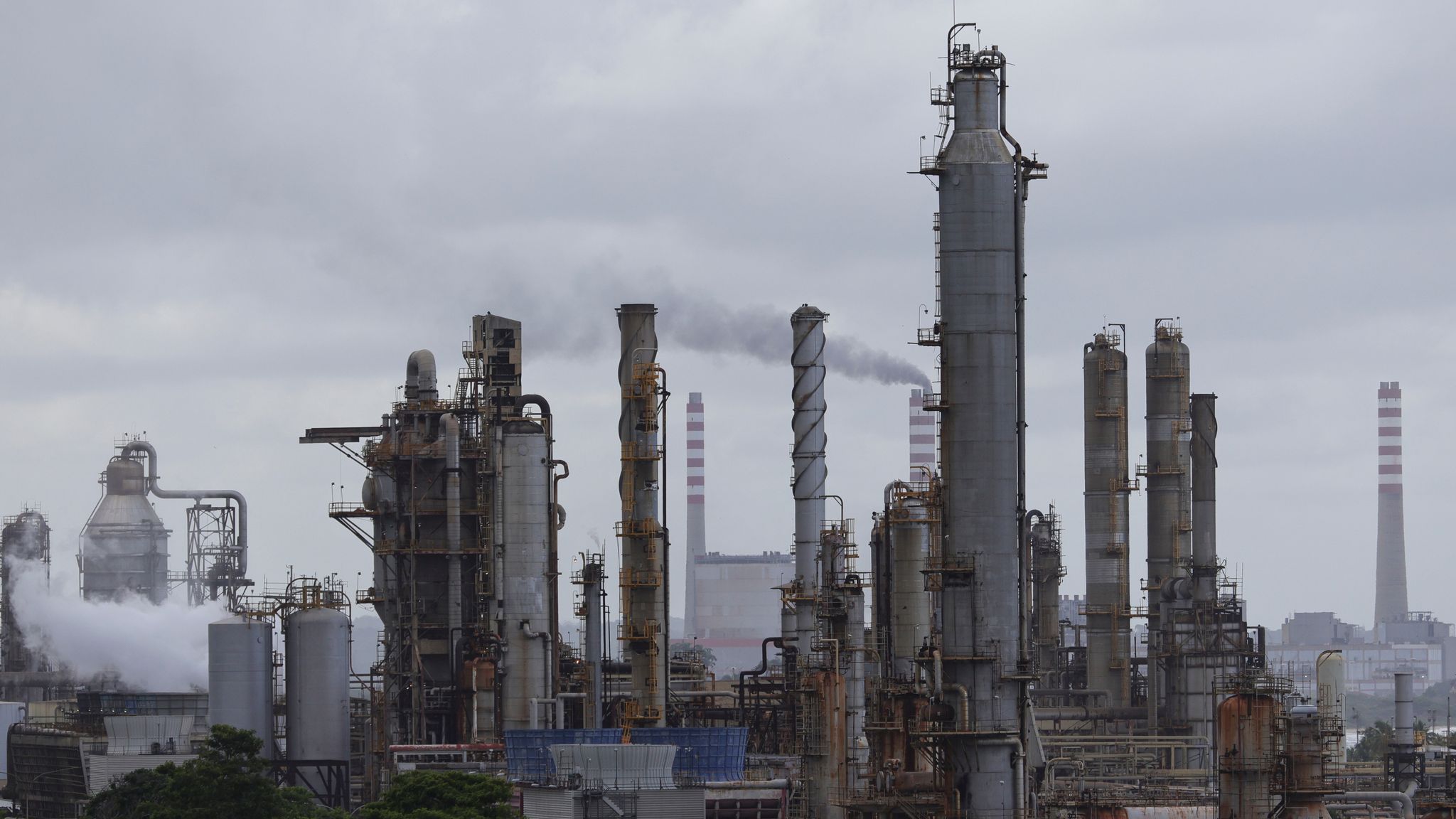
Venezuela’s oil infrastructure has suffered years of systemic neglect, theft, and maintenance collapse, leaving export logistics degraded and refining capacity mismatched with heavy-grade crude processing requirements. Venezuelan heavy crude requires specialized refining capabilities, much of which has shifted away from facilities previously calibrated for PDVSA grades.
Market desks tracking Brent and WTI indices see the commercial impact of Venezuelan supply as a long-cycle event, not a short-term deflationary lever. The gap between political messaging and geological recovery timing has forced institutional analysts to reassess valuation models tied to Venezuelan supply economics.
Institutional Stakeholders and Capital Consequence Ownership
The institutions navigating the commercial fallout are doing so through a capital-risk lens:
-
ConocoPhillips — publicly linked to directional arbitration compensation assessments approaching $12 billion, while resisting new capital exposure without guarantees.
-
ExxonMobil — tied to a $1.65 billion ICSID arbitration award following the 2007 nationalization of Cerro Negro. The company exited Venezuela commercial operations years ago after failing to secure capital protections.
-
Chevron — active upstream operator via PDVSA joint ventures, but capital-constrained relative to national rebuild requirements.
-
Goldman Sachs — modeling feasibility assessments for rebuild financing scenarios, not issuing public upstream investment commitments.
-
Halliburton and SLB — positioned for oilfield services demand if payment safeguards emerge, but not committing capital without indemnity.
-
World Bank/IFC frameworks — potential sovereign debt restructuring architecture, not direct upstream reconstruction financiers.
-
OPEC+ — assessing long-cycle production impact as a strategic risk scenario.
Every capital decision tied to Venezuela carries the consequence of potential misallocation if governance cycles collapse again — a reality energy boards are openly modeling for.
Boardroom Directives and the Path Forward
The C-suite mandate entering Q1 2026 planning cycles is clear:
-
No financing without sovereign guarantees
-
No shareholder exposure without U.S. indemnity or government-supported insurance
-
No reimbursement model that isn’t production revenue-linked
-
No majority operatorship concessions, no capital
-
No trust, no financing
Until these commercial legal and financial chokepoints clear, Venezuela’s oil will remain a theoretical asset, not a commercial reality.
People Also Ask
What guarantees are U.S. oil companies asking for in Venezuela?
Sovereign-backed reconstruction financing guarantees, majority operatorship rights, and U.S.-supported political risk insurance.
How much does ConocoPhillips want back from Venezuela?
Directional arbitration assessments have linked the company to claims approaching $12 billion, based on past expropriation filings.
Why did ExxonMobil leave Venezuela originally?
It exited after the 2007 nationalization of Cerro Negro when negotiations failed to secure capital protections.
How long to restore Venezuela oil production?
Institutional energy assessments suggest recovery cycles nearing a decade before material global pricing impact.
Cost to fix Venezuela oil infrastructure?
Multilateral institutions and energy analysts have floated estimates exceeding $100 billion over 10 years, based on infrastructure collapse severity.
Can a U.S. president force companies to invest?
No. Corporate boards must prioritize fiduciary duty over political timelines.
Venezuela oil, Orinoco Belt investment risk, reconstruction financing guarantees, PDVSA collapse, ConocoPhillips arbitration claims, ExxonMobil Venezuela exit, Chevron PDVSA joint ventures, global oil price impact, U.S.–Venezuela capital standoff, energy boardroom risk modeling
Feature Report👉 The Prince Group Extradition: A Turning Point for Sovereign Liability and Asset Exposure 👈