
Tesla and Nvidia Are Redefining the Economics of Self-Driving
Tesla, Nvidia, automotive suppliers, institutional investors, and global regulators are directly affected as self-driving competition shifts from vehicle capability toward control of compute, data, and monetization rights. What changes is not the technology race itself, but the ownership of economic upside. The exposure concentrates on valuation durability, capital intensity, and regulatory tolerance for autonomy claims tied to real-world deployment.
For Tesla, autonomous driving remains central to its long-term earnings narrative. Any reframing of the autonomy stack alters how shareholders model future cash flows. For Nvidia, the expansion of autonomous systems represents a widening platform opportunity that reinforces pricing power and demand visibility. The competitive tension therefore extends beyond engineering into capital markets and governance scrutiny.
This rivalry also lands amid heightened regulatory caution and rising funding costs. Autonomy promises once rewarded with premium multiples now face proof thresholds. The commercial consequence is simple: whichever model captures recurring economics without triggering regulatory drag will define the next decade of mobility and industrial automation.
Control of the Autonomy Stack Becomes the Battleground
Tesla’s strategy centers on vertical integration. Hardware design, software training, and data collection remain under one corporate roof. That approach concentrates risk and reward. Nvidia’s strategy distributes risk by selling the picks and shovels of autonomy to automakers, robotics firms, and logistics operators. Each model reshapes earnings predictability.
Investors assess these paths differently. Tesla’s board tolerates near-term volatility in exchange for platform ownership. Nvidia’s board prioritizes scale and optionality across customers. The divergence affects how analysts justify multiples and how credit markets price exposure.
Automakers watching this split must choose alignment. Dependence on external compute platforms shifts margin power outward. Internal buildouts raise capital requirements and execution risk. The decision influences long-term competitiveness more than near-term feature parity.
Capital Pressure and Liability Exposure
Autonomy development demands sustained spending. Tesla absorbs that burden directly, which amplifies earnings sensitivity to adoption rates and regulatory approval. Nvidia distributes development cost across its customer base, smoothing revenue recognition and protecting margins. The liability profile differs accordingly.
Insurance markets reflect this asymmetry. Vehicle autonomy claims carry product liability implications. Manufacturers owning the full stack face broader exposure. Platform providers limit direct liability while benefiting from volume growth. This distinction influences underwriting terms and risk reserves.
Regulators observe these structures closely. Concentrated control invites deeper scrutiny. Distributed platforms diffuse accountability but complicate enforcement. Both paths carry cost, though of different kinds.

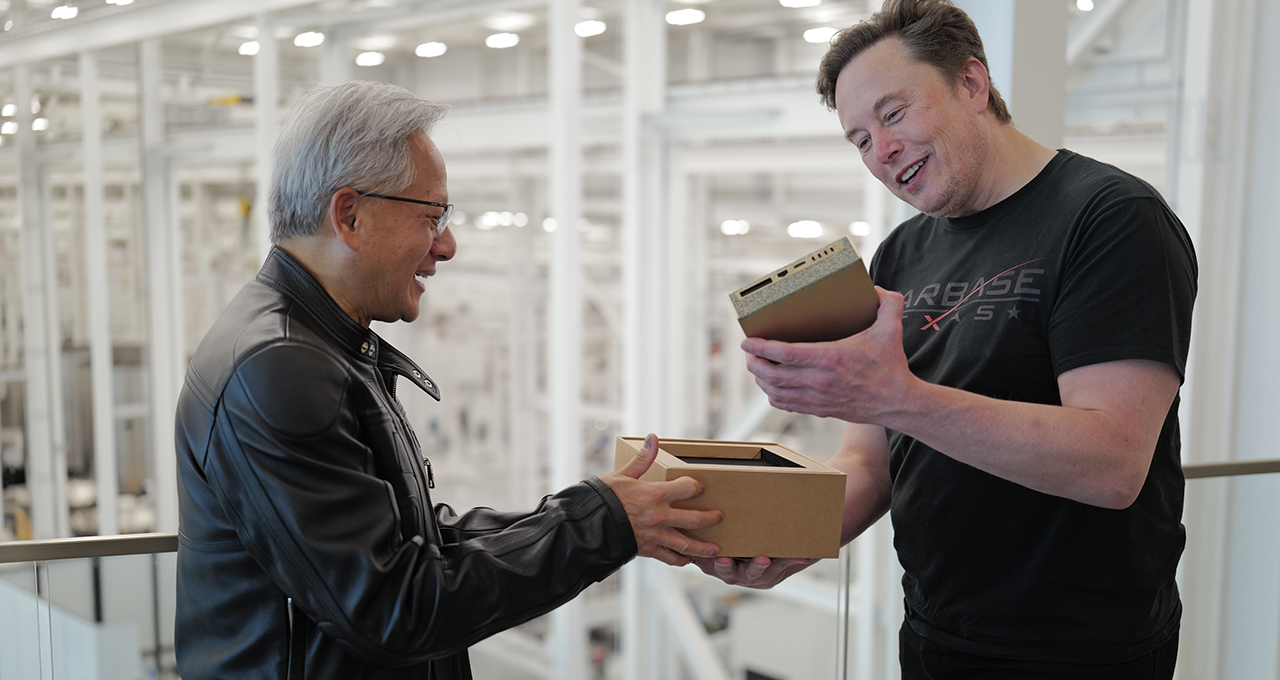
NVIDIA CEO Jensen Huang
Valuation Tension Between Platforms and Products
Public markets increasingly reward recurring revenue and infrastructure positioning. Nvidia’s model aligns with that preference. Tesla’s valuation depends on proving that autonomy scales profitably within a manufacturing business. That proof remains incomplete, which keeps volatility elevated.
Index funds tracking the Nasdaq and S&P 500 respond to these narratives. Nvidia’s weight reflects confidence in demand visibility. Tesla’s weight reflects optionality balanced by uncertainty. Portfolio managers adjust exposure based on perceived execution risk.
This tension also shapes M&A interest. Platform assets attract strategic buyers. Product-centric autonomy bets face narrower exit paths.
Old Assumptions Versus New Economic Reality
| Old Way | New Way |
|---|---|
| Autonomy as a vehicle feature | Autonomy as a compute platform |
| Hardware margins drive value | Software and inference economics drive value |
| OEM ownership of upside | Platform capture of recurring revenue |
Regulatory Gatekeeping Tightens
Transportation regulators in the United States and Europe now demand clearer accountability for autonomous failures. Tesla’s direct control simplifies attribution but heightens responsibility. Nvidia’s indirect role shifts compliance obligations to customers while maintaining influence over system design.
Competition authorities monitor platform concentration. Nvidia’s growing presence across sectors raises questions about dependency and pricing power. Tesla’s integrated model raises concerns about market foreclosure if autonomy becomes proprietary.
These pressures translate into compliance cost and strategic constraint. Neither path escapes oversight.
Funding Conditions Shape Strategic Freedom
Higher interest rates increase the cost of long-horizon bets. Tesla funds autonomy internally, tying progress to operating cash flow. Nvidia benefits from upfront demand commitments from customers, reducing capital strain. Central bank policy therefore affects these rivals asymmetrically.
Sovereign wealth funds and pension investors favor predictable infrastructure returns. Nvidia’s profile aligns more closely with those mandates. Tesla attracts growth-oriented capital willing to accept volatility. The investor base itself becomes a strategic factor.
Private markets mirror this split. Startups building on Nvidia platforms secure funding more easily than vertically integrated challengers. That dynamic reinforces Nvidia’s ecosystem advantage.
Second-Order Effects Across Industries
Logistics firms, robotics startups, and industrial automation players watch this contest closely. Their procurement choices lock in cost structures for years. Selecting a platform provider shifts bargaining power. Building proprietary stacks raises barriers.
Insurers pricing fleet risk evaluate autonomy maturity differently depending on architecture. Integrated systems promise consistency. Platform-based systems promise rapid iteration. Premiums reflect these assessments.
Labor markets also respond. Engineers gravitate toward platforms with broad impact. Talent concentration reinforces competitive momentum.
Exchange and Index Implications
Movements in Tesla and Nvidia shares influence broader market sentiment. Options markets price volatility differently for each. Tesla carries higher implied volatility, reflecting binary outcomes. Nvidia trades with lower implied risk, reflecting diversified demand.
These signals guide hedge funds and institutional allocators. Capital flows reinforce strategic narratives. Market structure thus feeds back into corporate decision-making.
Governance and Board Accountability
Tesla’s board must justify continued autonomy spend amid uneven monetization. Nvidia’s board must manage platform dominance without triggering regulatory backlash. Both face scrutiny, though from different angles.
Shareholder activism remains more likely at product-centric firms with volatile earnings. Platform firms face policy-driven risk instead. Governance frameworks adapt accordingly.
Executive compensation also reflects these dynamics. Long-term incentives tie leaders to strategic bets whose payoff horizons differ sharply.
Competitive Responses Multiply
Traditional automakers reassess build-versus-buy decisions. Some retreat from autonomy ambition. Others double down. Each response affects supplier ecosystems and capital allocation.
Technology firms outside automotive see opportunity. Cloud providers, semiconductor rivals, and AI startups position themselves as alternatives or complements. Competition widens beyond the original players.
The result is a fragmented but consequential contest over who owns the economics of autonomy.
Authority Close
For boards and executives, the lesson is not about who leads in self-driving demonstrations. It is about who controls monetization pathways, liability exposure, and capital efficiency. Strategy must align with funding realities and regulatory tolerance.
Investors should evaluate autonomy narratives through the lens of economic capture rather than technical promise. Platform control offers resilience. Vertical integration offers upside with risk. Institutional capital will favor the model that converts autonomy into durable cash flow without regulatory rupture.