
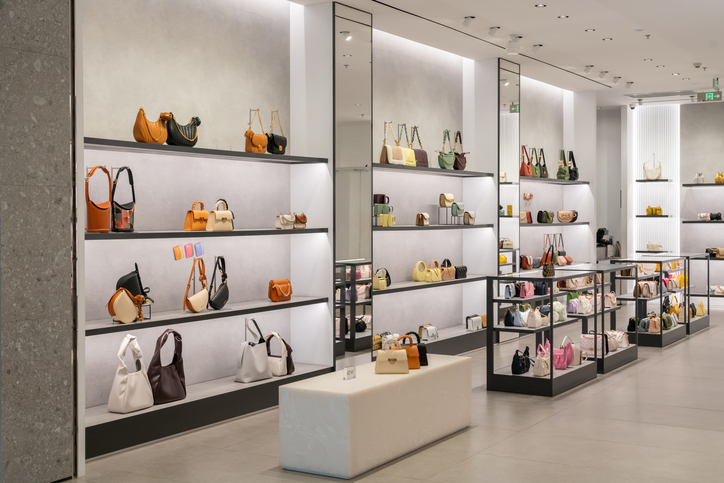
Saks Global: Ownership, Value, and Leadership Amid a Luxury Retail Shake-Up
Saks Global, the conglomerate behind Saks Fifth Avenue, Neiman Marcus, and Bergdorf Goodman, has emerged as one of the most prominent players in U.S. luxury retail. The company’s portfolio spans iconic department stores that have long defined the high-end shopping experience, combining prime real estate, prestige branding, and an affluent customer base.
In January 2026, Saks Global filed for Chapter 11 bankruptcy protection in the United States, a move that underscores the financial and operational challenges facing large, private luxury retailers. This filing allows the company to continue operating while renegotiating debt obligations, managing operational costs, and stabilizing its business. While the brand remains valuable in cultural and commercial terms, its financial structure requires careful management amid declining revenues and heavy debt from prior mergers and acquisitions.
Ownership Structure and Valuation
Saks Global is privately owned, following a merger in 2024 that brought together Saks Fifth Avenue and Neiman Marcus under a single corporate umbrella. The merger also included the flagship New York store, Bergdorf Goodman. The transaction was valued at approximately $2.7 billion, with financing structured through a combination of debt and private investment.
While the company does not disclose full financial statements due to its private status, analysts estimate that the underlying real estate holdings alone could be worth around $4 billion, given the prime locations of its flagship stores and associated properties. However, these assets are heavily leveraged, and the ongoing debt service has been a significant strain on cash flow.
Following the merger, the company carried billions in debt, and this leverage has been central to the recent bankruptcy proceedings. Revenue pressures, coupled with operational costs and interest payments, have eroded profitability, even as the brands maintain strong recognition and customer loyalty.
Financial Performance and Earnings
Though exact revenue figures are not publicly available, industry reporting provides insight into the company’s financial performance:
-
Sales Trends: Post-merger, the company experienced a decline in revenue, with reports indicating a drop of approximately 13% in mid-2025 compared to prior periods.
-
Net Losses: Heavy debt servicing and integration costs contributed to significant net losses, with one estimate indicating a $288 million net loss for the year leading up to bankruptcy discussions.
-
Debt Obligations: The company missed a key bond interest payment exceeding $100 million in late 2025, accelerating the need for bankruptcy protection and restructuring.
The financial strain illustrates that even with strong brand equity, the burden of leveraged acquisitions and complex operational integration can outweigh the inherent value of the stores’ customer base and real estate holdings.
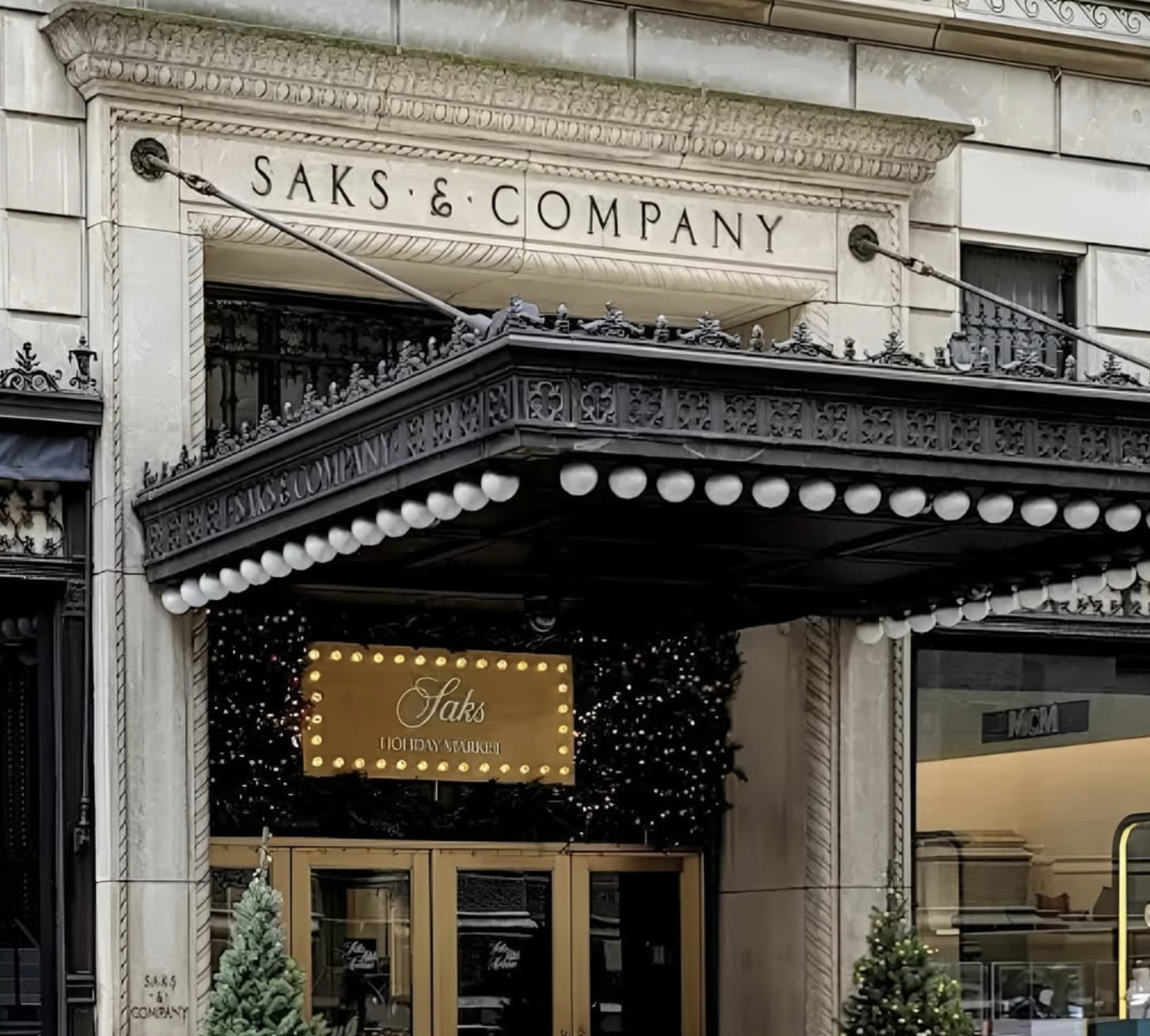
Bankruptcy and Restructuring Strategy
The Chapter 11 filing allows Saks Global to operate while restructuring its obligations. To support day-to-day operations, the company secured approximately $1.75 billion in debtor-in-possession financing. This includes:
-
$1 billion specifically designated to maintain store operations and payroll.
-
Additional financing from lenders and bondholders to stabilize liquidity during restructuring.
This approach is designed to ensure continuity for employees, suppliers, and customers, while giving the company space to reorganize its debt, optimize operations, and position the brands for long-term sustainability.
Leadership Evolution
Saks Global has seen several executive changes as it navigates financial turbulence:
-
Marc Metrick, CEO for nearly a decade, stepped down in early 2026 amid the company’s mounting financial pressures. His tenure included significant expansion and efforts to modernize the stores, but also coincided with rising debt levels following the merger.
-
Richard Baker, a key investor and architect of the 2024 merger, briefly assumed the CEO role and also served as executive chairman. His tenure focused on overseeing restructuring strategy and liaising with creditors.
-
Geoffroy van Raemdonck, formerly CEO of Neiman Marcus, was appointed as the new CEO of Saks Global. Van Raemdonck brings extensive luxury retail experience, including experience guiding Neiman Marcus through prior financial and operational challenges. His leadership marks a shift toward stabilizing operations, optimizing the customer experience, and restoring profitability.
These leadership changes highlight a broader trend in luxury retail: prioritizing executives who combine operational expertise with an ability to maintain brand prestige while managing financial obligations.
Operational Challenges and Market Context
Saks Global’s struggles are part of a larger context in U.S. luxury retail. Department stores face structural headwinds including:
-
Changing consumer behavior: Shifts toward e-commerce and direct-to-consumer channels have reduced foot traffic in flagship stores.
-
High operational costs: Maintaining large, urban retail spaces with premium staffing and inventory is expensive.
-
Debt from acquisitions: Leveraged mergers have strained cash flow, limiting investment in modernization or customer experience initiatives.
Despite these pressures, Saks Global continues to benefit from strong brand recognition, prime retail locations, and loyalty among high-net-worth customers. These factors will be central to the company’s ability to restructure successfully.
Implications for Stakeholders
Employees: Stores are expected to remain open, with bankruptcy providing stability for payroll and benefits while the company reorganizes.
Customers: The Chapter 11 process is designed to ensure continuity of service, loyalty programs, and in-store experiences, preserving the customer relationship during financial restructuring.
Vendors and Suppliers: Financing arrangements aim to maintain supply chain relationships, securing payment and trust with luxury brands that stock the stores.
Investors and Creditors: The restructuring will determine long-term ownership stakes, potential asset sales, or capital injection, balancing debt obligations against the value of high-profile retail assets.
Conclusion
Saks Global’s Chapter 11 filing underscores a key lesson in luxury retail: brand heritage and prime real estate provide intrinsic value, but complex debt structures and evolving consumer behavior can significantly affect financial sustainability.
The company’s new leadership under Geoffroy van Raemdonck reflects a strategic pivot toward operational stabilization, customer experience focus, and long-term profitability. While earnings have been constrained by legacy obligations, the intrinsic value of the Saks, Neiman Marcus, and Bergdorf Goodman brands — alongside their real estate and loyal clientele — provides a foundation for recovery.
As the company navigates bankruptcy, its success will depend on balancing the prestige and experience that define its luxury positioning with the practical realities of modern retail economics.