The End of the Crypto Ghost: How HMRC’s New Data Engine Is Mapping Britain’s Hidden Billions
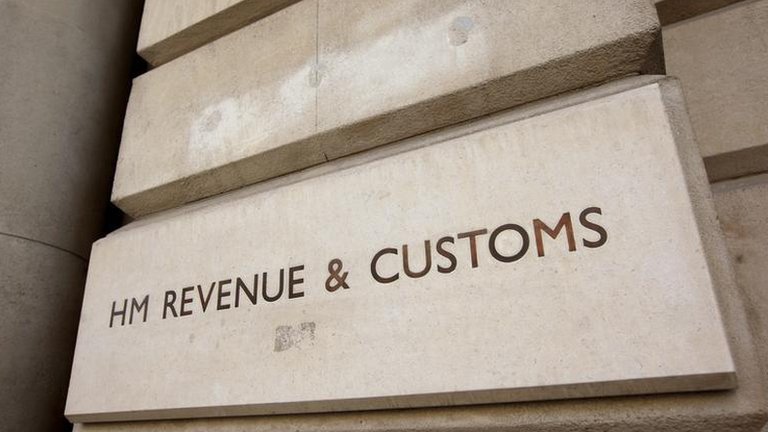
HM Revenue & Customs (HMRC) and the OECD have officially dismantled the digital curtain that once shielded billions in private crypto wealth.
As of January 1, 2026, the launch of the Cryptoasset Reporting Framework (CARF) has forced 48 nations—led by the UK—to treat digital wallets with the same transparency as traditional bank accounts.
For years, crypto investors operated under the assumption that the blockchain's pseudonymity provided a permanent buffer against state oversight.
That leverage has vanished. Under new statutory regulations, every UK-based exchange must now feed transaction data, purchase prices, and wallet addresses directly into HMRC’s central auditing systems.
The commercial consequence of this automated "dragnet" is a massive correction in the risk-reward ratio for digital asset holdings. Public filings and government briefings indicate that the UK Treasury expects to claw back up to £315 million in previously undeclared tax revenue by 2030.
This is no longer about "nudge letters" or polite reminders sent to a few thousand high-volume traders. It is a fundamental shift in market mechanics where the state now holds a superior informational position to the taxpayer.
By the time the international data-sharing window opens in 2027, the "tax gap" that allowed investors to swap tokens or spend crypto in secret will have been permanently sealed.
The Algorithm Over the Audit: Why Manual Evasion No Longer Scales
Leverage has shifted from the individual trader to the institutional algorithm. In the previous decade, HMRC relied on "nudge letters"—sending nearly 65,000 inquiries in the 2024–25 tax year alone—to encourage voluntary disclosure.
This was a labor-intensive, human-led process that gave the savvy investor time to navigate gray areas. Today, that manual approach has been replaced by an automated XML-based reporting schema.
Platforms are now legally mandated to collect National Insurance numbers and verified Taxpayer Identification Numbers (TINs) before a single trade can be executed.
In this new environment, the "ghost investor"—the individual who moved wealth between decentralized protocols and centralized exchanges without a paper trail—is effectively extinct.
According to tax investigation experts at Price Bailey, the integration of exchange data with HMRC’s advanced analytics allows the state to spot inconsistencies in real-time.
If an investor's lifestyle or bank deposits do not align with their declared crypto disposals, the system flags the discrepancy before a human auditor even opens the file.
This technological parity means that the primary cost for investors is no longer just the tax itself, but the "compliance friction" that now accompanies every move of capital.
The Geopolitical Arbitrage: How Capital Flees the High-Transparency Zone
The immediate result of the UK’s aggressive implementation of CARF is the creation of a tiered global financial map.
While the United Kingdom and the United States have solidified their positions as the primary enforcers of digital transparency through their September 2025 joint task force, other jurisdictions are playing a longer, more opportunistic game.
Leverage is currently flowing toward "wait-and-see" hubs like Singapore, Switzerland, and the United Arab Emirates. While these regions have signed the OECD agreement, they have strategically delayed their reporting start dates.
This gap in timing creates a window for institutional capital flight. Large-scale holders of digital assets are not necessarily looking to evade taxes permanently, but they are looking to avoid the administrative entanglement of a system that is still in its "beta" phase of enforcement.
For a London-based hedge fund, the cost of staying in a CARF-compliant environment includes not only the taxes owed but the massive legal overhead required to ensure every fractional token swap is reported with 100% accuracy. By moving operations to Dubai or Hong Kong, these entities gain a three-to-five-year lead time where their capital remains "dark" to the automated systems of HMRC.
The Death of the "Young Equities" Alternative
In early 2024, Lisa Gordon of Cavendish Investment Bank warned that young investors were favoring digital assets over traditional equities specifically because of the perceived lack of friction and oversight.
For a generation that viewed the stock market as over-regulated and under-performing, crypto was the ultimate leverage tool. It allowed for rapid capital accumulation without the "middle-man tax" of traditional brokerage reporting.
HMRC has now effectively killed this narrative. By imposing stricter tax on purchases and mandating automated data collection, the UK government has leveled the playing field between digital assets and traditional stocks.
Public filings from the Treasury indicate that by treating crypto gains with the same severity as capital gains from real estate or blue-chip stocks, the government is reclaiming its role as the primary stakeholder in private wealth creation. The state no longer asks for a seat at the table; it owns the ledger.
The Joint Task Force and the End of the Offshore Haven
If the OECD’s framework is the net, the joint task force between the United Kingdom and the United States is the anchor. This partnership, formed in late 2025, marks a significant shift in how "offshore" wealth is perceived.
Historically, an investor could move gains from a UK exchange to a US-based platform to obfuscate the trail. The new collaborative mandate ensures that the IRS and HMRC share data with a level of fluidity never before seen in the financial sector.
This cooperation has stripped the commercial leverage away from companies that specialized in "privacy-preserving" financial services.
The joint task force is specifically targeting the intersection of anti-money laundering (AML) and tax compliance. For the business owner, this means the cost of international expansion has effectively doubled. A startup can no longer just worry about UK regulations; it must build its infrastructure to satisfy the IRS simultaneously.
The Compliance Chasm: The £300 Penalty Reality
The most immediate commercial friction is no longer the volatility of Bitcoin, but the administrative weight of the Cryptoasset Reporting Framework (CARF). As of January 2026, the cost of "being wrong" has been quantified.
HMRC has established a £300 penalty for every user whose data is inaccurate, incomplete, or unverified. For a mid-tier exchange with 50,000 active UK users, a systemic error in a single reporting cycle now carries a theoretical liability of £15 million—a figure that could wipe out annual profit margins.
This "compliance chasm" is fundamentally altering who can afford to compete in the British market. Leverage has moved away from the scrappy startups that defined the early crypto era and toward well-capitalized "Reporting Cryptoasset Service Providers" (RCASPs) that can afford the estimated £800,000 annual cost of maintaining these automated systems.
By the time the first international data exchange takes place in 2027, the commercial consequence will be a consolidated market where only a handful of legally resilient "super-exchanges" remain.
The Institutional Pivot: Re-Centralizing the Dream
While retail investors face increased scrutiny, the institutional sector is gaining leverage through a different avenue: the integration of stablecoins into the regulated financial perimeter. Government briefings from late 2025 indicate that the Treasury is backing a move to bring "systemic stablecoins" into the same regulatory scope as traditional banking products.
This creates a massive commercial advantage for legacy banks that can offer "tokenized" versions of the pound. These institutions already possess the CARF-compliant reporting infrastructure and the trust of the regulator. As a result, we are seeing a "re-centralization" of the crypto dream. The original promise of a decentralized financial world is being replaced by a state-integrated model where digital assets are simply another asset class within a high-transparency ledger.
The 20-Year Reach: Why Voluntary Disclosure is the Only Exit
The long-term commercial consequence of the HMRC-IRS joint task force is the elimination of the "statute of limitations" in the mind of the investor. Under the new regime, HMRC has the power to assess up to 20 years of historical gains in cases where they can prove deliberate non-compliance.
This isn't just a threat; it is a business strategy for the Treasury, which expects CARF to raise £315 million by 2030 to fund public services like the NHS.
The state has successfully created a "compulsory transparency" model. By the end of 2026, the choice for investors will be binary: either make an "unprompted" voluntary disclosure to secure lower penalties or wait for the automated CARF data to trigger a "prompted" investigation in 2027.
The leverage now rests entirely with the Revenue, which no longer needs to hunt for data; they simply need to wait for the electronic report to arrive on their dashboard.
FAQs: People Also Ask
-
What is the new UK crypto tax law for 2026? From January 1, 2026, the UK has implemented the Cryptoasset Reporting Framework (CARF), requiring exchanges to report user transaction data, National Insurance numbers, and gains directly to HMRC.
-
How much is the penalty for not reporting crypto in the UK? Individual users and service providers can face penalties of £300 for failing to provide accurate data, with additional fines of up to 100% of the unpaid tax for deliberate non-disclosure.
-
Will HMRC know if I use an offshore crypto exchange? Yes. Starting in 2027, the UK will automatically share and receive crypto tax data with 47 other countries, including hubs like Singapore and Switzerland, under the OECD's CARF agreement.
-
Do I have to pay tax on crypto-to-crypto swaps in the UK? Yes. HMRC treats the exchange of one cryptocurrency for another as a "disposal," which is a taxable event subject to Capital Gains Tax.
-
What is the £800k compliance cost mentioned for crypto firms? HMRC estimates that UK-based crypto service providers will spend an average of £800,000 annually to implement the automated systems required for the new reporting mandates.
-
Is there a way to voluntarily disclose past crypto gains to HMRC? Yes, taxpayers can use the HMRC digital disclosure service. Making an "unprompted" disclosure typically results in significantly lower penalties than waiting for an investigation.
Related: 👉👉 Top Crypto Billionaires 2026: Who Owns the Future of Money 👈👈