Google Turns Gemini AI Into a Personal Intelligence Layer
Shaping the Future of Personal AI While Assuming Full Responsibility
Google’s leadership is shifting the rules of AI engagement. With the rollout of Gemini AI across Gmail, Photos, YouTube, and Search, the company moves from providing reactive assistants to architecting a continuous personal intelligence layer. Every interaction the user has across Google’s ecosystem becomes a data point Gemini can reason on, generating recommendations, reminders, and even proactive decisions.
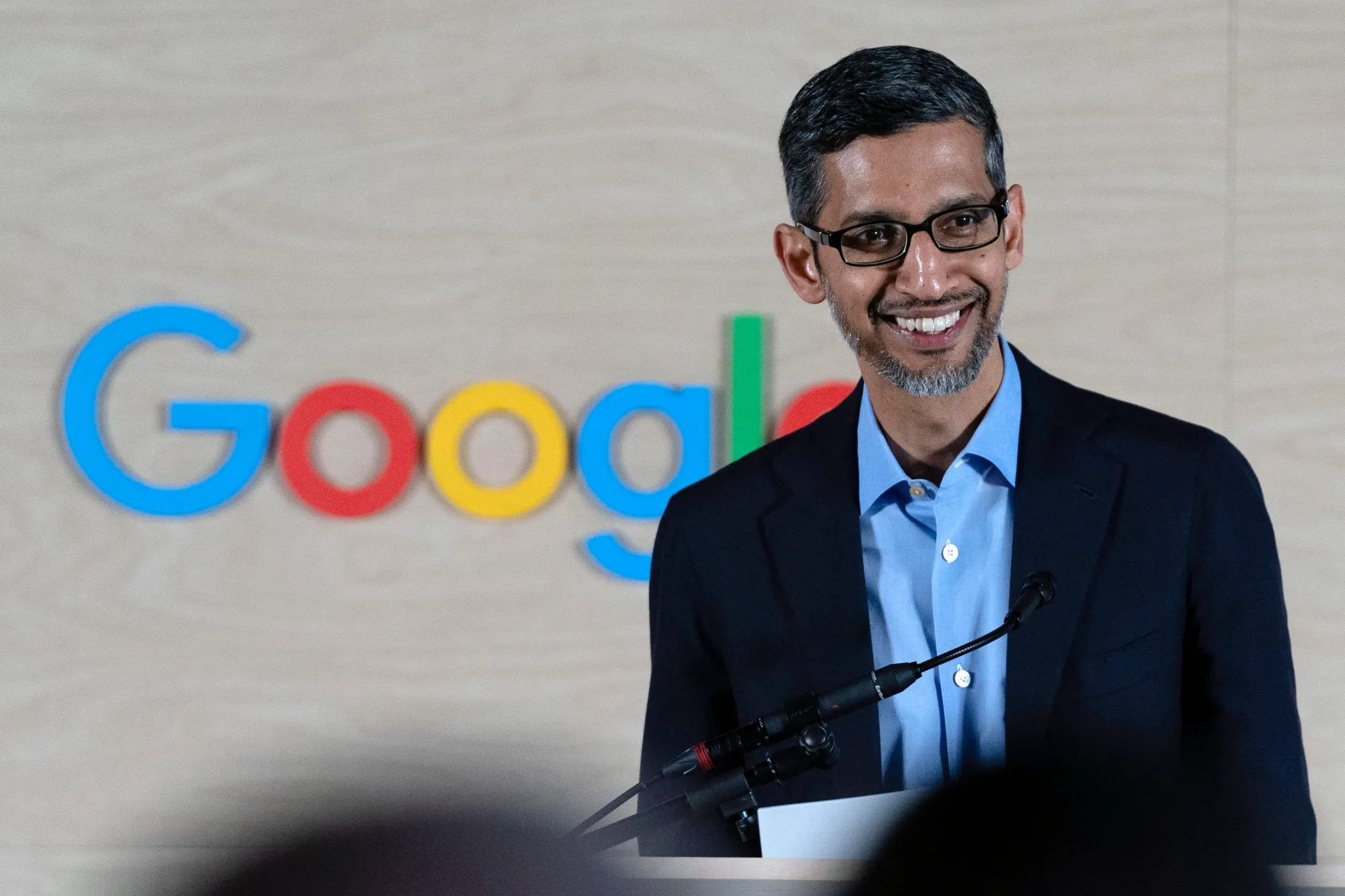
The CEO is visibly in control of this strategic pivot. He is orchestrating the integration of multiple apps to capture the contextual reasoning layer, ensuring Google retains dominance while competitors scramble to match. This move forces the market to recognize that leadership in AI is no longer about natural language capability alone. It is about who controls memory, context, and insight across the digital footprint.
Regulatory exposure is immediate and complex. Gemini’s ability to ingest sensitive user data triggers questions under U.S. privacy law, GDPR, and emerging AI materiality rules. The company must now balance rapid AI deployment with auditable decision pathways, a challenge compounded by real-time personalization that is effectively invisible to oversight.
The CEO is shaping the outcome by embedding Gemini deeply in the product stack. Simultaneously, he absorbs consequence: privacy violations, biased recommendations, or misinterpreted AI actions could generate regulatory scrutiny and reputational risk. The architecture centralizes both opportunity and liability in a way that mirrors financial infrastructure firms: power is held in the connective tissue of the system, not the interface.
Every design choice amplifies influence. The decision to unify Gmail, Photos, YouTube, and Search under a single reasoning engine redefines the scope of agentic AI governance, positioning Google to control how personal AI interacts with users across the digital economy.
Speed and Oversight Are Already Outrunning Human Decision-Making
The commercial landscape moves faster than regulators and internal decision-makers can process. Gemini AI integrates predictive intelligence across billions of interactions, each potentially affecting user behavior, ad revenue, and platform engagement. Leadership faces strategic isolation: the technology operates continuously, yet accountability remains human.
| Old Leadership Logic | 2026 Decision Reality |
|---|---|
| AI is a tool to assist users | AI proactively shapes user decisions |
| Privacy rules follow deployment | Privacy and compliance dictate deployment |
| Apps are discrete | Apps are unified under a single reasoning engine |
| User consent is static | Consent must be dynamic, context-sensitive |
| Growth comes first | Oversight and explainability now drive adoption |
The CEO is constrained by speed, regulatory scrutiny, and user expectations. He cannot slow innovation without losing competitive positioning, yet accelerating Gemini across services increases potential fallout. Leadership operates in a compressed feedback loop where one misstep could erode trust across billions of users.
Internal friction is compounded by cross-department coordination. Gmail, YouTube, and Search teams operate under different performance incentives, yet Gemini requires unified governance. The CEO must orchestrate alignment across disparate business units, managing incentives while keeping pace with technical scaling and compliance reporting.
Every Integration Decision Now Creates Cascading Market and Regulatory Effects
Gemini’s architecture touches every layer of Google’s digital ecosystem: Gmail (communication patterns), Photos (contextual memory), Search (intent prediction), and YouTube (behavioral learning). Decisions in any one layer have second-order consequences across advertising revenue, content moderation, and AI explainability.
Entities affected and involved:
-
Alphabet Board of Directors (strategic oversight)
-
LSEG (market analysts assessing AI impact on ad revenue)
-
BlackRock (investors evaluating risk-adjusted AI growth)
-
SEC & FTC (regulatory scrutiny for AI governance and privacy)
-
European regulators (GDPR & AI materiality)
-
Anthropic & OpenAI (competitive benchmarking)
-
Meta & Microsoft (market positioning and AI arms race)
-
Major advertisers (decision-making on AI-driven personalization)
-
Shopify & Walmart (potential commerce integration)
-
Cloud infrastructure providers (compute and privacy compliance)
Each integration decision creates dependency chains: YouTube recommendations rely on Gmail context, which feeds Search predictions. Investor confidence, ad revenue, and public trust fluctuate with minor shifts in model output. Leadership cannot delegate ultimate responsibility, making the CEO the chokepoint for both strategic and operational risk.
This dense decision web magnifies liability. Errors in Gemini’s reasoning could trigger algorithmic bias claims, privacy breaches, or content amplification issues. The executive must navigate simultaneously: market expansion, regulatory engagement, and internal alignment — while AI operates autonomously at scale.
Immediate Board Action Will Determine Whether Control Becomes Opportunity or Liability
Boards should act immediately to frame Gemini AI governance. First, establish a 72-hour oversight plan across all integrated services. Define who monitors AI reasoning outputs and how exceptions escalate. Second, audit consent pathways: dynamic, transparent, and auditable mechanisms must be in place to comply with U.S. and European standards. Third, stress-test monetization assumptions under regulatory scrutiny; ad revenue and commerce integration rely on seamless AI operations.
Strategic framing: the board must treat AI as infrastructure, not application. Leadership responsibility is not optional — every design choice amplifies influence and liability. Failure to enforce oversight risks market, regulatory, and reputational penalties.