
David Ellison’s Paramount–Warner Gambit: When Capital Certainty Collides With Regulatory Gravity
In today’s media industry, power no longer rests with studios that tell the best stories.
It rests with those who can finance scale fast enough to satisfy markets while surviving regulatory drag.
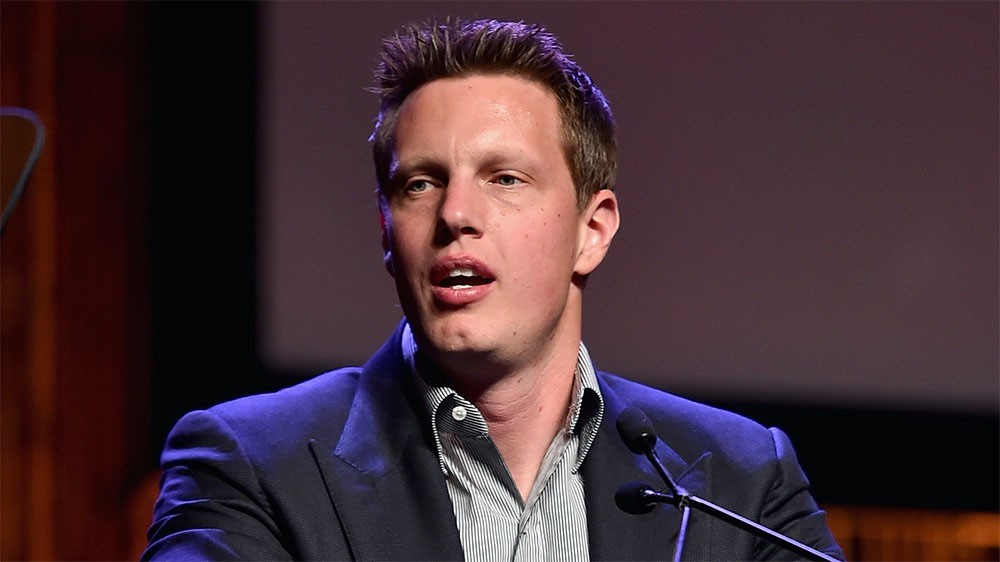
David Ellison, CEO of Paramount Global, understands this shift. His pursuit of Warner Bros. Discovery is not an act of creative ambition or executive bravado. It is a response to a compressed set of constraints that now define leadership at the top of global media companies: rising capital costs, streaming margin pressure, and regulatory systems that move more slowly than markets — but retain ultimate veto power. That reality helps explain why Ellison has moved beyond boardrooms and investor calls, engaging directly with political leadership, including a recent meeting with the UK prime minister as regulatory scrutiny of global media consolidation intensifies.
A Power Shift Defined by Capital, Not Content
For decades, consolidation in media was justified by creative scale. Bigger studios meant stronger negotiating power with talent, distributors, and advertisers. That logic has eroded.
Today’s consolidation is defensive. Streaming economics have shifted from subscriber growth to profitability. Content spending remains high, but tolerance for prolonged losses has collapsed. Investors are no longer patient with scale that cannot fund itself.
Ellison’s approach reflects this new reality. Paramount’s interest in Warner Bros. Discovery is rooted in capital certainty rather than creative integration. The objective is to stabilize cash flow, strengthen balance-sheet resilience, and compete in a market where Netflix’s self-funded model has reset expectations.
This reframes the power dynamic. Boards no longer ask which studio has the best intellectual property. They ask which structure can survive refinancing cycles, regulatory scrutiny, and market volatility simultaneously.
Ellison is gaining influence in one arena—capital markets—while encountering resistance in another: regulatory governance.
Why Regulatory Engagement Became Strategic, Not Symbolic
Ellison’s meeting with the UK culture secretary in London did not occur in a vacuum. It came amid heightened scrutiny of global media consolidation and increasing sensitivity to cultural plurality, competition, and national influence.
The UK has positioned itself as more than a passive observer in global media deals. The Competition and Markets Authority has shown a willingness to assert jurisdiction where cultural impact intersects with market structure. In parallel, European regulators continue to examine how consolidation affects local content ecosystems and consumer choice.
Ellison’s outreach reflects an understanding that regulatory approval is no longer a procedural hurdle. It is a strategic domain requiring early engagement and political fluency.
This does not imply regulatory capture or undue influence. It signals acknowledgment of constraint. Modern CEOs must now operate in public-policy environments where silence is interpreted as indifference and engagement as risk mitigation.
The reputational exposure here is subtle but real. Political meetings elevate visibility. They also raise expectations. A CEO who enters the regulatory conversation becomes accountable not just for outcomes, but for process.
The Boardroom Dilemma at Warner Bros. Discovery
For Warner Bros. Discovery’s board, the situation is equally constrained. Rejecting Paramount’s advances preserves independence but prolongs exposure to market skepticism. Accepting them introduces regulatory complexity and shifts control.
This is not a binary choice between value creation and value destruction. It is a choice between competing risks.
On one side lies the risk of stagnation. Public markets have punished media companies that cannot demonstrate a credible path to sustainable profitability. On the other lies execution risk: regulatory delay, integration challenges, and loss of strategic autonomy.
Ellison’s proposal, backed by significant financing assurances, attempts to reduce one category of risk—funding uncertainty—while necessarily increasing another: regulatory exposure.
Boards in this position are not obstructive by default. They are fiduciaries operating under heightened scrutiny, aware that both action and inaction carry consequence.
The Significance of Financing Certainty
One of the most consequential elements of this pursuit is the emphasis on financing credibility. The involvement of Larry Ellison, through personal guarantees, is not symbolic. It addresses a core vulnerability in large-scale media transactions: deal certainty.
In recent years, regulators and boards alike have become more skeptical of ambitious acquisitions built on optimistic financing assumptions. Rising interest rates and volatile credit markets have exposed deals that looked sound on paper but fragile in execution.
Personal backing from a billionaire founder does not eliminate risk, but it changes its profile. It signals commitment. It also invites deeper scrutiny.
Regulators must now consider not just corporate balance sheets, but governance boundaries between personal wealth and institutional control. That scrutiny is procedural, not punitive—but it lengthens timelines.
Ellison’s strategy here is not reckless. It is calculated. He is trading speed for certainty, accepting regulatory friction as the price of financial credibility.
Why This Deal Matters Beyond Paramount and Warner
The implications extend beyond the two companies involved. This potential consolidation is being watched closely by competitors, investors, and regulators because it sets precedent.
If successful, it may normalize greater personal financial involvement by founders and controlling figures in large acquisitions. That would alter expectations around CEO accountability and board oversight.
If it fails, it reinforces regulatory skepticism toward scale-driven consolidation in media, slowing similar ambitions elsewhere.
Netflix, Comcast, and international broadcasters are observing closely—not because they are direct participants, but because the outcome will shape their own strategic options.
Markets respond to precedent as much as performance.
The CEO’s Constraint: Authority Without Autonomy
Ellison’s position illustrates a defining tension of modern corporate leadership. Authority has increased. Autonomy has not.
CEOs today command vast resources and global visibility. Yet their room to maneuver is increasingly bounded by regulators, investors, and public scrutiny. Decisions must be made faster, with less certainty, and under conditions where delay itself becomes a liability.
This is not a failure of leadership. It is a structural reality.
Ellison is not attempting to overpower institutions. He is navigating them. His actions—capital commitments, political engagement, and strategic signaling—reflect an effort to align multiple systems that rarely move in unison.
Timing as the Ultimate Risk Factor
The greatest threat to this deal is not rejection. It is delay.
Markets price time aggressively. Regulatory processes do not. Every extension erodes the economic rationale for consolidation, particularly in sectors where technology and consumer behavior evolve rapidly.
Ellison’s challenge is to sustain momentum without appearing coercive. To demonstrate cooperation without conceding strategic intent. To move fast enough to satisfy investors, but slow enough to satisfy regulators.
Few executives operate comfortably in that space.
What Boards Should Be Asking Now
For boards observing this situation — whether directly involved or facing similar pressures — the lesson is not about deal structure alone. It is about preparation for a governance environment where political engagement has become inseparable from transaction risk. When a CEO’s agenda extends to meetings with heads of government, including the UK prime minister, it signals that regulatory outcomes are no longer managed at arm’s length from leadership.
Boards must stress-test not only financial models, but regulatory pathways across jurisdictions. They must assess whether leadership teams are equipped to engage governments as fluently as markets, and whether those engagements are coordinated, documented, and aligned with fiduciary duties. Personal financial commitments can stabilize deal credibility, but they also introduce governance questions that cannot be deferred once political visibility increases.
Most importantly, boards must resist framing these moments as moral judgments of CEOs. This is not a debate about boldness versus caution. It is about operating under constraint, where market expectations move faster than regulatory systems, and where political access has become a practical component of strategic execution rather than a reputational footnote.
Conclusion: Leadership in the Age of Compressed Choices
David Ellison’s Paramount–Warner pursuit reflects the state of modern corporate leadership. Decisions are made with incomplete information, under public scrutiny, and against regulatory systems designed to slow exactly the kind of change markets reward.
This is not a story of overreach. It is a story of adaptation.
Ellison is neither conquering nor capitulating. He is responding to an environment where capital certainty, regulatory legitimacy, and strategic timing intersect—and often collide.
For CEOs watching from other sectors, the message is sobering but useful. The future belongs not to those with the most ambition, but to those who can navigate constraint without losing momentum.
In 2026, leadership is less about control than endurance.