
The Liquidity Shield: Why Tech’s Elite are Hedging Against the 2026 AI Infrastructure Reckoning
Jeff Bezos, Michael Dell, and the founders of CoreWeave have offloaded more than $19 billion in equity this year, creating a massive "liquidity shield" as the commercial reality of the AI boom begins to fracture.
While retail investors remain fixated on soaring GPU demand, the insiders who build the hardware and manage the data centers are racing toward the exits.
Public filings indicate that Bezos alone has liquidated $5.6 billion of Amazon stock, a move that coincides with his return to an operational role as co-CEO of Project Prometheus, a secretive $6.2 billion venture targeting the intersection of artificial intelligence and industrial manufacturing.
The exodus of capital is not limited to the founder of Amazon. Oracle’s Safra Catz and Nvidia’s Jensen Huang have executed significant divestments as the broader market grapples with what analysts describe as an "AI Capex hangover."
At Oracle, Catz’s $1.9 billion sale—representing a staggering two-thirds of her net worth—preceded her announced transition to an advisory role. This pattern suggests that the era of "passive" billionaire wealth is ending, replaced by a tactical scramble for liquidity to fund the next generation of hardware-heavy AI ventures.
The commercial consequence of this mass liquidation is a sudden vacuum in the stability of "Magnificent Seven" stocks.
As founders prioritize funding for private "Physical AI" startups—which focus on autonomous aerospace, robotics, and self-aware manufacturing systems—retail investors are being left to hold the bag of legacy tech companies facing ballooning debt and diminishing returns on AI infrastructure.
This isn't just a sell-off; it is a tactical retreat from the digital cloud into the physical world.
The 2026 Tech Liquidity Dashboard: Strategic Exits vs. Corporate Debt
| Insider Name | 2025 Stock Sold | % of Net Worth | Debt/Equity Ratio | Strategic Reallocation |
|---|---|---|---|---|
| Jeff Bezos | $5.6 Billion | 2.3% | 0.42 | Project Prometheus |
| Michael Dell | $2.2 Billion | 1.5% | 2.15 | Private Philanthropy |
| Safra Catz | $1.9 Billion | 67.8% | 4.80 | Advisory Pivot |
| Jensen Huang | $1.1 Billion | 0.7% | 0.18 | Robotics R&D |
| CoreWeave Founders | $1.2 Billion | 42.0% | 2.66 | Venture Hedging |
The Leverage Shift: From Digital Rents to Physical Dominance
In this new landscape, leverage has shifted away from the software-as-a-service (SaaS) models that defined the last decade. Those who own the physical means of production—the rockets, the automated assembly lines, and the proprietary energy grids—are gaining the upper hand.
Bezos’ pivot to Project Prometheus illustrates this perfectly. By siphoning billions from Amazon, he is moving from a business that manages digital transactions to one that builds the autonomous infrastructure of the 2030s. Amazon, once the disruptor, is now the piggy bank for its founder’s more ambitious, high-risk physical ventures.
The Capex Arms Race: Oracle’s $248 Billion Gamble
While Safra Catz has systematically reduced her personal exposure, Oracle’s corporate strategy has shifted into high-risk overdrive. Public filings indicate a staggering $248 billion in upcoming data center lease commitments—a figure that has surged as the company races to accommodate the compute hunger of partners like OpenAI.
This aggressive expansion comes at a perilous cost. Oracle recently increased its fiscal 2026 capital expenditure forecast by an additional $15 billion, bringing its total projected spend for the year to roughly $50 billion.
The commercial tension here is palpable: the company is doubling down on fixed assets while its leadership is liquidating liquid equity. This "all-in" bet on infrastructure is creating a massive divergence in leverage. While Catz holds the leverage of liquid cash, Oracle as an entity is becoming increasingly beholden to the debt markets.
If the anticipated 2026 revenue from AI-as-a-service fails to materialize or even plateaus, the company will be left with specialized, high-depreciation assets and a mountain of high-interest debt that cannot be easily restructured.
Public filings indicate that Oracle’s interest expenses are projected to hit $1.25 billion annually, a cost that must be serviced regardless of whether their AI cloud tenants remain solvent.
The leverage has shifted from the executive suite to the bondholders. In this environment, the "owner leverage" that Catz once wielded has been traded for the safety of the sidelines, leaving the remaining shareholders to shoulder the burden of a $248 billion lease liability that spans the next two decades.
The Denton Delay: When Physical Reality Hits the AI Cloud
The friction between digital promises and physical reality is most evident in the construction trenches. CoreWeave, once the darling of the AI hardware boom, recently saw its stock slide 50% from its peak as data center delays and debt uncertainty mounted.
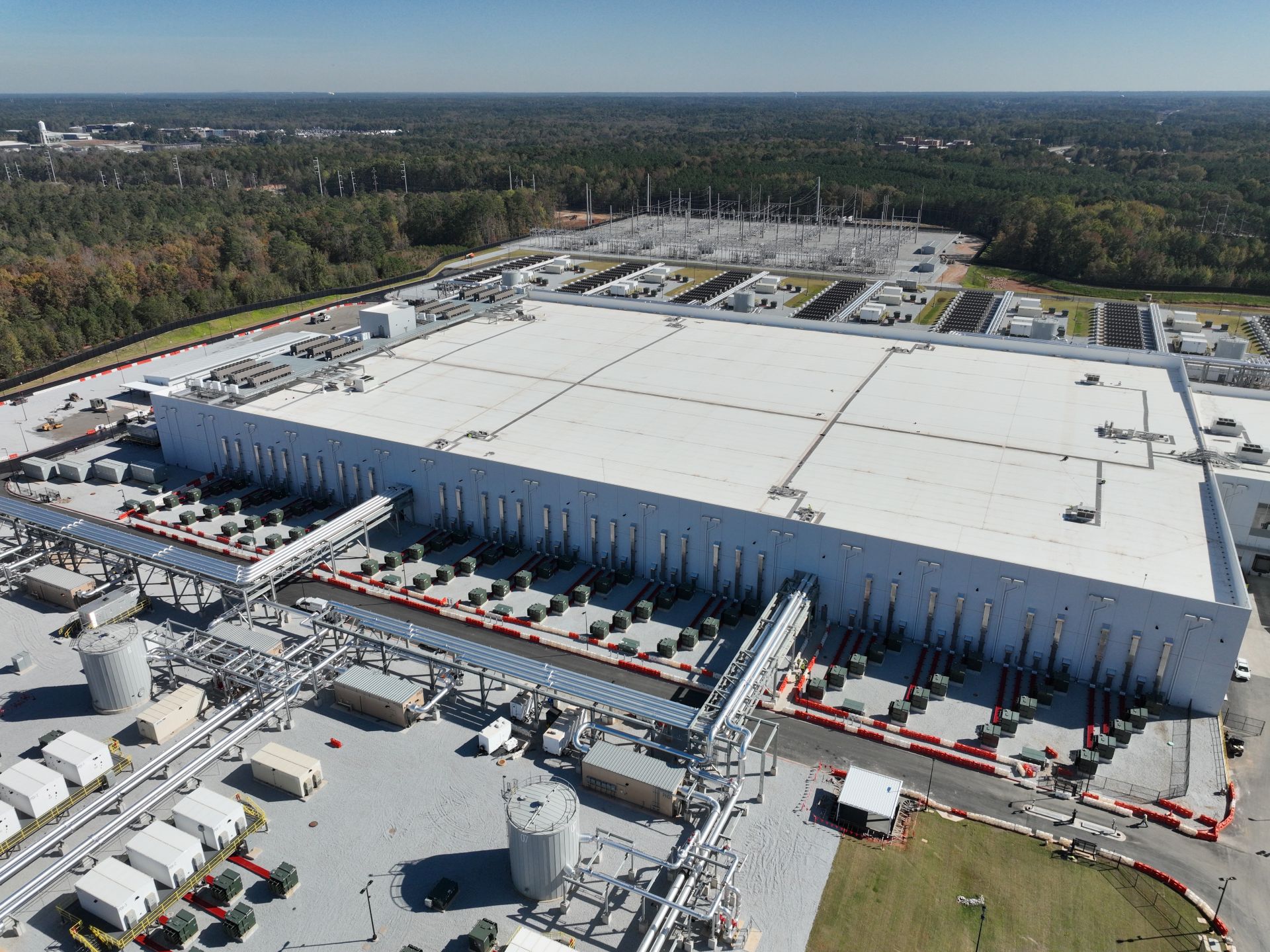
The primary catalyst was a significant delay at its flagship Denton data center complex, caused by grid-connection hurdles and supply-chain bottlenecks. For providers operating on razor-thin margins with massive interest expenses, a 60-day delay isn't just a nuisance—it’s a liquidity threat.
CoreWeave’s founders, including Michael Intrator and Brian Venturo, successfully offloaded nearly $1.2 billion in shares earlier in the year, effectively cashing out before these infrastructure bottlenecks became public knowledge.
The leverage in the specialized cloud sector has shifted entirely. In 2024, the founders held all the cards because they possessed the hardware that everyone from Microsoft to Meta was desperate to rent. However, as we move through 2026, the leverage has moved to the energy providers and the local governments who control the permitting process.
The founders recognized this shift early. Their decision to unload a massive percentage of their stakes suggests a lack of confidence in the "infinite scaling" narrative that originally drove their IPO valuation. They have secured their exit velocity, leaving public shareholders to navigate the volatility of the "physical buildout" phase of the AI cycle.
The Circular Capital Trap: Inside the AI Ecosystem’s Shadow
The most precarious commercial tension in the 2026 market is the rise of "circular capital," where the largest players in the tech industry are effectively manufacturing their own demand. A shadow looms over the sector as major players like Nvidia and Microsoft buy into each other’s ecosystems to prop up valuations.
Amazon’s multibillion-dollar commitments to fund OpenAI's cloud usage create an illusion of revenue growth that masks a deeper lack of free cash flow across the industry.
The leverage in this scenario has shifted dangerously toward the few companies that possess the cash to keep the circle spinning. However, for those on the outside, the risk is immense.
When Jensen Huang unloads $1.1 billion of Nvidia stock, he is securing his personal wealth against the possibility that this circular demand loop might break. If the startups at the end of the money chain fail to produce a profitable consumer product, the billions in "committed revenue" on the books of companies like Nvidia could vanish overnight.
This trap is the hidden catalyst behind the $19 billion liquidation trend. Founders are not just selling because the price is high; they are selling because they understand the quality of the revenue behind those prices.
As the "expense surge" for power and specialized cooling begins to eat into the margins of the providers, the ability to fund these circular deals diminishes. We are seeing a shift where "owner leverage" is being used to exit the digital loop before the market realizes that a significant portion of AI growth has been a self-funded illusion.
The Institutional Pivot: The Death of the "Buy and Hold" Founder
For decades, the gold standard of tech leadership was the "founder-holder"—the executive who kept the vast majority of their net worth tied to the company they built. But the 2025–2026 cycle has signaled the death of this tradition.
The scale of liquidations by leaders like Jayshree Ullal of Arista Networks ($1 billion) and David Baszucki of Roblox ($670 million) suggests that the "smart money" no longer believes in the indefinite growth of digital platforms.
This shift has profound implications for corporate governance. When a CEO like Safra Catz sells two-thirds of her net worth, her "skin in the game" is effectively removed.
Public filings indicate that as founder ownership drops, boardrooms become more susceptible to the demands of short-term activist investors. The leverage that once allowed a founder to take a ten-year view on a project is being replaced by a frantic, quarter-by-quarter survival instinct.
Ultimately, the mass exit of 2025 is an indictment of the current public market structure.
The founders are signaling that the "Magnificent Seven" and their peers have become too large, too indebted, and too reliant on hype to sustain their current valuations. By creating a "Liquidity Shield," these billionaires are preparing for a period of stagnation in the public sector, while they use their realized gains to corner the next market.
The reality of the 2026 tech economy is that the digital pioneers have already moved on. They are no longer building for the stock market; they are building for themselves.
FAQs: People Also Ask
-
Why did Jeff Bezos sell $5.6 billion in Amazon stock in 2025? Bezos is diversifying his wealth to fund Blue Origin and his new AI venture, Project Prometheus, which focuses on industrial engineering and "Physical AI."
-
What is Project Prometheus? It is a $6.2 billion AI startup co-led by Jeff Bezos and Vik Bajaj that aims to apply artificial intelligence to heavy industries like aerospace and automotive manufacturing.
-
Is there an AI bubble in 2026? While demand is high, many insiders are selling due to "Capex hangovers" and the high debt loads required to build data centers, alongside data center delays.
-
Why did Safra Catz sell two-thirds of her net worth? Catz sold $1.9 billion in Oracle stock ahead of her transition to an advisory role, capitalizing on record-high share prices driven by AI data center projections.
-
How much did CoreWeave founders cash out? Founders and board members like Michael Intrator, Brian Venturo, and Jack Cogen sold over $1.2 billion in shares combined following the company's IPO.
-
What is the "Circular Capital" risk in AI? It is a situation where tech giants invest in startups that then use that money to buy the investors' products, artificially inflating revenue growth.
-
Who sold the most tech stock in 2025? Jeff Bezos topped the list with $5.6 billion in sales, followed by Michael Dell at $2.2 billion and Safra Catz at $1.9 billion.