
By Volha Hurskaya
The Best Entrepreneur awardee and IEEE Senior Member shares insights on expanding a self-funded international business, revealing the real price of corporate stagnation, and recognizing the value of focused execution, an often-overlooked key to business growth.
Across the world, the push for digital transformation continues to gather momentum, with the market expected to hit $3.28 trillion by 2030, Research and Markets predicts. Yet, the more money companies pour into digital upgrades, the fewer results they see: productivity declines, projects fail, and confusion sets in.
The consequences are enormous: billions are lost to slow processes, duplicated systems, and digital projects that do not make a difference. In many companies, technology is developing faster than structure, culture, or accountability can handle. This is what Sergiu Metgher calls digital atrophy, a situation where even the best systems lose efficiency and create more problems instead of solving them.
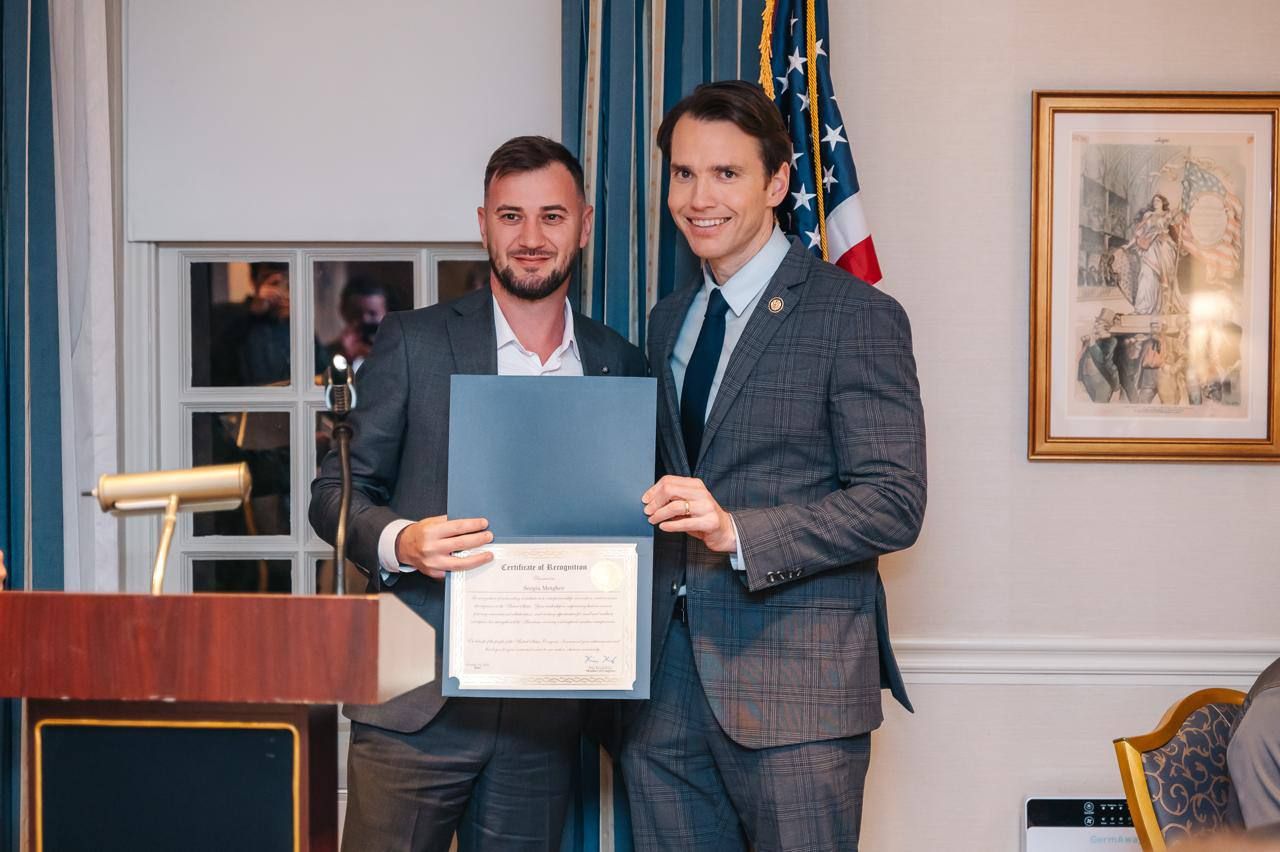
For Sergiu, the founder and CEO of ReignCode, digital atrophy is an emerging threat to the modern business landscape. Born in Moldova, he has spent over 10 years digging into why successful companies fail. His unique journey spans law, engineering principles, and the emerging field of AI governance. Before turning ReignCode into a global IT consulting firm, he studied legal and technical systems, later expanding his knowledge through executive studies at Harvard Business School, Stanford Graduate School of Business, and MIT Sloan. That mix of disciplines, thus, led to broader recognition—proof that his work is making a difference. For example, the Mayor of New York and a Congressman recognized him recently, not just for growing a business, but to honor his efforts in innovation and helping communities. The industry has noticed him, too, with Cases&Faces naming him the Best Entrepreneur this year.
But beyond the awards lies something much deeper: why do businesses with cutting-edge technology struggle to perform? What causes innovation to slip into inefficiency? And how can leaders rebuild momentum before progress crumbles under its own weight?
In this exclusive interview, Sergiu shares how ReignCode expanded worldwide without relying on external funding, how he diagnoses digital atrophy to identify when businesses start to fail, and why he believes the future of business success will depend more on better execution and less on disruption.
Sergiu, let’s talk about your education first. I see you have a law degree, with certifications from top schools. Now, you are pursuing a PhD in law at the Universitatea Liberă Internațională din Moldova (ULIM). But I’m curious: law and IT seem so far apart. What made you pursue both?
They actually go hand-in-hand, especially now more than ever.
At ReignCode, we work with heavily regulated industries like fintech, insurance, and retail, where every decision touches legal, ethical, and technical layers. AI doesn’t operate in a vacuum. It runs on data, and that data is subject to laws, audits, risk policies, and human trust.
Having a background in both law and technology allows me to bridge those worlds, not just technically, but strategically. I’m not just building platforms that work; I’m building systems that can survive regulatory scrutiny, align with upcoming policy, and deliver real enterprise value without cutting corners.
Most tech leaders struggle with that, especially in today’s climate, where AI regulation is accelerating. So, this combination of legal foresight and technical execution is rare. And that’s what puts me in the room when critical conversations happen, not just about how to build, but whether we should, and how to do it responsibly.
That’s very exciting! When you started ReignCode in 2013, you decided to grow without external funding, not just as a business choice, but as a statement of your beliefs. Did you choose to maintain control, or because of your convictions? And how did it change your view of freedom and discipline in business?
I never thought bootstrapping meant deprivation. Instead, I saw it as a way to stay focused. When you grow without external funding, you can’t pretend to have enough. Every choice needs to prove its worth. This pressure makes things clear.
For me, freedom isn’t about doing what you want; it’s about creating something that can stand on its own principles. Getting funds from investors often helps you grow faster but waters down your goals. So, I wanted ReignCode to grow like strong systems do: step by step, precisely, and with integrity at every level.
In the end, bootstrapping taught us that limits aren’t roadblocks. They’re design constraints. They make you think hard about your setup, your team, and your culture. That’s why we’ve always believed that structure isn’t a cage; it's the framework that lets freedom last.
ReignCode started as a one-person consultancy firm and has since grown into a global team of more than 60 professionals. You use the term “digital atrophy,” but that’s not a widely recognized industry term. How does your framework differ from established concepts like technical debt or organizational inertia? And why should clients trust a proprietary diagnostic framework over proven methodologies?
ReignCode is built on a single powerful idea: radical ownership. Whether it’s our engineers or project managers, every team member works as if they own the company. When someone takes responsibility for results instead of just completing tasks, accountability becomes natural instead of being enforced. That mindset is what fueled our growth, not by adding more layers of supervision but by improving overall clarity.
The same way of thinking shapes how we assist clients in addressing digital atrophy. Digital atrophy happens when progress starts causing companies to get stuck. Businesses keep investing in better tools but overlook the structures, culture, and responsibility needed to make those tools work well. So, tools evolve, but the way the company operates stays the same. The result is stagnation: companies spend billions, but they don’t improve.
At ReignCode, we look at this issue like diagnosing an illness. We track every connection from decisions to outcomes, searching for hidden problems like slow decision-making, conflicting goals, or unclear responsibilities. Then we fix the system by creating clear frameworks that bring accountability back into the spotlight. The results speak for themselves. A European insurance company we worked with sped up claims processing by 40% and removed serious regulatory risks in just a few months. In another case, a logistics business reduced downtime by 70% after we overhauled their data pipeline and governance setup. In both cases, I found out that the same issue was at play. It’s not failing tech that causes problems. Everyone blames the tools. But the truth is, most transformations fail because they skip the hard part—fixing the foundation. We start there. That’s why it works.
That’s what we focus on and what my upcoming book, “A Methodology for Overcoming Digital Atrophy in Modern Organizations,” is all about. Throwing more tools at stagnation doesn’t solve the problem. The solution lies in rebuilding the discipline on which technology relies. Structure is not red tape. It’s the immune system that keeps innovation thriving.
I did check your LinkedIn, and we also spoke earlier. So, you really have an impressive track record. But tell me more about the citations from the NYC Mayor and Congressman. These are pretty significant achievements. Walk me through what they mean to you.
I’m incredibly humbled by both. They reflect the impact of the work we’ve done as a team I am leading.
I’ve always believed that leadership isn’t just about scaling a business; it’s also about showing up for the ecosystem you’re part of. I use the term “go-giver” a lot because that’s how I approach entrepreneurship. Whether I’m mentoring other founders, contributing to advisory sessions on AI governance, or helping modernize legacy systems in large organizations, it all comes down to being available and creating real impact.
When the Mayor of New York recognized me, and later a Congressman issued a formal citation, it wasn’t for show; it was a signal that public institutions see value in the work we’re doing at the intersection of tech, regulation, and civic responsibility. That’s powerful.
And it motivates me to keep going. These recognitions fuel my commitment to help shape how governments adopt AI safely, build smarter infrastructure, and create more resilient jobs in the U.S. economy.
You’ve consistently mentioned structure as the key to ReignCode’s success. As you take it global, what’s your plan for the next 18 to 24 months, and how will those plans challenge that approach?
Over the next couple of years, we aim to solidify our foundation while growing. We plan to expand our delivery network in the U.S. and Western Europe, prioritizing clients who need deep and lasting operational change rather than short-lived solutions.
We’re focused on growing stronger, not faster. This involves improving our internal operations, growing client success teams, and enhancing delivery processes to make sure every project, whether in retail or finance, delivers clear and measurable results. These next steps will show what we represent: can a business expand worldwide and still keep the principles that led to its success? I think it can, but that is if the structure stays at the heart of the strategy.
Finally, you have grown ReignCode without taking on investors, expanded it globally, and turned governance into an edge. What would you tell young founders trying to build something that lasts in unpredictable markets?
This is what I always tell founders: don’t confuse motion with real progress. Today, startups are always moving very fast, but many lack a clear direction. As a result, they fail not because they don’t have ideas but because they expand before laying a solid foundation.
So, my advice is clear: learn discipline before chasing growth. Build processes that don’t depend on you. Be stable before trying to scale. Stability isn’t the opposite of innovation. Rather, it is what keeps innovation going.
Then, avoid seeking validation too early. You do not need approval from investors to prove your purpose is real. Focus on taking action that builds trust. If your vision can endure without attention, it will flourish when recognition comes.
That’s how we built ReignCode, a company where being independent is not about money but also about the way we think.