Agribusiness in 10 Years: What Will Change—and How to Get Ready Now
A 15-year industry veteran on how technology is reshaping roles and why reskilling can't wait
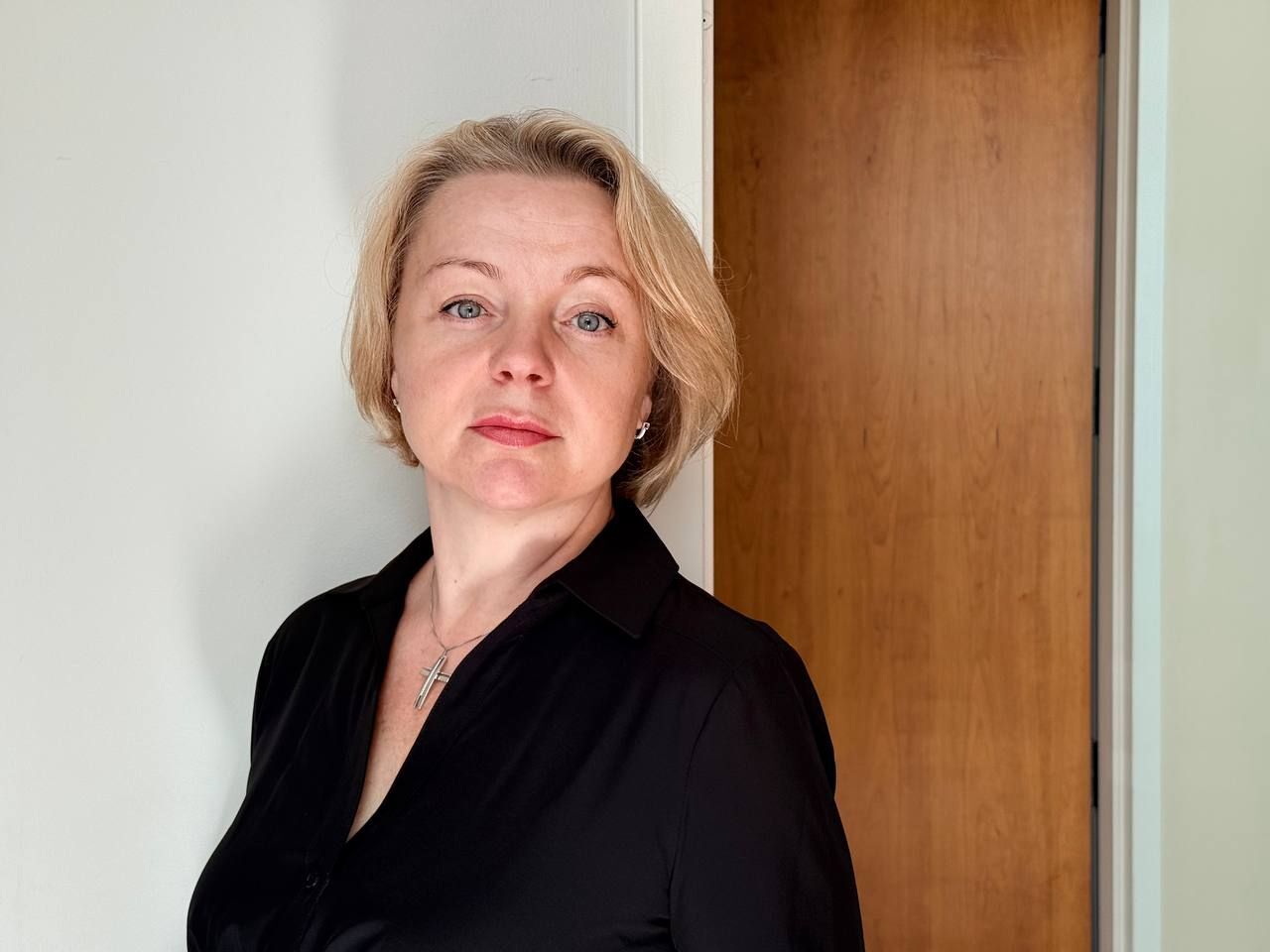
In 2015, Olga Maksimchuk was negotiating with a Turkish tomato supplier over five rubles per kilogram. That was the job: push for a better price, secure a discount, close the contract. A typical day for a category manager at a large retail chain.
By 2024, she was running greenhouses in the desert, where artificial intelligence decides when to water plants and how to feed them. She was working on a system that lets farmers sell "slices of a future harvest" to thousands of small investors via blockchain. And she was training a new generation of category managers to work with data instead of gut instinct.
In just ten years, the profession changed beyond recognition. What comes next will be even more radical.
"Ten years from now, agribusiness will look completely different," Olga says. "AI, robotics, genetics, tokenization—these aren't twenty years out. More like five to seven. Anyone who doesn't start reskilling now will be left behind."
For fifteen years, Olga Maksimchuk worked in fresh produce category management at major Russian retail chains. Her last five years were at X5 Retail Group, where she led the Fresh category. The category grew by ₽2.5 billion under her watch. She also implemented an AI forecasting system that cut write-offs 15%.
In 2022, she moved into international agtech, taking on a leadership role at Vegberry in the Gulf region. In two years, the company expanded to 60 hectares of owned greenhouses and a network of 50 partner farms across the UAE and Oman, becoming one of the top three suppliers in the Emirates market.
Vegberry turned into a testing ground for technologies that, ten years from now, will be industry standard.
Five technologies reshaping agribusiness by 2034
AI runs everything from planting to harvest
At Vegberry's greenhouses, hundreds of sensors send data to the cloud every five minutes. AI analyzes temperature, humidity, and light levels, then automatically controls irrigation, climate, and nutrition. Humans set the goals; the system does the rest.
After two years: tomato yields jumped 38%, water use dropped 43%. One agronomist now manages 60 hectares across two countries—work that used to require six specialists.
"In ten years, AI won't just run greenhouses," Olga says. "It will manage open fields as well. Drones will monitor every plant. Robots will handle harvesting. People will stay in charge of strategy; operations will move to machines."
Gene editing without GMOs
Gene-editing technologies make it possible to develop crops resistant to disease and drought—without introducing foreign DNA. Tomatoes become disease-resistant, cucumbers need half as much water, leafy greens contain more nutrients.
"In about seven years, this will be the norm," Olga says. "Without chemicals or pesticides. Genetics will give plants what fertilizers used to provide."
Robots and drones everywhere
Robots can already pick berries without damaging them. Within five years, they'll be cheap enough to pay for themselves in two seasons. Drones detect nutrient deficiencies and early signs of disease days before symptoms are visible to the eye.
"Manual labor drops 70–80%," Olga explains. "You're left with system operators."
Food tailored to your DNA
DNA testing will become affordable and routine. Results will show which foods your body absorbs best and what diet works for you. Blockchain will link that data to a digital product passport.
"You walk into a store, and your phone highlights the products that are ideal for you," Olga says. "The technology exists—integration is what's missing."
Tokenizing future harvests
Farmers can't borrow against future harvests—banks don't accept growing crops as collateral. Tokenization changes the rules. A farmer issues digital shares of the future harvest; investors buy in starting at $100. Smart contracts automatically distribute revenue once the crop is sold.
Vegberry is developing Vegberry Coin. A co-investment model is already in use: a fig plantation in Oman was financed with $400,000. After nine months, seedling survival reached 97%.
"Tokenization lets you scale across hundreds of farms at once," Olga says. "Farmers get funding. Investors can watch their crops grow through sensor data. Full transparency."
How roles are evolving
Buyers become ecosystem strategists
The old model was simple: find the cheapest supplier, negotiate hard, sign a one-year contract. That model's dead now. Short-term contracts create instability; price obsession destroys quality.
"In 2015, I fought for every ruble," Olga recalls. "By 2020, it was clear we needed three- to five-year partnerships. At X5, we co-financed farm upgrades and got exclusive access to top-quality produce in return."
Today's category manager designs ecosystems—builds partner networks, manages data, coordinates through platforms.
Agronomists run AI systems now
Traditionally, agronomists walked fields with a notebook, relying on experience. In an era of climate volatility, intuition breaks down.
The role shifts. Agronomists oversee AI systems instead of walking fields. They analyze sensor data instead of taking manual measurements.
"Our agronomist doesn't need to be in the greenhouse," Olga says. "From the office, he sees 60 hectares in real time. The system runs itself."
Logistics goes predictive
Logistics used to mean manual route planning. Today, machine learning optimizes routes based on traffic, weather, and shelf life. IoT sensors stream real-time data; the system adjusts plans automatically.
The "Category Manager 2.0" program
In fall 2023, Olga released a 100-page guide, Digital Transformation of Fresh Supply Chains, packed with practical tools. The response surprised her. Dozens of category managers from different companies reached out: "Teach us how to work differently."
"I realized people want to change—they just don't know how," she says. "They read about AI and blockchain, but they don't know what to do on Monday morning at work."
In 2024, she launched a training program built around her own ten-year journey.
She starts with supplier relationships. At X5, Olga financed partner farm upgrades and secured exclusive access to better products—win-win. Course participants learn to structure similar models: long-term agreements, co-investment, fair risk-sharing.
Then comes data. The AI forecasting system she implemented at X5 cut herb write-offs from 20% to 8%, saving ₽60 million a year. The course breaks down how to launch such systems—from data sources to model selection to reading results.
Transparency pays, too. At Vegberry, every package carries a QR code with the product's full history. Customers pay 40% more for verified origin. Olga shows how to implement blockchain traceability and monetize it.
Capital is trickier. Banks won't lend against future harvests, so Olga teaches alternative structures—co-investment models, bio-asset valuation under international standards, tokenization.
Last: ecosystem management. Vegberry built a network of 50 farms without owning them. A platform shows demand forecasts to all participants; AI allocates orders. Coordination through data and incentives, not directives. You won't learn this from textbooks—only from real cases.
"The program isn't theory," Olga says. "Half the time we dissect my own projects—the numbers, the mistakes, what actually worked and what bombed. Participants see reality, then adapt it to their companies."
"Here's what matters: technology won't replace people, but it will redefine roles," she adds. "Agronomists won't walk fields with notebooks—they'll run AI systems. Buyers won't haggle over price—they'll design ecosystems. But to get there, you have to start learning now."
In two years, Vegberry has shown what that future looks like: top three in the UAE market, AI and blockchain in production, tokenization underway. Next comes scaling—and training the industry.
"Ten years from now, the winners will be obvious—the ones who started changing today. The rest will still be explaining why they were too busy."
Written by Isabel Modano