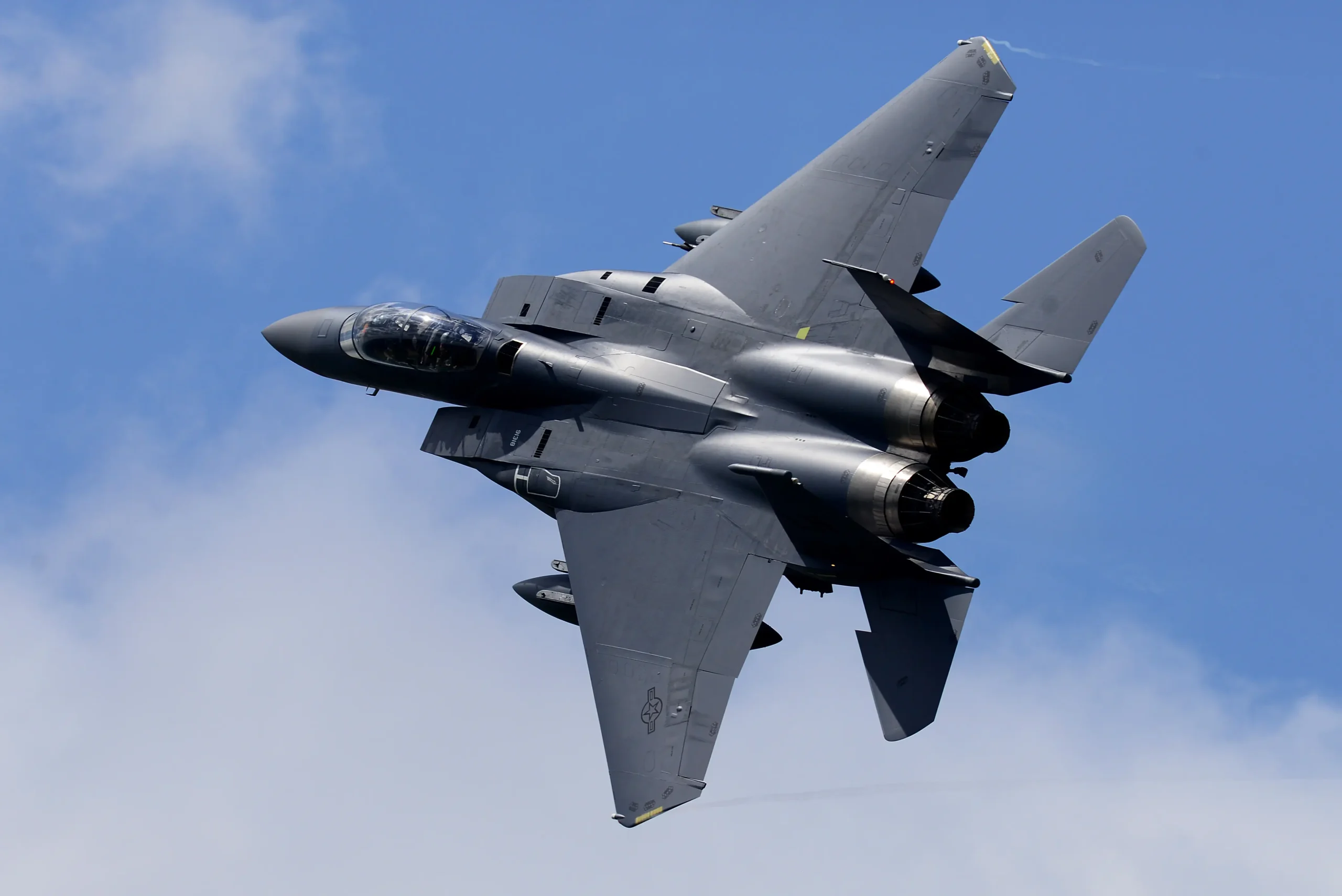
In Brief
- U.S. Air Force Colonel and his pilot survived a violent F-15E ejection over enemy territory.
- Survival relied on extreme forces, split-second timing, and procedural protocols—not training alone.
- Military definitions of “success” hide where real risk actually lies.
Colonel and pilot faced forces beyond human control
Air Force Colonel [name withheld] and his pilot were forced to eject after their F-15E was shot down. At 500 miles per hour, there is no time to process what’s happening. The pilot triggers a rocket that propels them out of the aircraft into forces the human body isn’t built to withstand.
Most people assume survival comes from elite preparation. It doesn’t. It comes from what happens when control disappears entirely—and that’s the real story here. Within the first seconds of this F-15E ejection, everything shifts from controlled action to raw physics. According to AFMAN 11‑2F-15E V3, ejection is a last-resort emergency procedure, with the Pilot in Command holding final authority over whether to initiate it . That decision is a threshold, not a skill.
Why this isn’t really about training
It’s easy to assume that fighter pilots are drilled endlessly for ejection scenarios. It feels logical. But Matthew “Whiz” Buckley, former Navy pilot, explains that pilots do not train for full-force ejections because the experience is too violent and fast to replicate meaningfully.
High-risk roles carry precise preparation for routine operations. In reality, ejections occur in extreme conditions outside controlled training, with survival hinging on reaction timing and physical forces. AFMAN procedures ensure pilots follow standardized emergency protocols, but even with rules in place, outcomes depend more on forces and body positioning than training alone .
Where survival is actually decided
Pilots experience up to 10–20 Gs of force instantly, a rocket-propelled seat, and a 500 mph wind blast upon exit. Survival depends on body alignment in a fraction of a second. If limbs are slightly misaligned, injuries can be catastrophic.
AFMAN 11‑2F-15E outlines emergency procedures for ejection but emphasizes that these protocols cannot remove the inherent physical risk . This is where the real risk sits—not in the decision to eject, but in the milliseconds after it happens. Once triggered, the outcome is largely outside human control.
How the system defines “success”
In military terms, a “successful ejection” is mechanical: the canopy clears, the seat fires, the parachute deploys. The system does not guarantee the pilot’s condition after landing. Success is measured by procedural completion rather than human outcome.
This highlights a critical misunderstanding: procedures ensure safety to a minimum threshold, but real-world risk—spinal injuries, limb trauma, and environmental hazards—remains high .
Why the decision is so difficult
Pilots don’t eject immediately. They wait. Ejecting guarantees losing the aircraft, introduces serious injury risk, and leaves them exposed in hostile territory. The decision sits in a narrow, high-stakes window. Wait too long, and the aircraft becomes unsurvivable. Act too early, and you sacrifice control, mission objectives, and safety on the ground.
AFMAN 11‑2F-15E stresses that the Pilot in Command has final authority for emergency actions, underscoring that human judgment is central even in high-speed thresholds .
What this reveals beyond aviation
This story is relevant far beyond the cockpit. Business, finance, and leadership decisions often follow the same pattern: systems operate normally until they suddenly fail. Outcomes depend less on preparation and more on thresholds that cannot be fully controlled.
Think of market crashes, legal exposure events, or crisis management decisions. The most dangerous moments often appear manageable until they are not. Timing and thresholds—not skill alone—determine outcomes.
What This Means for Any High-Stakes Decision
This is not just a story about pilots surviving an ejection. It’s about what happens when systems reach a point where control breaks down. Most people assume skill and preparation dominate outcomes in high-pressure situations. In reality, there are moments where timing, thresholds, and forces beyond control matter far more.
This reveals that at the edge of any system, outcomes stop being controlled and start being decided by forces you cannot manage.