The Economy Is Losing Momentum Before the Shock Has Fully Hit
Recent data shows the U.S. is entering this period of geopolitical and energy uncertainty from a weaker footing than many expected.
According to the U.S. Bureau of Economic Analysis, real GDP grew at just 0.7% annualised in Q4 2025, a sharp slowdown from 4.4% in the previous quarter.
That deceleration was not driven by a single factor. While consumer spending and investment continued to support growth, both exports and government spending declined, and overall activity weakened across multiple parts of the economy.
The downward revision to the data reinforces that picture, reflecting softer-than-expected consumer demand, weaker exports, and reduced investment — all signs that momentum was already fading before external pressures intensified.
Even beneath the surface, the trend is cooling. Real final sales to private domestic purchasers — a key measure of underlying demand — grew just 1.9%, indicating that private-sector strength is beginning to soften.
At the same time, inflation remains a constraint. The PCE price index rose 2.9%, with core inflation at 2.7%, limiting policymakers’ ability to ease policy aggressively if conditions weaken.
The risk is not that something suddenly breaks — it’s that the economy has become easier to break.
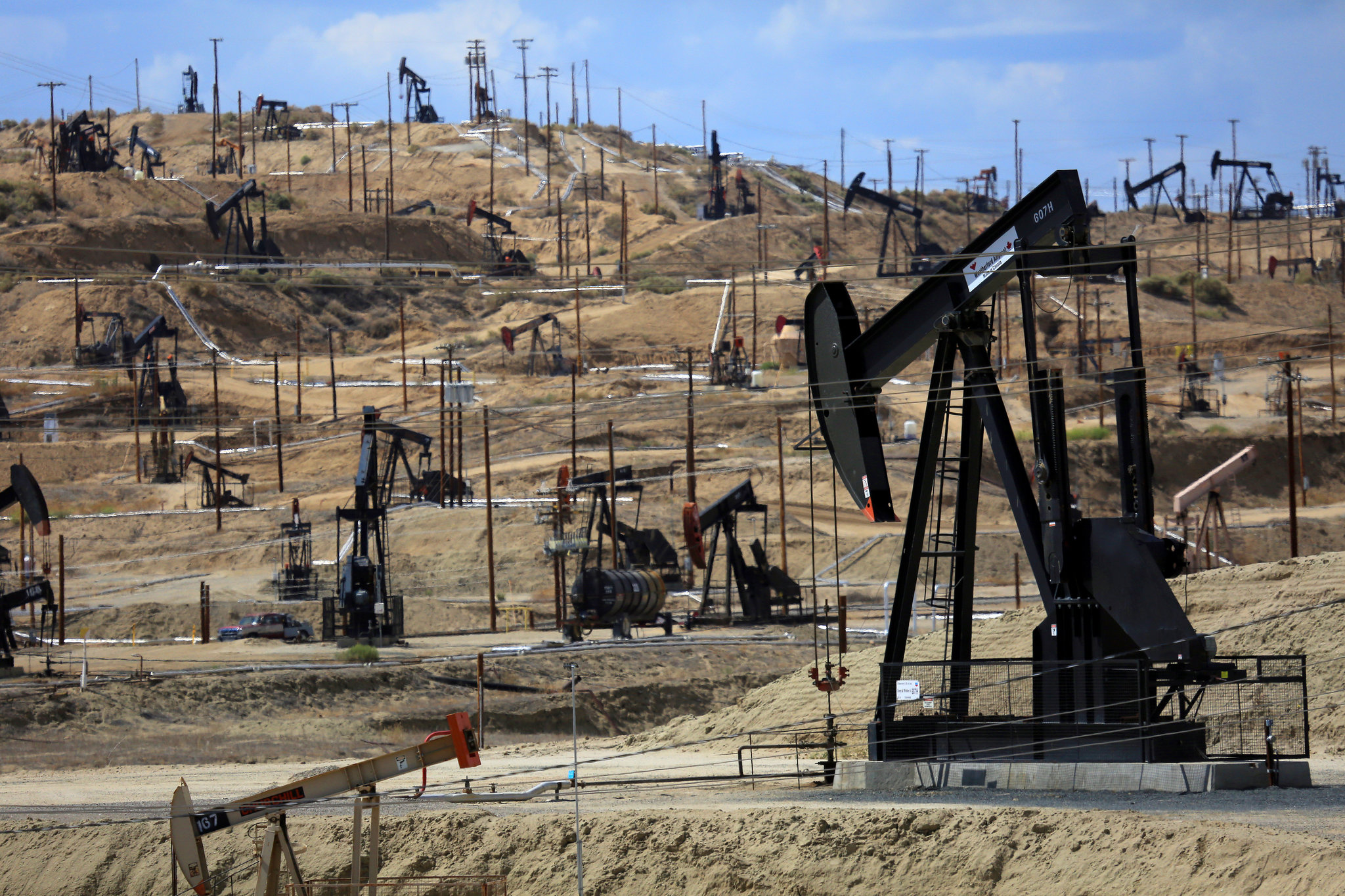
Why Oil Matters More Than Almost Anything Else
Energy shocks have historically been a common trigger in recessionary periods, not because they dominate GDP directly, but because of how quickly they spread through the economy.
When oil prices rise sharply, the effects are immediate and difficult to offset. Households face higher fuel and energy costs that cannot easily be reduced, businesses see transport and input costs rise, and inflation expectations can begin to drift higher. That, in turn, can constrain central banks, which may need to keep policy tighter for longer than they otherwise would.
Analysis from Wells Fargo suggests that a sustained 50% increase in oil prices could reduce real consumer spending growth by around one percentage point — enough to materially weaken overall economic momentum.
At higher levels, the risk escalates. Some modelling suggests oil prices approaching $130 per barrel could be sufficient to push consumer spending into consecutive quarterly declines — a pattern often associated with recessionary conditions.
The key variable is persistence. Short-term volatility can often be absorbed. Sustained increases force households and businesses to adjust behaviour — and that is when the economic impact becomes systemic.
The Consumer Is the Real Fault Line
The U.S. economy is ultimately driven by consumption, which accounts for the majority of economic activity. As long as consumers continue spending, the expansion can hold. Once they begin to pull back, the slowdown can accelerate.
Higher energy costs are particularly damaging because they act as a direct pressure on household budgets. Unlike discretionary purchases, spending on fuel, heating and transport cannot easily be reduced, leaving less income available for other areas.
There are already early signs of strain. Wage growth is slowing, lower-income households are under increasing pressure, and consumer sentiment remains subdued. These are not recession signals on their own — but they indicate that resilience is weakening.
Once behaviour begins to shift — fewer purchases, delayed spending, reduced discretionary activity — the impact spreads across sectors. Retail softens, services demand weakens, and business revenues begin to slow.
This is the point at which a slowdown can become self-reinforcing.
The Labour Market Is No Longer a Safety Net
For much of the past two years, the labour market has acted as the economy’s primary shock absorber. Strong hiring and steady income growth helped sustain consumption even as inflation rose.
That buffer is now weakening.
Hiring has slowed, job creation has become more uneven, and signs of weakening demand for labour are beginning to emerge in some sectors. While unemployment remains relatively low, the trend is no longer improving.
This matters because labour market dynamics can shift quickly once momentum turns. A slowing jobs market can absorb pressure. A weakening one can amplify it.
If hiring slows further or unemployment rises more sharply, the feedback loop becomes harder to contain. Lower income leads to weaker spending, which reduces business activity, leading to further job cuts.
That is how slowdowns can evolve into downturns.
Financial Conditions Are Still Tight
At the same time, policy is not positioned to provide immediate support.
The Federal Reserve has kept interest rates elevated, and persistent inflation limits how quickly it can reverse course. Even if growth weakens, policymakers may be constrained by the risk of reigniting price pressures.
That creates a challenging environment. Growth is slowing, but monetary policy remains restrictive.
Market dynamics add another layer of risk. If equity markets weaken and borrowing costs remain high, the wealth effect that has supported consumer spending in recent years can begin to fade. Higher-income households, in particular, are sensitive to asset prices, and a sustained market downturn can translate into reduced consumption.
When tighter financial conditions coincide with weakening growth, the system becomes significantly more fragile.
The Tipping Point Is a Chain Reaction
Recessions rarely begin with a single event. They tend to emerge when multiple pressures align and reinforce one another.
For the U.S. economy to tip into recession, several developments would likely need to occur in combination:
- oil prices remain elevated for a sustained period
- consumer spending begins to contract
- labour market weakness spreads
- financial conditions remain tight
- confidence deteriorates
Individually, none of these guarantees a downturn.
Together, they create an environment in which the economy becomes increasingly difficult to stabilise.
The Bottom Line
The U.S. economy may not need a dramatic collapse to enter recession — it may simply need a trigger.
Growth has already slowed, inflation remains a constraint, and the labour market is losing momentum. At the same time, external risks — particularly from energy markets — are rising.
Recession is still avoidable. But the margin for avoiding it is narrowing.
The U.S. economy is not in recession — but it is now close enough that a single shock could be enough.