
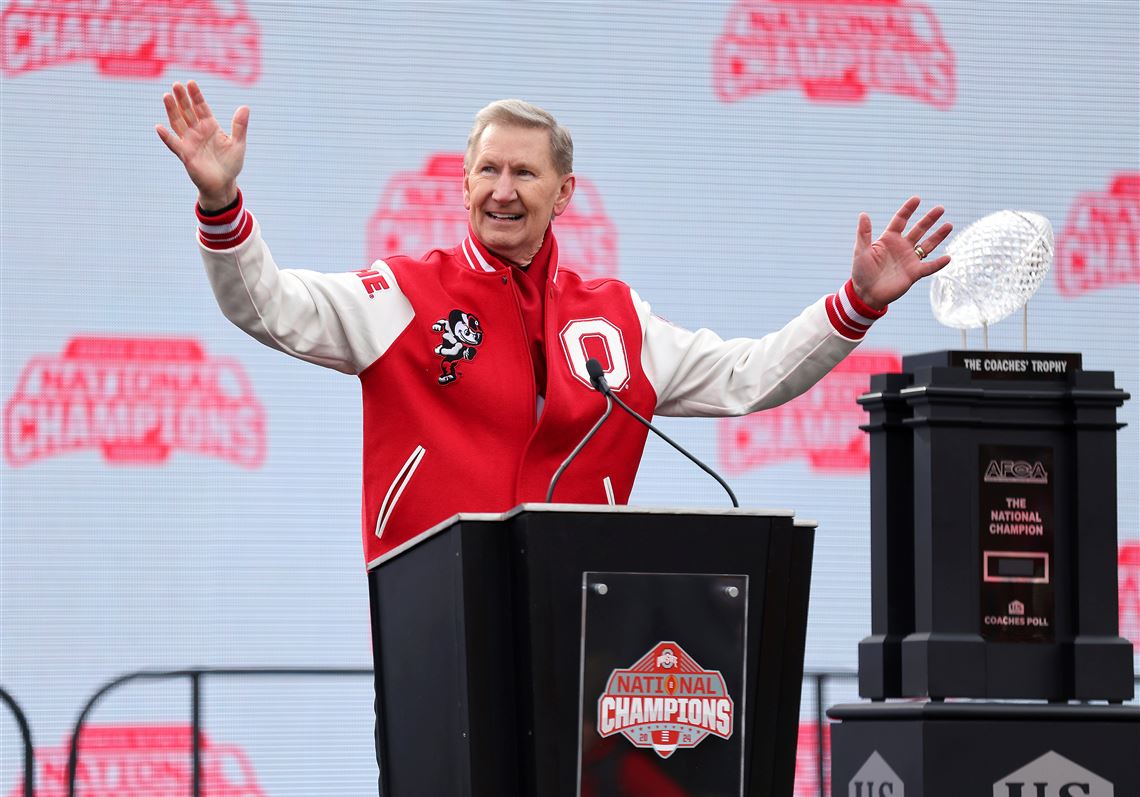
Ohio State University President Walter “Ted” Carter Jr. has resigned after disclosing what the university described as an “inappropriate relationship” with a woman seeking public resources for her personal business, prompting an internal investigation and an abrupt leadership transition.
The departure raises governance questions at one of the largest universities in the United States, an institution with more than 60,000 students and an annual budget of about $11.5 billion.
Key Takeaways
• Ohio State President Ted Carter resigned after disclosing an “inappropriate relationship” with a woman seeking public resources for her business.
• The university has launched an internal investigation and is preparing a leadership transition.
• The case raises governance and ethics questions at one of the largest universities in the United States.
What Happened
Ohio State confirmed Monday that Carter stepped down voluntarily over the weekend after informing the university’s board of trustees about the relationship.
In a statement, Carter said he had made a “mistake in allowing inappropriate access to Ohio State leadership.” He did not elaborate on the nature of the relationship or clarify whether it was romantic.
Board Chair John Zeiger accepted Carter’s resignation in a letter dated Sunday following a private executive session of the board. A university spokesperson said Carter did not attend the session, though trustees were already aware of the situation before the meeting.
“The Board was surprised and disappointed to learn of this matter and takes the situation and its potential impact on the university very seriously,” Zeiger wrote.
Ohio State said it has opened an investigation into Carter’s conduct while preparing a leadership transition plan. Further details about the transition could be announced soon.
In the interim, day-to-day operations will be managed by members of Carter’s leadership cabinet, including the chief of staff, two executive vice presidents and several senior vice presidents.
Carter, 66, became Ohio State’s president in 2023 after previously leading the University of Nebraska system. A retired U.S. Navy vice admiral, he also served as superintendent of the U.S. Naval Academy and trained at the Navy Fighter Weapons School, known as Top Gun.
Ohio State is the sixth-largest university in the United States, with more than 600,000 living alumni. Its operations include a major medical centre and one of the country’s most prominent college athletics programmes.
Trustees had previously expressed strong support for Carter’s leadership. In August, the board approved a merit raise of more than $50,000 on top of his $1.1 million salary, along with a bonus approaching $400,000. His contract had been scheduled to run through 2028.
Why It Matters for CEOs
Large public universities now operate with budgets, workforces and operational complexity comparable to major corporations. As a result, leadership conduct issues can quickly become governance challenges that require board intervention.
When personal relationships intersect with institutional resources or access to senior leadership, organisations can face reputational risk and scrutiny over how influence and decision-making authority are used.
For corporate leaders and boards, the episode highlights how executive behaviour can quickly become a governance issue even when details remain limited. In such situations, boards often prioritise leadership change to contain institutional risk and preserve organisational stability.
Wider Industry Context
Leadership turnover has become increasingly visible across major universities in recent years, often linked to governance disputes, political pressure or internal management conflicts.
Ohio State itself has seen multiple presidential changes within a short period. Carter took the role in 2023 after the earlier resignation of President Kristina Johnson, who stepped down mid-contract.
The pattern reflects the growing complexity of leading large public universities, many of which now operate as multibillion-dollar organisations combining academic programmes, healthcare systems, research operations and major athletics departments.
What to Watch Next
Ohio State officials said the university will continue its investigation while preparing the next phase of its leadership transition.
Education sector observers and governance specialists will be watching how the board manages the search for a new president and how quickly the university can stabilise its leadership structure.
The outcome of the investigation and the timeline for appointing a successor will likely shape how the institution restores confidence among students, staff and other stakeholders.
People Also Ask
Why did Ohio State President Ted Carter resign?
He resigned after informing the university’s board of trustees about what the university described as an inappropriate relationship.
Is Ohio State investigating Ted Carter?
Yes. The university confirmed it has opened an investigation into the circumstances surrounding the relationship.
Who will lead Ohio State after Ted Carter’s resignation?
The university said members of Carter’s leadership cabinet will manage day-to-day operations during the transition.