
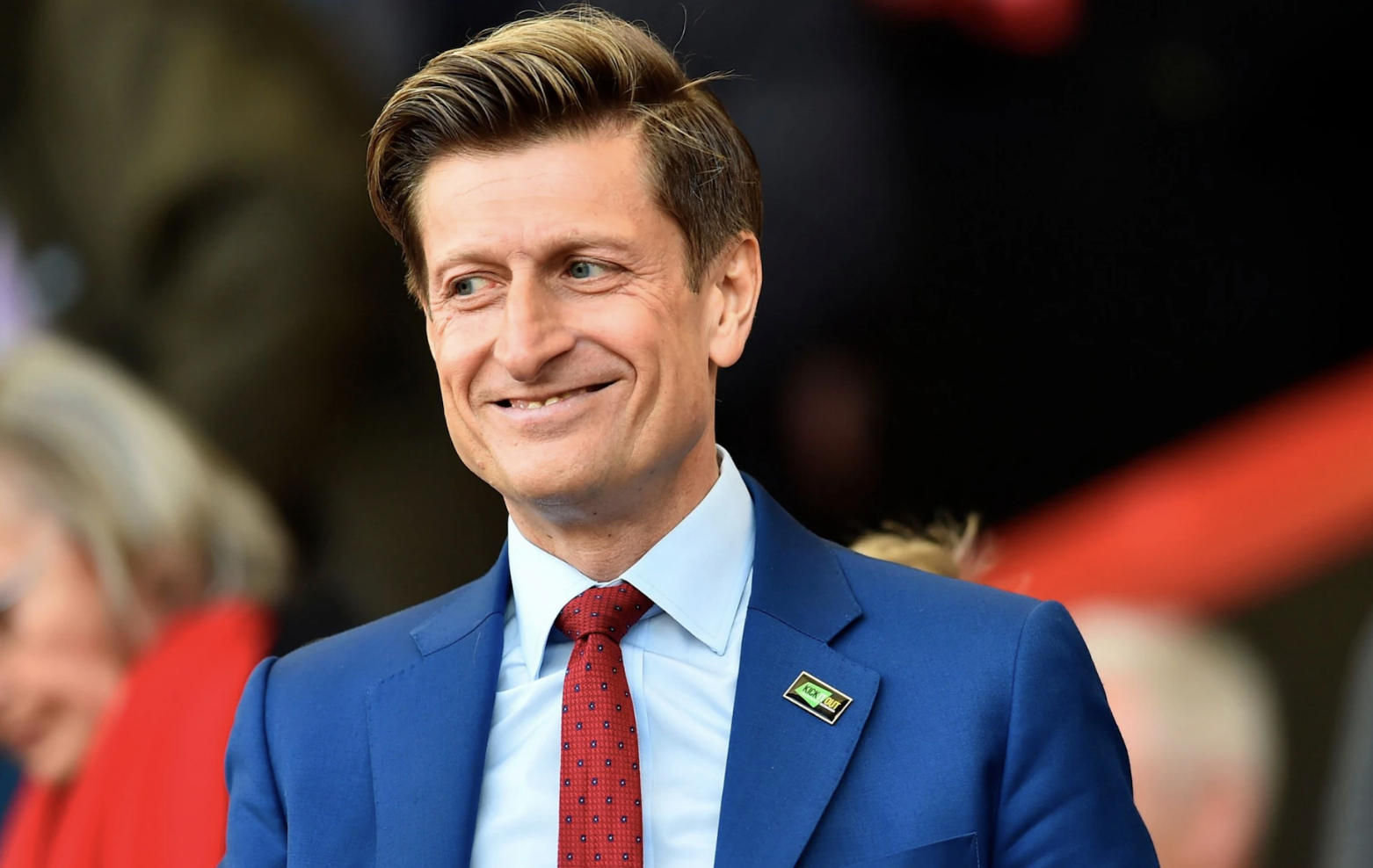
Steve Parish: The Operator Who Rewrote Premier League Ownership
Current Titles
-
Chairman, Crystal Palace Football Club
-
Co-founder, Tag Worldwide (formerly Chime Sports Marketing)
-
Board Participant, Premier League Advisory Structures
Authority Without Excess Capital
Steve Parish operates in an environment defined by extremes. The Premier League is now shaped by sovereign wealth funds, private equity vehicles, and billionaires with the capacity to absorb nine-figure losses. Parish stands apart—not because he rejects ambition, but because his authority has never relied on excess capital.
His leverage is institutional rather than financial. Parish commands influence because he understands how football actually functions as a business: the interdependence of broadcasting cycles, wage inflation, regulatory pressure, and supporter trust. Over more than a decade, he has built a reputation as one of the league’s most competent owner-operators—respected by executives, policymakers, and competitors alike.
In modern football, credibility has become a currency. Parish has accumulated it carefully.
An Unconventional Route to the Boardroom
Steve Parish’s rise to the top tier of English football did not follow the traditional arc of elite education, early finance roles, or inherited capital. He left school at 16 and entered the workforce immediately, learning commercial fundamentals the hard way—on the job, under pressure, and with consequences that were immediate rather than theoretical.
That early immersion shaped a distinctly operational mindset. Parish developed fluency in how businesses actually function: meeting client demands, managing costs, delivering on deadlines, and building trust through consistency rather than grand vision statements. These instincts became central to his leadership style later on.
His professional ascent came through the media and marketing services sector, where he co-founded what would become Tag Worldwide, a global content production and marketing execution business. Unlike creative agencies built around star talent or volatile campaigns, Tag focused on the unglamorous but indispensable mechanics of modern advertising—rights management, version control, localisation, and large-scale asset delivery for multinational clients.
Operating in this environment rewarded precision, repeatability, and systems thinking. Success depended less on risk-taking and more on process discipline, contractual reliability, and the ability to scale quietly across markets. Parish’s leadership was forged in a world where margins were protected through efficiency and relationships were earned through performance, not profile.
Those lessons translated directly into football governance. When Parish eventually entered the boardroom at Crystal Palace, he did so not as a fan-owner or financial speculator, but as an operator trained to stabilise complex organisations under constraint.
How Steve Parish Built His Wealth
Steve Parish accumulated his wealth well before Crystal Palace became an established Premier League club, and he did so outside the football ecosystem entirely.
At Tag Worldwide, the value proposition was structural rather than creative. The business addressed a growing problem faced by global brands: executing marketing campaigns consistently across dozens of countries while managing legal, linguistic, and logistical complexity. By embedding itself deeply into clients’ operational workflows, Tag became less a supplier and more an extension of its customers’ internal infrastructure.
This model produced durability. Long-term contracts, recurring revenues, and predictable cash flows formed the backbone of the business. Growth came not from speculative bets or rapid exits, but from steadily expanding scope within existing client relationships and replicating systems across geographies.
That distinction is central to understanding Parish’s approach to wealth. His capital was built through service infrastructure rather than asset flipping or financial leverage. As a result, his tolerance for risk was shaped by continuity, not volatility. Capital preservation mattered as much as growth.
When Parish moved into football ownership, that mindset came with him. Crystal Palace was never positioned as a personal financial backstop or a vehicle for aggressive speculation. From the outset, the objective was stability—ensuring the club could operate within its means, fund itself sustainably, and avoid dependence on emergency capital injections.
In this sense, Parish’s wealth was not something he brought into football to spend freely. It was something he had already secured elsewhere, allowing him to insist that the club stand on its own commercial and sporting foundations.
Rescuing a Club on the Brink
When Parish led a consortium to acquire Crystal Palace in 2010, the club had just emerged from administration. The risk was existential. Facilities were outdated, finances fragile, and long-term planning nonexistent.
The early years were focused on repair rather than ambition. Governance was stabilised. Costs were controlled. Trust with supporters and creditors was rebuilt. Promotion to the Premier League followed, but Parish resisted the temptation to overspend in pursuit of instant relevance.
Instead, the club adopted a philosophy of incremental consolidation—a model that would come to define its identity.
Building a Premier League Mainstay
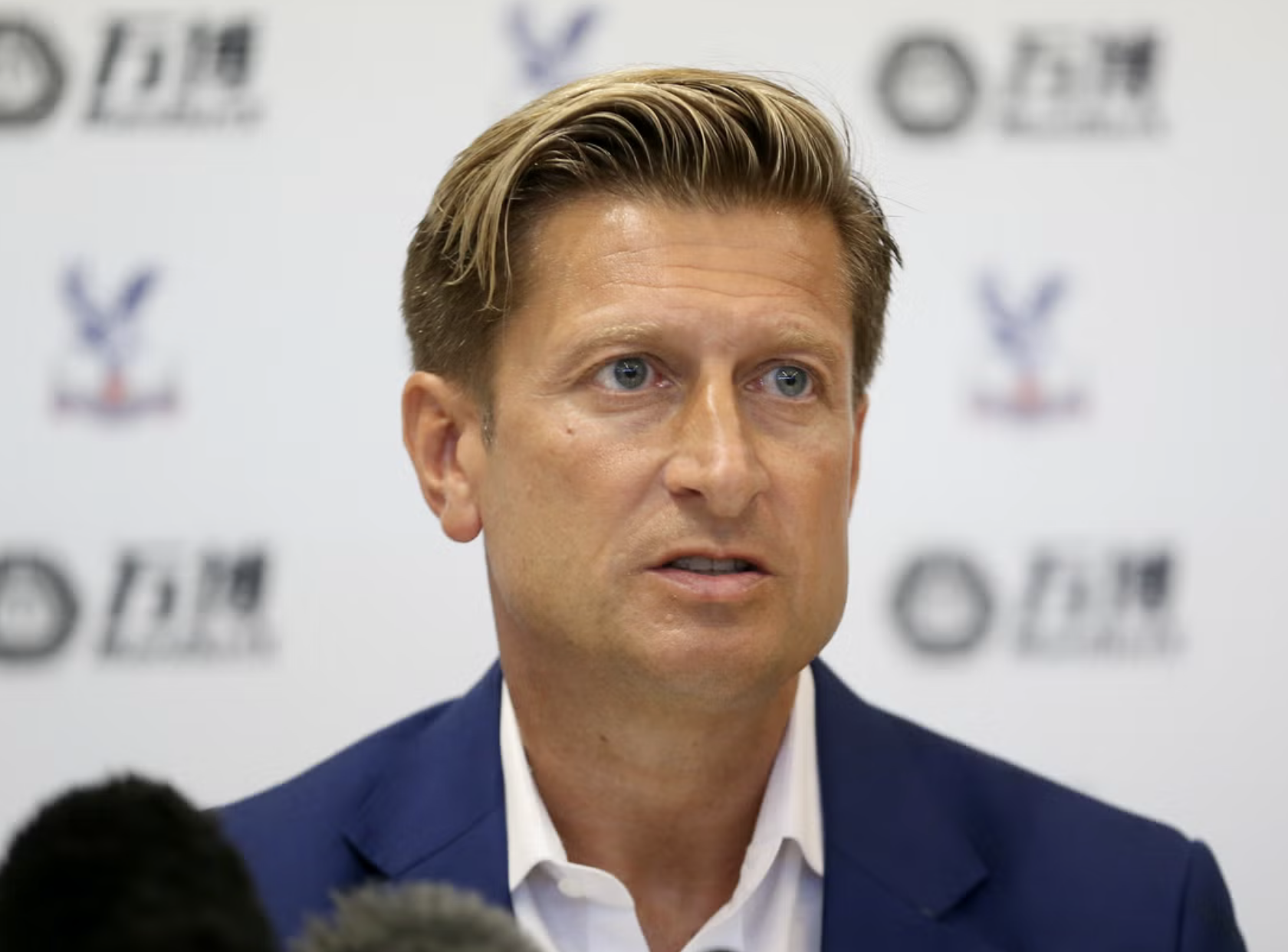
Under Parish’s chairmanship, Crystal Palace evolved from survival candidate to established Premier League presence. That consistency was not accidental.
The club invested selectively in recruitment, placing increasing emphasis on data analysis and player development rather than transfer-market hype. Wage growth was controlled. Infrastructure spending was prioritised where it improved performance sustainability rather than optics.
Over time, Palace became known as a club that rarely panicked. That stability translated into long-term value—on and off the pitch.
Discipline in a Spend-Heavy League
Parish’s most defining quality as an owner is restraint guided by strategy.
He is willing to invest, but only where the return strengthens the club structurally. Rather than chasing marquee signings, Palace’s investment has focused on:
-
Training and performance environments
-
Medical and recovery infrastructure
-
Recruitment analytics and scouting networks
-
Financial frameworks aligned with league regulations
This approach places Parish ahead of the curve as football governance tightens. Sustainability rules and profitability regulations are beginning to penalise clubs built on unchecked spending. Parish’s background in regulated commercial industries makes him unusually comfortable operating within these constraints.
For Palace, compliance is not a limitation. It is a competitive edge.
Football as an Influence Platform
For Parish, Crystal Palace is not a vanity asset. It is a platform—one embedded within a global entertainment economy.
Premier League ownership delivers more than matchday revenue. It offers brand exposure, political capital, and long-term relevance in global media markets. These advantages complement Parish’s broader professional network and reinforce his standing beyond football.
Unlike speculative investors, Parish does not need football to deliver outsized financial returns. Its value lies in durability, influence, and institutional presence.
Governance, Control, and Decision-Making Power
Parish does not govern through dominance, but through alignment.
While Crystal Palace has multiple shareholders, Parish remains the operational anchor—coordinating interests, setting tone, and ensuring strategic consistency. His authority flows from trust rather than ownership percentage.
Removing Parish would not simply change leadership. It would alter the club’s operating philosophy.
Media Presence and Personal Privacy
Steve Parish occupies an unusual position in Premier League discourse. He is one of the league’s most articulate and accessible senior figures, frequently contributing to public discussions on financial regulation, ownership standards, and competitive balance. His interventions tend to be precise rather than performative, grounded in operational realities rather than abstract ideals.
At the same time, Parish maintains a clear separation between public role and private life. His past relationship with broadcaster Susanna Reid received attention, but he has since kept personal matters out of public view. That discipline reflects a broader pattern in his leadership style: visibility where governance requires it, restraint where it does not.
Risk Exposure in a Changing League
The risks confronting Parish are structural, shaped by the Premier League’s evolving economic and regulatory environment. Broadcasting revenues face long-term uncertainty, cost inflation continues to pressure wage bills, and regulatory scrutiny around sustainability is tightening. These forces affect all clubs, but not equally.
Crystal Palace’s relatively conservative financial approach offers a degree of insulation. The club has historically avoided excessive leverage and has been cautious in wage commitments. This does not eliminate risk, but it changes its character. Parish’s challenge is less about survival and more about maintaining competitiveness without compromising financial discipline in a league increasingly defined by scale.
The Operator Model Endures
Steve Parish represents a form of football leadership that prioritises execution over ambition signalling. His role is not defined by grand vision statements or aggressive spending cycles, but by steady governance, institutional continuity, and risk management.
In a Premier League environment increasingly shaped by state-backed ownership and financial asymmetry, this approach can appear understated. Yet it has proven durable. Parish’s model does not promise rapid transformation, but it does offer stability in a volatile system. As regulatory pressure increases and financial margins tighten, that kind of operational competence is becoming less an exception and more a competitive necessity.