
Crypto Recovery Explained: Can You Really Get Lost or Stolen Cryptocurrency Back?
There is something uniquely brutal about losing cryptocurrency.
Unlike money taken from a bank account, crypto does not vanish. It remains visible on the blockchain, moving from wallet to wallet in plain sight. Many victims describe it as watching a burglar walk off with their possessions while a glass wall prevents anyone from intervening. You can see everything. You can stop nothing.
If you search for “crypto recovery” in the United States, the results are deeply misleading. Some articles talk about Bitcoin prices rebounding. Others announce new task forces or enforcement actions. Then there are the recovery services themselves, many promising — sometimes outright guaranteeing — that lost crypto can be retrieved.
For people who have actually lost money, the real question is far simpler: is crypto recovery real, or is it just another trap waiting to spring?
The answer is uncomfortable. In a small number of cases, recovery is possible. In most cases, it is not. And misunderstanding that difference has left thousands of ordinary consumers worse off than when they started.
Why crypto is so hard to recover in the US, the UK, and Europe
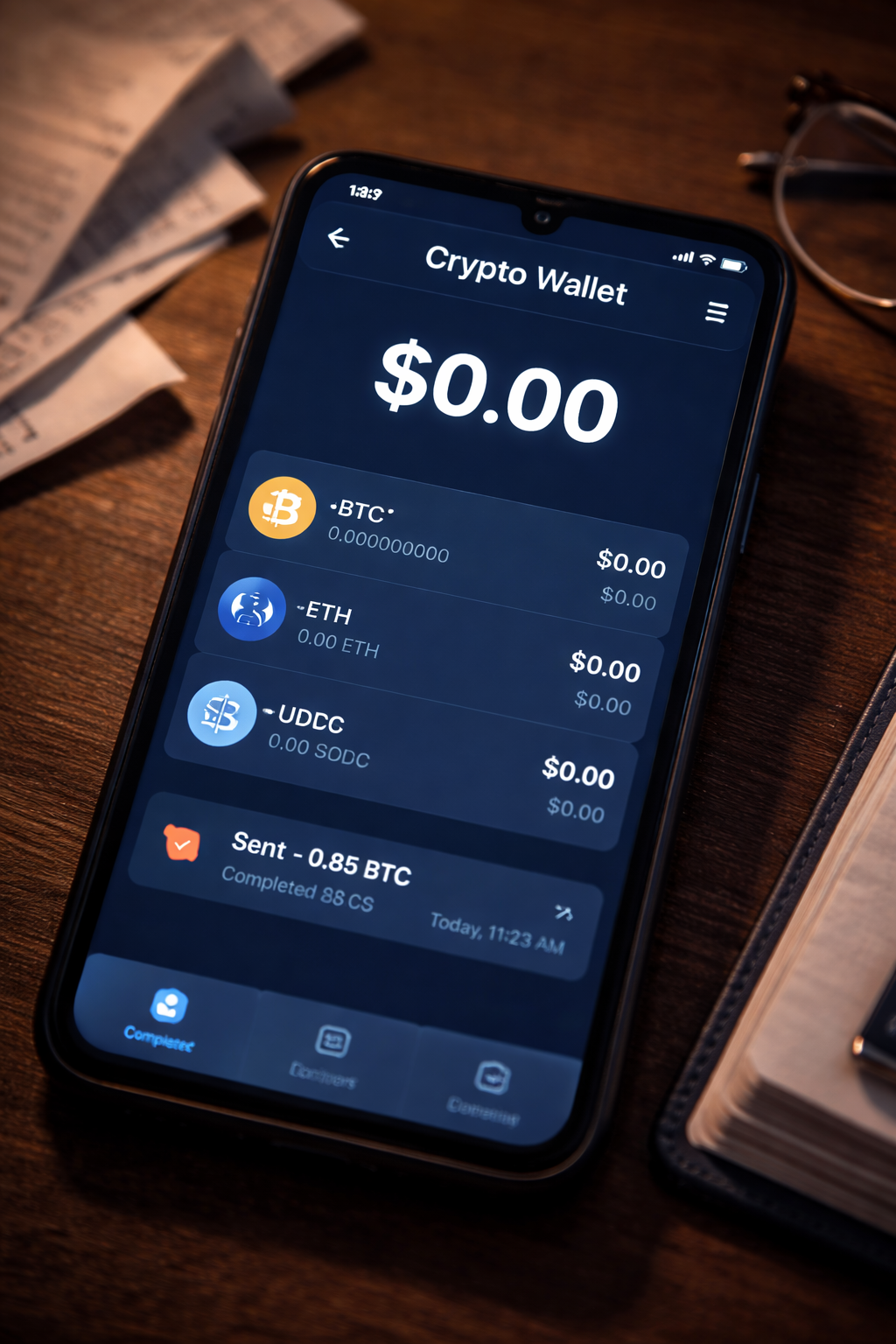
For many victims, this is the moment it becomes real: the transaction is confirmed, the balance is zero, and there is no undo button.
Cryptocurrency was designed to eliminate intermediaries. That design choice is exactly what makes recovery so difficult in the real world.
Once a transaction is confirmed on a blockchain, it cannot be reversed. There is no equivalent of a bank dispute, no chargeback system, and no central authority that can simply undo a mistake. Wallet addresses are public, but identifying the human being behind them — and bringing them within reach of a court — is often impossible.
Reporting by BBC News has shown victims tracking stolen funds for months, watching their crypto move across the blockchain while police, regulators, and exchanges remain unable to intervene. Transparency does not equal control.
From a legal standpoint, this creates a dead zone. Criminal law, consumer protection, and financial regulation all assume the existence of identifiable parties or institutions that can be ordered to act. Crypto often bypasses all three, especially when losses involve self-custody wallets or overseas actors.
This is why individual crypto theft has exploded. According to Chainalysis, criminals have shifted away from attacking large exchanges and toward individual users, where losses are harder to trace, harder to freeze, and harder to recover.
When Crypto Recovery Can Actually Work
Despite everything, crypto recovery is not entirely fictional.
Recovery becomes possible when stolen crypto intersects with regulated choke points, most commonly centralized exchanges. These platforms hold assets on behalf of users, operate under national laws, and maintain customer records. That matters.
If stolen funds land on a major exchange, courts and law enforcement agencies may be able to act. Exchanges can freeze accounts, preserve assets, and respond to subpoenas or court orders. This is not fast, and it is not guaranteed, but it is one of the few points where the law can still reach the crypto system.
Courts in both the US and the UK have recognized crypto as a form of property. In the UK, cases such as AA v Persons Unknown and Ion Science v Persons Unknown established that courts can issue freezing orders over stolen crypto where it can be linked to identifiable accounts. In the US, federal courts have similarly treated crypto as property capable of seizure, allowing agencies to recover funds in cases involving exchanges or identifiable intermediaries.
What matters for consumers is not the case names, but the principle: recovery only becomes realistic when stolen crypto touches something regulated and cooperative.
There is also a separate category that is often confused with recovery. Some people lose access to crypto they still legally own — through forgotten passwords, corrupted hard drives, or damaged devices. In those cases, specialist forensic services may help restore access. No crime is undone, and no transaction is reversed. The owner is simply regaining what was always theirs.
These scenarios exist, but they are rare — and they are routinely exaggerated by marketing.
When Crypto Is Effectively Gone
For most people, recovery never gets that far.
If crypto is stolen directly from a self-custody wallet and moved through multiple addresses, the chances of recovery collapse quickly. Once funds leave regulated platforms and pass through swaps, mixers, or overseas wallets, the legal system loses traction.
Regulators are blunt about this. The Financial Conduct Authority has repeatedly warned consumers that crypto is high-risk and largely unprotected. In the US, agencies make similar points in plainer language: crypto losses are usually permanent.
This is not because authorities do not care. It is because crypto was designed to operate beyond reversibility. The law can only act where it still has something to grab onto.
The Second Loss: Fake Crypto Recovery Services
One of the most common and damaging follow-on harms comes after the initial theft.
Victims are often contacted by people claiming they can recover lost crypto. These offers frequently sound official. They reference real agencies, real laws, and real investigations. Some even use the names of genuine law firms or investigators.
In the United States, both the Federal Trade Commission and the Commodity Futures Trading Commission have warned that crypto recovery scams are surging. The pattern is consistent: upfront fees, requests for wallet information, and promises that sound far more confident than any real authority would ever make.
Real law enforcement does not charge fees to recover stolen money. Real regulators do not operate through Telegram or WhatsApp. Anyone claiming guaranteed recovery is selling hope, not law.
Crypto ATMs and why recovery almost never happens

Crypto ATMs are frequently used in scams because once cash is converted into cryptocurrency, the transaction is fast, irreversible, and extremely difficult to trace or recover.
Crypto ATM scams have become a major source of irreversible loss in the US.
Investigations by CNN show how victims are pressured into feeding cash into crypto ATMs under urgent threats — fake warrants, fake bank alerts, fake emergencies. Once the transaction completes, ownership transfers instantly.
Courts have repeatedly ruled that these transactions were technically authorized, even when victims were manipulated. That legal classification often prevents police from returning seized funds. The presence of a physical machine creates a sense of legitimacy that simply does not exist in law.
For consumers, the result is brutal but clear: crypto ATM losses are among the hardest to undo, even when reported quickly.
What To Do After Losing Crypto: A Consumer’s Full Path Forward
After crypto is lost, there is no single authority that fixes it. Instead, recovery — where it happens at all — comes from a chain of actions that sometimes intersect.
The first step is preserving evidence. Transaction hashes, wallet addresses, screenshots, timestamps, and communications matter more than personal explanations. Without them, even cooperative exchanges and agencies are limited.
If an exchange is involved at any point, it should be notified immediately. Exchanges cannot reverse transactions, but they can preserve records and act if law enforcement becomes involved quickly enough.
In the United States, consumers should report crypto theft to the Federal Bureau of Investigation through its Internet Crime Complaint Center. This creates a formal record and allows patterns to be linked across cases. Large or exchange-connected losses may also involve the U.S. Secret Service, which has recovered crypto in cases where assets could be seized from custodial platforms.
Scams should also be reported to the FTC, which uses aggregated complaints to support enforcement actions and warnings.
In the UK, reports go through Action Fraud, which assesses and routes cases to police units where appropriate. In the EU, national police forces remain the first point of contact, with cross-border coordination possible through Europol.
For most consumers, this process eventually reaches an endpoint. Exchanges confirm funds are gone. Investigations stall or close. Civil recovery becomes unrealistic. That is not failure — it is the system running out of jurisdiction.
What Not To Do After Losing Crypto
The most damaging mistakes tend to come after the loss.
Acting on urgency rather than authority is what leads many victims into secondary scams. Paying private “recovery experts,” sharing wallet credentials, or sending more crypto to unlock funds almost never helps and often creates new losses.
Another common error is assuming that visibility equals control. Being able to see stolen funds on the blockchain does not give anyone legal power to retrieve them. Public outrage, social media pressure, or online petitions do not substitute for jurisdiction.
Perhaps the hardest mistake is refusing to accept finality. When the legal system runs out of tools, continuing to chase recovery often leads directly to people who profit from false hope.
The Reality Consumers Need to Hear
Crypto recovery sits at the intersection of possibility and illusion.
Yes, funds are sometimes recovered. Yes, US, UK, and European authorities are getting better at tracing and seizing crypto when it touches regulated systems. But the architecture of cryptocurrency still resists reversibility, and no enforcement announcement has changed that.
For most consumers, the most meaningful recovery is not financial but informational: understanding what happened, why it could not be undone, and how to avoid being targeted again.
That clarity does not bring the money back. But it does stop the loss from growing.
“Am I Wasting My Time?” The Brutally Honest Answer
If you’re asking this, you probably already know the answer.
If your crypto was taken from a personal wallet you controlled, sent through a few addresses, and never hit a major exchange again, then yes — you are almost certainly wasting your time. Not because you didn’t act fast enough, not because you didn’t try hard enough, but because there is nothing left for anyone to grab. No bank. No account holder. No jurisdiction. Just numbers moving across a system designed to ignore regret.
If the money did pass through a big exchange and you reported it immediately, there may still be a sliver of hope — and it really is a sliver. That window closes fast. Once the funds move again, the door usually shuts for good. Most people don’t get a dramatic ending. They get an email saying the funds are gone.
Here’s the part nobody wants to hear: if police, the exchange, and regulators have all told you there’s nothing more they can do, anyone who says otherwise is not being optimistic — they’re lying. There is no secret back door. There is no elite recovery team. There is no hacker who can “reverse” a blockchain transaction if you just pay one more fee.
The danger point is when silence sets in. No updates. No progress. No next step. That’s not a delay — that’s the system telling you it’s finished with your case. Continuing after that moment doesn’t increase your chances. It increases the odds you’ll be scammed again by someone selling hope at a premium.
Stopping does not mean you didn’t care. It means you’ve reached the edge of reality.
Crypto doesn’t fail gently. When it’s gone, it’s usually gone for good. Knowing when to stop chasing it is often the only move left that actually protects you.