The $8 Trillion Weapon That Could Break America Without Firing a Shot
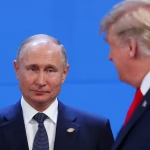
Donald Trump is heading to Davos with a wrecking ball. Over the weekend, the President shattered a fragile trade truce by threatening 10% tariffs on NATO allies as leverage to seize Greenland.
Treasury Secretary Scott Bessent is already dismissing European outrage as "weakness," but the bluster hides a terrifying reality. This isn’t just another trade spat over fish or aluminum. Europe is currently sitting on an $8 trillion financial "nuclear option" that could bankrupt the American middle class before the first Greenland tariff even hits.
The logic in Washington is that America always wins a trade war because it buys more than it sells. That arrogance ignores a fatal flaw: Europe doesn't just sell us luxury cars; it buys our national debt. George Saravelos at Deutsche Bank recently pointed out that the U.S. has a massive, bleeding vulnerability.
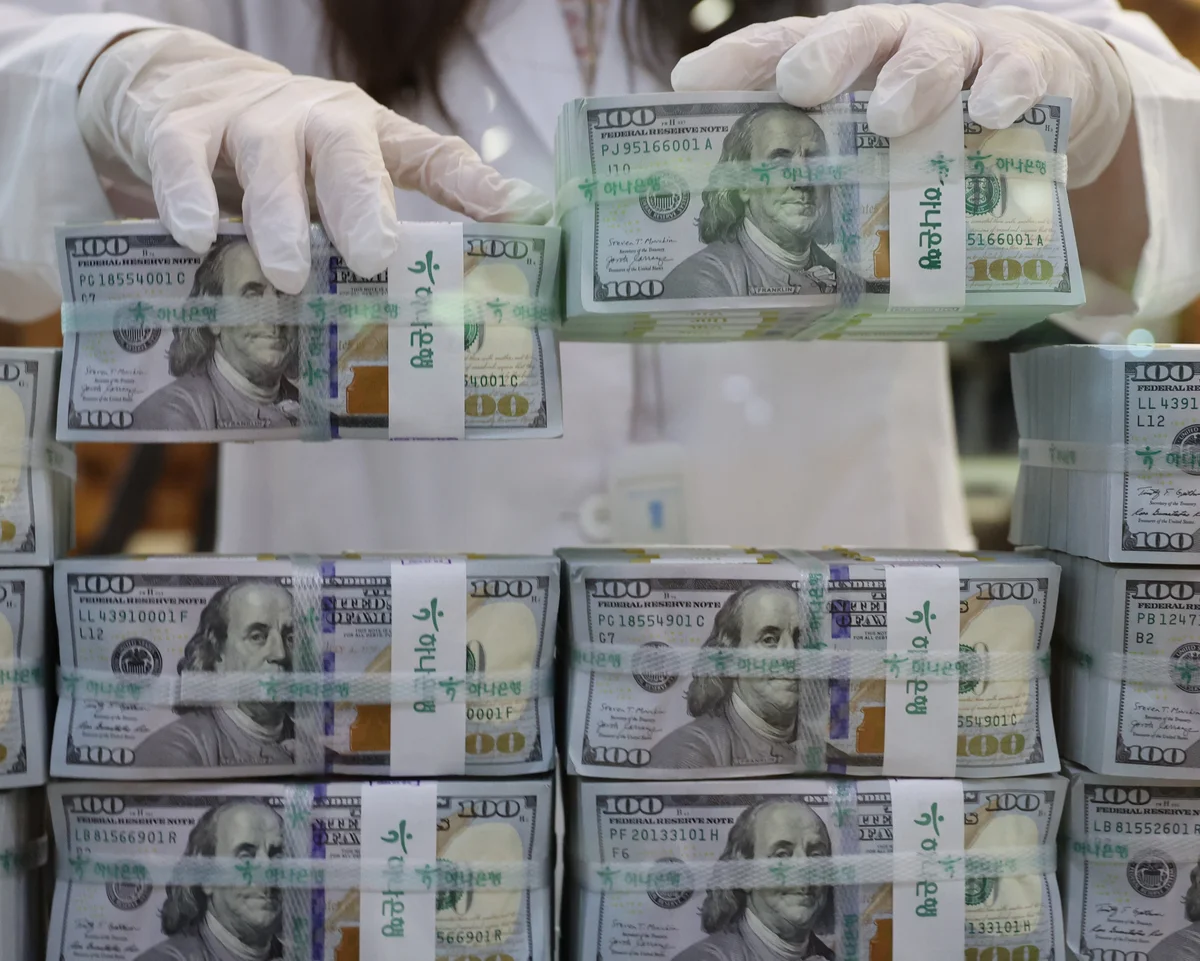
European countries own $8 trillion in U.S. bonds and equities—nearly double the rest of the world combined. If France’s Emmanuel Macron triggers the EU’s "anti-coercion instrument" in response to the Greenland land-grab, the counter-strike won't be on trade. It will be a coordinated "Sell America" fire sale that turns the U.S. dollar into a toxic asset.
Your Mortgage Is Now a Diplomatic Pawn

The dollar’s ‘safe-haven’ status depends on foreign confidence—and that confidence is no longer guaranteed.
If you’re wondering why a fight over a frozen territory thousands of miles away matters to you, look at your monthly bills. The U.S. government is currently running record deficits and relies on European investors to keep the lights on.
The U.S. net international investment position—the gap between what we owe the world and what they owe us—has plunged to a record negative $27.6 trillion. We are a nation living on a credit card issued by people we are currently insulting.
When Danish pension funds start dumping dollars, it isn't just a political statement. It is a market signal that the "safe haven" is on fire.
This isn't corporate theory; it's a direct threat to your wallet. Every time a European bank sells a U.S. Treasury, the cost of borrowing for American car loans, credit cards, and mortgages goes up. Trump is promising a "revolution of common sense" to fix housing affordability ahead of the midterm elections.
Yet, he is simultaneously hand-delivering Europe the power to spike U.S. rates and tank his own domestic agenda. The President is betting on strength, but he’s playing a hand where the other side holds the deed to his house.
The math is brutal. In the first 48 hours following Trump’s "Truth Social" post, the yield on the 10-year U.S. Treasury bond gained 0.1 percentage points, jumping to 4.3%.
That is the sharpest move higher this year. It sounds small until you realize it effectively wipes out months of Federal Reserve efforts to lower borrowing costs for families. If Europe continues to withdraw its capital, we aren't just looking at more expensive French wine; we are looking at an era where the American dream of homeownership becomes a casualty of Arctic ambition.
The End of the Safe-Haven Dollar

U.S. foreign policy decisions are increasingly shaping global investor confidence.
For nearly a century, the U.S. dollar has been the world’s ultimate safety net. That status is currently being incinerated in real-time.
Even ideologically friendly leaders like Italy’s Giorgia Meloni are warning Trump to back down as European political cohesion solidifies against him. The $8 trillion "Sell America" trade is the ultimate weapon because it is silent and automatic.
It doesn't require a military invasion; it just requires European fund managers to decide that American assets are no longer a safe place to park their money.
"European countries own almost twice as much as the rest of the world combined," Saravelos warned. "It is not clear why Europeans would be as willing to play this part" while their sovereignty is under threat. In 2025, European equities already outperformed U.S. stocks by nearly 20 percentage points.
The appetite for the dollar was already waning; Trump’s Greenland ultimatum might be the final push. If the "Sell America" momentum continues, the dollar’s role as the world's reserve currency could collapse, bringing an end to the era of cheap American living.
When investors flee the dollar, the prices of everything we import—from electronics to oil—go up. Inflation, the very beast the administration claims to be fighting, would be fed by the President’s own foreign policy.
This is the "weaponization of capital" that France is urging. By making it too expensive for the U.S. to borrow, Europe can exert more pressure than any tariff ever could. They aren't firing shots; they are simply closing their wallets.
Why This Chaos Is Just Beginning
Danish Prime Minister Mette Frederiksen at the Prime Minister's Office in Copenhagen, Denmark, January 13, 2026.
Trump’s team, including National Economic Council Director Kevin Hassett, is framing the Greenland threat as a classic "Art of the Deal" bargaining ploy. They expect Europe to blink.
But the rhetoric from Paris and Copenhagen suggests this time is different. The "anti-coercion" tools being sharpened in Brussels are designed to target finance, not just trade. This is a level of economic warfare that bypasses the factory floor and goes straight for the central bank.
The U.S. is currently in a "record negative extreme" regarding its financial standing with the rest of the world. We are more vulnerable today than during the trade wars of the first Trump term.
At that time, global markets were still flush with post-pandemic liquidity. Today, the world is looking for an excuse to diversify away from U.S. volatility. Greenland isn't just a territory; it’s the spark for a global financial decoupling that could leave the U.S. isolated.
The real risk isn't just a 10% tariff on German cars. The risk is a structural divorce between the world’s two largest financial blocs. If the Western alliance fractures over Greenland, the $8 trillion currently stabilizing the U.S. economy will evaporate.
We are no longer talking about a trade war; we are talking about a total financial collapse of the transatlantic order. By the time the Davos summit ends, we will know if the American economy is about to face its most expensive lesson in history.
The 'Golden Dome' and the Race for the 21st Century
While the headlines scream about real estate, the quiet battle is over what lies beneath the melting ice. Trump’s push for Greenland is inextricably linked to his $175 billion "Golden Dome" missile defense system.
To build it, the U.S. needs rare earth minerals—the same minerals that currently keep China as a global tech gatekeeper. Greenland holds one of the world's largest untapped deposits of these elements, and Trump's "Donroe Doctrine" is a transparent attempt to secure an American monopoly on the future of warfare and energy.
But there is a catch: Europe has already spent the last two years embedding itself into Greenland’s mining sector. In 2024, the EU launched a massive €94 million strategic partnership with Nuuk to ensure that these critical minerals flow to Brussels, not just Washington or Beijing.
By threatening Greenland’s sovereignty, Trump is effectively trying to "eminent domain" Europe’s green energy transition. If the U.S. seizes control, the wind turbines, electric vehicles, and advanced semiconductors that Europe is betting its future on will suddenly be subject to the whims of the White House.
This isn't just a land grab; it's a supply chain heist. The Danish government has already signaled that Greenland’s resources are a "red line" for the EU's strategic autonomy.
If Trump forces a confrontation, he isn't just fighting for a territory—illegally or otherwise—he is declaring war on the very materials that will decide who wins the next century.
For the average American, this means the "Greenland War" could determine whether the next generation of tech is "Made in America" or becomes another casualty of a fractured West.