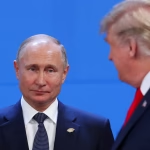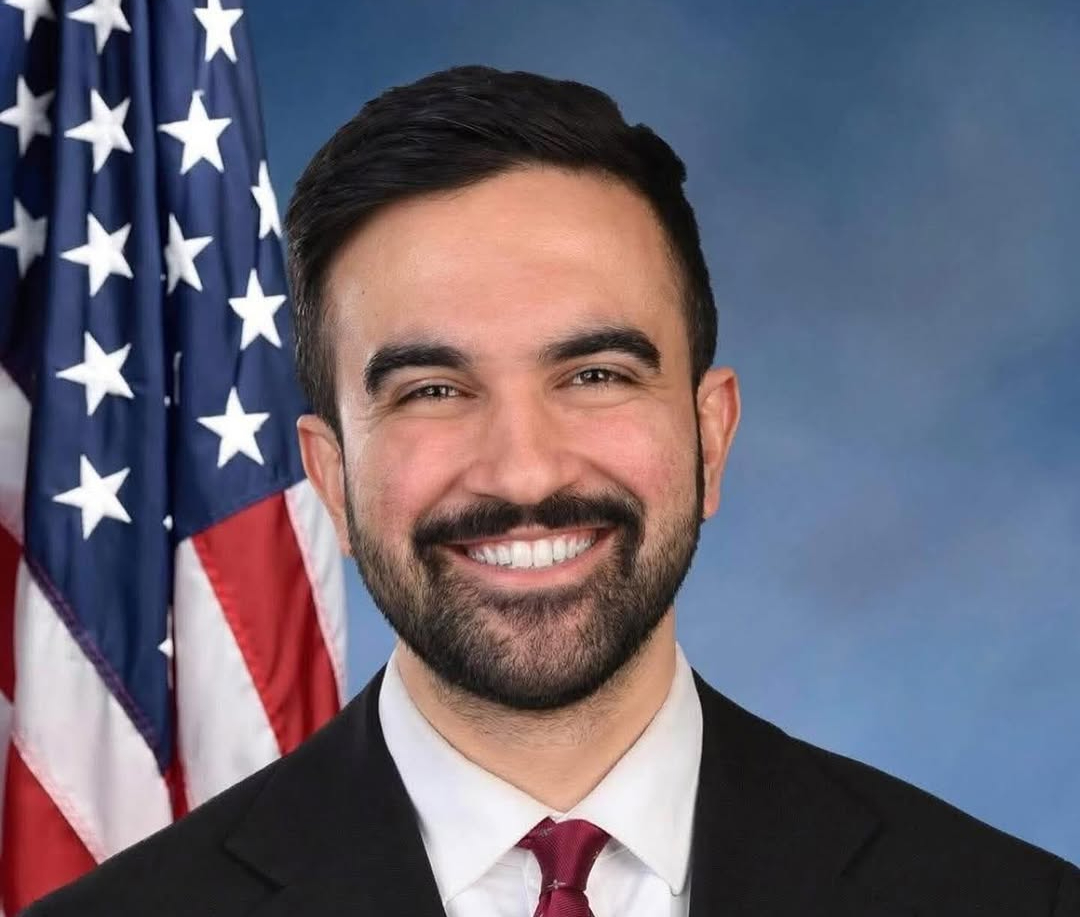
Zohran Mamdani and Donald Trump: Power, Populism, and a New Political Parallel
Two Outsiders, One Moment of Convergence
Zohran Mamdani’s rise in New York politics has prompted an unusual comparison: not to fellow progressives, but to Donald Trump. The comparison is not ideological. It is structural. Both men built political power by rejecting party orthodoxies, speaking directly to voters who felt ignored, and treating institutions as tools rather than constraints. In a deeply polarized America, that shared approach to power matters.
Mamdani, a democratic socialist and New York state assemblymember, has positioned himself as an insurgent voice within Democratic politics, challenging long-standing assumptions about housing, public spending, and affordability. Trump, now in his second presidential term, remains the most disruptive force the Republican Party has produced in decades. Their policy agendas sit on opposite ends of the spectrum, but their political methods rhyme.
This parallel is not about alliance. It is about how power is acquired and exercised in an era where institutional trust is weak and voter frustration is high.
Mamdani’s Political Identity and Governing Vision
Mamdani’s career has been defined by a willingness to challenge entrenched interests within his own party. He has focused heavily on cost-of-living pressures, housing access, public transit, and public services, framing these not as abstract policy debates but as immediate economic constraints on everyday life in New York.
His appeal rests on clarity rather than compromise. Mamdani does not soften his ideological commitments, but he presents them through concrete outcomes: lower costs, more predictable services, and a larger role for public institutions in stabilizing daily life. This approach has resonated with younger voters and working-class communities frustrated by incrementalism and rising expenses.
Crucially, Mamdani has treated political power as something to be seized directly rather than negotiated slowly. He has challenged party leadership when necessary and embraced conflict as part of political change, a trait more often associated with Trump than with progressive Democrats.
Trump’s Model: Centralized Authority and Disruption
Trump’s governing style has remained consistent across his political career. He centralizes authority, uses public confrontation as leverage, and treats institutions as arenas for dominance rather than consensus. His economic messaging has focused on protectionism, energy independence, and reshoring, while his cultural messaging emphasizes control, order, and national identity.
Where Mamdani seeks to expand public provision, Trump seeks to reassert executive power. Where Mamdani frames inequality as a systems problem, Trump frames it as a failure of leadership and borders. These differences are fundamental. Yet both leaders rely on direct voter loyalty more than institutional approval.
This reliance on personal mandate over elite validation is the core of their similarity.
Why the Comparison Resonates Now
The Mamdani-Trump comparison emerges at a moment when traditional political coalitions are under strain. Voters across the spectrum are less patient with incremental reform and more receptive to leaders who promise visible change, even at the cost of institutional friction.
Both figures speak to economic anxiety, albeit from different directions. Mamdani emphasizes rent, transit, healthcare, and wages. Trump emphasizes trade, energy prices, and national competitiveness. In both cases, the message is that existing systems have failed to deliver stability.
This shared diagnosis — that institutions are lagging reality — helps explain why two ideologically opposed figures can be discussed in the same analytical frame.
Points of Contact Without Ideological Alignment
Despite sharp disagreements, there are limited areas where Mamdani and Trump’s interests intersect in practice. Infrastructure, urban safety, and economic productivity affect both federal and local outcomes. Federal-local coordination is not optional in areas such as transportation funding, disaster response, or large-scale housing finance.
Mamdani has framed engagement with federal authorities as transactional rather than ideological: cooperation where it benefits residents, resistance where it conflicts with local law or priorities. Trump, for his part, has historically shown willingness to work with local leaders when outcomes can be claimed as wins, regardless of party affiliation.
This does not signal partnership. It signals pragmatism under constraint.
Structural Power and Asymmetry
Any interaction between Mamdani and Trump occurs within a clear power imbalance. Federal authority controls funding streams, regulatory frameworks, and national messaging capacity. Local leaders depend on these structures even when they oppose the administration politically.
Mamdani’s challenge is to maintain ideological credibility while navigating these constraints. Trump’s leverage is institutional, but it is also reputational: conflict can mobilize his base, while cooperation can project control. Both leaders understand this dynamic and deploy it strategically.
The result is not consensus, but managed tension.
What This Reveals About American Politics in 2026
The Mamdani-Trump parallel highlights a deeper shift in American politics: ideology matters, but method matters more. Voters increasingly reward leaders who appear decisive, direct, and willing to challenge norms — regardless of whether they come from the left or the right.
This does not mean convergence of beliefs. It means convergence of tactics. Political success now depends less on policy nuance and more on narrative clarity, perceived authenticity, and the ability to frame institutions as either allies or obstacles.
Mamdani represents a left-wing version of this model. Trump represents a right-wing version. Both are products of the same structural dissatisfaction.
The Limits of the Parallel
The comparison should not be overstated. Mamdani’s vision relies on expanding democratic participation and public accountability, while Trump’s approach concentrates power and loyalty. Their end goals differ sharply, as do their views on immigration, civil rights, and the role of government.
Where they align is not ideology, but strategy: both believe power is taken, not granted.
Why This Relationship Matters Going Forward
As economic pressures persist and institutional trust continues to erode, figures like Mamdani and Trump will shape the political playbook for others. Their interactions — cooperative or confrontational — will signal how flexible America’s political system remains under stress.
Whether this results in more effective governance or deeper polarization will depend less on personalities and more on outcomes. For now, the Mamdani-Trump comparison offers a clear lesson: in modern American politics, the path to power increasingly runs through disruption, not consensus.