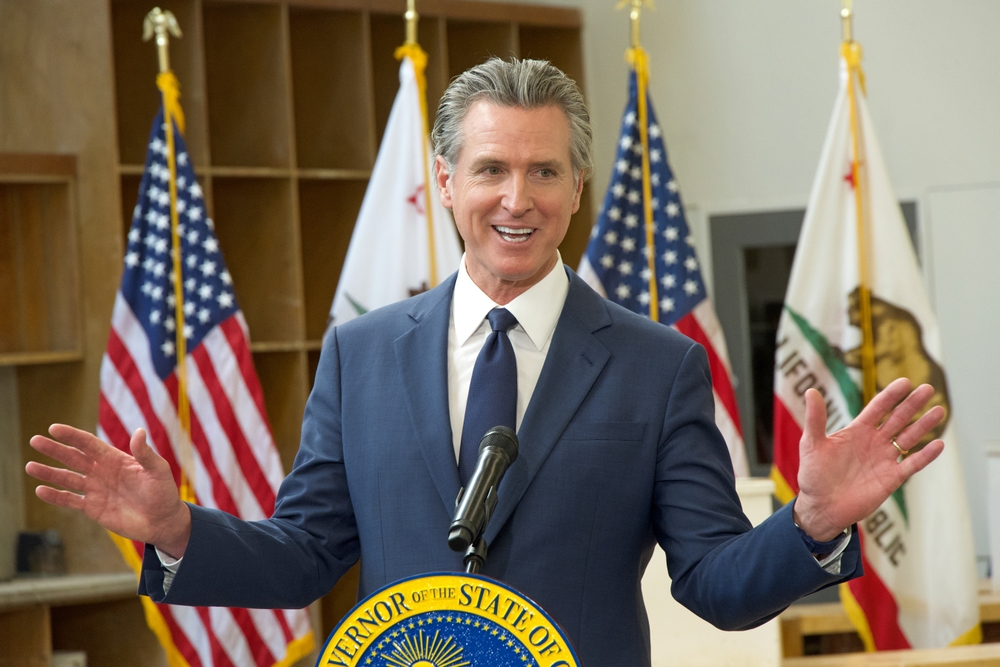
Gavin Newsom: From PlumpJack to Platform Politician
Gavin Newsom’s career is a study in contrasts — shaped by early economic hardship, nurtured by elite networks, and defined by an ability to navigate both entrepreneurial and political worlds. A figure who straddles business and public service, Newsom’s story offers insight into how political leaders accumulate influence, wealth, and policy leverage over decades.
Early Life: Hardship and Opportunity
Gavin Christopher Newsom was born on October 10, 1967, in San Francisco, California, into a family intimately familiar with both privilege and struggle. After his parents divorced when he was a toddler, he and his sister were largely raised by their mother, Tessa, a single parent who balanced up to three jobs — as a secretary, waitress, and paralegal — to support her family. Her effort to make ends meet included working long hours and even renting out a bedroom to cover rent, a formative experience that Newsom has said taught him resilience and work ethic early in life.
At the same time, Newsom’s father, William Alfred Newsom III, was a politically connected judge with deep ties to San Francisco’s elite, including the Getty family. These divergent influences — working-class struggle at home and proximity to wealth and power through his father’s connections — would come to define much of Newsom’s later career landscape.
First Business Success: PlumpJack and Elite Backing
Newsom’s first major professional break did not come in politics, but in business. In the early 1990s, he opened a small wine shop called PlumpJack on San Francisco’s Fillmore Street.
What could have been a modest local enterprise was instead incubated with the backing of billionaire Gordon Getty, a close family friend and oil heir who reportedly treated Newsom as a surrogate son. Getty’s financial support extended beyond the first store, helping Newsom grow PlumpJack into a diversified hospitality and lifestyle brand encompassing wineries, restaurants, hotels, and related businesses.
PlumpJack quickly became more than a retail shop. Under Newsom’s direction it expanded into high-end vineyards, boutique hotels, and multiple restaurant concepts, generating meaningful revenue and personal wealth well before Newsom formally entered elected office. Though he eventually placed his business holdings into a blind trust to comply with state ethics rules, the economic foundation laid by PlumpJack and related ventures contributed significantly to his personal financial profile.
Early Public Service: San Francisco Politics and Name Recognition
Newsom’s transition from entrepreneur to public servant began in the mid-1990s. His first formal appointment was to the San Francisco Parking and Traffic Commission, giving him visibility in local government and putting him in the orbit of then–Mayor Willie Brown. Brown later appointed Newsom to the San Francisco Board of Supervisors, the city’s legislative body, where he represented District 2 and gained experience on issues spanning urban policy, public safety, and community engagement.
In 2003, Newsom made a successful bid for mayor of San Francisco, becoming the youngest person elected to that office in nearly a century. As mayor, he drew national attention in 2004 when he directed the city-county clerk to issue marriage licenses to same-sex couples, a decision that elevated his profile and foreshadowed wider cultural and policy debates across the United States.
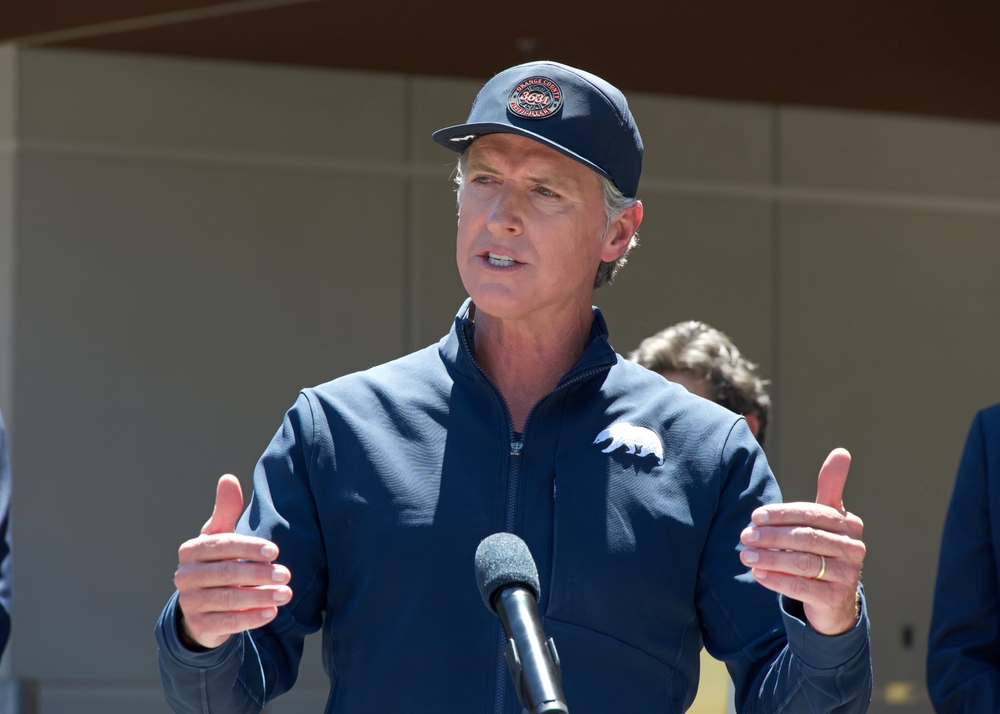
Gavin Newsom
Statewide Politics: Lieutenant Governor and Governorship
Newsom’s career continued upward at the state level when he was elected Lieutenant Governor of California in 2010. In that role, he presided over the state senate and served as an ambassador for California’s economic and educational interests, gaining experience in statewide governance and deepening relationships with business and civic leaders.
In 2018, Newsom successfully ran for Governor of California, assuming office on January 7, 2019. His tenure has included bold policy initiatives in areas ranging from climate action and economic growth to education and healthcare investment, shaping California’s national profile as both an economic powerhouse and a laboratory for progressive governance.
Wealth and Financial Position
Newsom’s net worth reflects his dual careers in business and public service. Before entering politics, his ownership stake in PlumpJack entities — including wineries and hospitality properties — laid the groundwork for personal wealth accumulation. Over time, his financial disclosures reflected growth in investments, real estate, and enterprise interests. One historical analysis found that his financial disclosures moved from reported assets worth less than $1 million in the late 1990s to multi-million-dollar holdings through business and investment income in the 2010s.
Public filings also documented interests in ventures such as PlumpJack wineries and related brands, with some listed at values exceeding $1 million. Those business interests, combined with investment holdings and real estate — including private residences and income-producing PlumpJack properties — contribute to a personal financial profile that places Newsom among the more affluent state executives in the U.S.
It’s worth noting that in his gubernatorial role, Newsom placed his PlumpJack interests into a blind trust and signed an order barring his administration from doing business with those entities to avoid conflicts of interest. These actions reflect a recognition of ethical constraints that often come with the entanglement of entrepreneurship and public office.
The Billionaire Tax Debate and Business Impact
Newsom’s unique biography — the son of a working-class mother and beneficiary of billionaire patronage — has shaped his stance in one of California’s most consequential economic policy debates: the 2026 Billionaire Tax Act. This proposed one-time 5% levy on assets held by state residents worth over $1 billion has grown into a flashpoint in California politics, drawing support from labor unions and progressive activists and opposition from business leaders and centrist politicians.
Newsom has emerged as one of the tax’s most vocal critics, describing it as potentially harmful to the state’s fiscal health. He warns that imposing such a tax could prompt capital flight, investment relocations, and a loss of high-income earners whose income tax contributions help fund public services. In the current debate, high-profile billionaire figures — including tech leaders and investors — have publicly opposed the measure, and some have reportedly begun shifting assets out of California in response to its potential passage.
Critics of Newsom argue that his opposition to wealth taxation aligns him with the wealthy donors who supported his early career, while supporters contend he is prioritizing economic stability and long-term job creation over short-term revenue initiatives. Regardless of perspective, the debate over the billionaire tax underscores how Newsom’s personal history and policy priorities intersect with broader economic concerns about inequality, investment retention, and state competitiveness.
Policy and Governance in Office
As governor, Newsom has balanced economic growth strategies with social policy aims. His 2026–27 budget proposal reflects a cautious but forward-looking fiscal approach that bolsters reserves while sustaining investments in education, childcare, public safety, and health services. By refilling California’s Rainy Day Fund and expanding funding for universal transitional kindergarten and childcare access, he has sought to strengthen the state’s long-term economic foundations even amid broader fiscal uncertainties driven by federal policy shifts and labor-market volatility.
Newsom’s economic policy track record also includes workforce development initiatives and investments that support career pathways in sectors with high growth potential, aligning with efforts to match California’s skilled workforce to evolving economic demands.
National Profile and Future Prospects
Newsom’s accumulated experience in business, local government, and statewide office has elevated him to national prominence within the Democratic Party. He has been discussed as a potential presidential contender, with his political and economic philosophy bridging progressive policy goals and business-oriented pragmatism. That positioning reflects his lived experience — navigating both entrepreneurial environments and complex public policy challenges in one of the nation’s largest and most economically significant states.
Whether in debates over taxation, economic growth strategies, or governance reforms, Newsom’s trajectory illustrates the interplay between personal history, wealth generation, and political leadership in contemporary American politics.