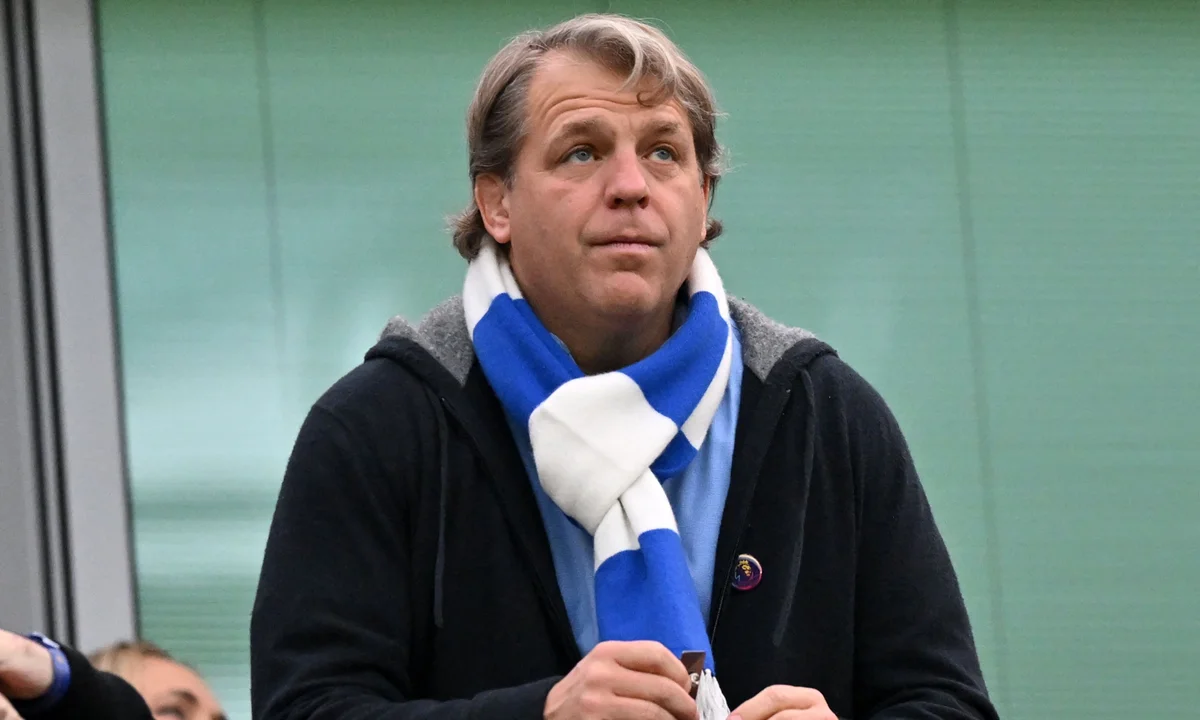
Todd Boehly: The Private-Equity Architect Reshaping Elite Sport
Co-Founder, Chairman & CEO, Eldridge Industries
Todd Boehly is importing institutional private-equity mechanics into European football—reshaping how elite clubs finance talent, manage risk, and arbitrage time.
The Executive Dossier
Strategic Authority
Boehly matters now because he sits at the intersection of capital, culture, and governance—deploying long-duration private money inside industries traditionally constrained by legacy rules and public scrutiny.
Core Vitals
Full Name: Todd Lawrence Boehly
Age: 52 (born September 20, 1973)
Place of Birth: Fairfax County, Virginia
Residence: Darien, Connecticut / London
Estimated Net Worth: ~ $9.3 billion (Forbes, 2026)
Capital Structure: GP-led, operating alongside institutional LP partners
Assets Under Management: $74 billion (following the 2025 consolidation of Eldridge Capital and Wealth divisions)
Education & Pedigree
Boehly holds a B.B.A. from the College of William & Mary and studied at the London School of Economics—an early exposure to transatlantic financial networks that later became central to his global deal-making.
His formative years at Citibank and Credit Suisse provided the technical grounding for the complex debt-and-equity structures that now underpin his investment strategy across insurance, media, and sport.
The Empire: Eldridge Industries
Through Eldridge Industries, Boehly oversees a diversified global holding company employing more than 5,000 people. The portfolio is best understood not by sector, but by capital function.
Cash-Flow Engines
Security Benefit—Eldridge’s life insurance and annuities platform—generates the predictable cash flows that fund longer-duration, higher-risk bets elsewhere in the portfolio.
Influence Assets (Media & Sport)
Eldridge controls or holds major stakes in cultural and attention-shaping platforms, including The Hollywood Reporter, Variety, Rolling Stone, and Billboard (via Penske Media), alongside high-profile sports franchises such as the LA Dodgers, LA Lakers, and RC Strasbourg (via BlueCo).
Optionality & Growth Bets
Boehly also maintains significant positions in A24, DraftKings, and premium music catalogs, including Bruce Springsteen’s—assets designed to compound cultural relevance as well as financial return.
The Playbook: Institutional Disruption
Boehly’s defining tactical innovation is his long-contract strategy at Chelsea Football Club, where players were signed to unprecedented seven- and eight-year deals.
By spreading transfer costs across extended amortization periods, Boehly effectively re-engineered short-term financial optics while preserving long-term squad optionality. The move exploited gray areas in existing sustainability rules—so successfully that the Premier League was forced to revise its regulations in 2024.
The lesson is clear: when rules lag capital innovation, capital wins—temporarily.
Risk Profile & Current Climate (2026 Outlook)
Boehly’s current frontline is defined by governance friction rather than asset acquisition. His "multiclub" experiment is entering a phase of high-stakes consolidation.
-
The Earl's Court "Cold War": The stadium issue is no longer theoretical. In late 2025, the Earl’s Court Development Company (ECDC) received planning approval for a residential-led masterplan that effectively boxes Chelsea in. Boehly’s preference for a new "destination stadium" at Earl’s Court now clashes directly with the reality of the site’s approved usage, further straining his alignment with Clearlake Capital, who have explored redeveloping the existing Stamford Bridge footprint.
-
The £150m Legal "Holdback": While Boehly has championed transparency, the club remains under significant pressure. It was recently revealed that Chelsea’s owners maintain a £150m cushion (a "holdback" from the sale price) specifically to cover fines from the 74 FA charges related to the previous regime. While this protects Boehly's personal capital, it does not shield the club from potential sporting sanctions, such as points deductions, which remain a threat for the 2026/27 season.
Governance & Power Map
Boehly exercises significant unilateral authority across Eldridge’s private holdings, but remains structurally constrained in joint-control environments.
-
Unilateral Control: Eldridge portfolio strategy, capital allocation, executive appointments.
-
Shared Control: Chelsea FC ownership (split with Behdad Eghbali of Clearlake Capital).
-
External Constraints: Premier League governance, financial sustainability rules, and public scrutiny.
The Human Element
A former championship wrestler, Boehly is known for endurance rather than flash—a trait that mirrors his boardroom style of outlasting rather than overpowering opponents.
He is married to Katie Garrett Boehly and has three sons. His philanthropic work focuses on epilepsy research and the Focused Ultrasound Foundation, initiatives shaped by personal family health experiences and a belief in applied medical innovation.
Editorial Bottom Line
Todd Boehly is not merely a sports owner or media investor. He is a systems operator, testing how far institutional capital can bend legacy industries before governance catches up. Whether his Chelsea experiment becomes a blueprint—or a cautionary tale—will define the next phase of elite sports ownership.
👉View other Premier League owners, including: Arsenal owner Stanley Kroenke