
The Great Consolidation: Rio-Glencore and the 2030 Race for Resource Sovereignty
The announcement that Rio Tinto and Glencore have resumed negotiations for a $260 billion mega-merger marks the definitive start of the era of Resource Sovereignty.
This macro-shift represents a fundamental transition from the era of fragmented commodity trading to one of institutional resource dominance.
The tipping point has arrived as global copper prices breach $13,000 per ton, signaling that the supply side of the energy transition is nearing a state of structural deficit. For the modern CEO, the market displacement risk is absolute: the formation of a mining "super-major" threatens to gate-keep the critical minerals required for every industrial supply chain in the western hemisphere.
The Death of the Spot Market and the Rise of Integrated Monopolies
The structural reality of this merger becomes clear as it reshapes the global competitive hierarchy. This is not merely a corporate acquisition; it is a strategic response to the fragmentation of global trade moats.
By combining Rio Tinto’s tier-one iron ore and lithium assets with Glencore’s forensic marketing and copper dominance, the resulting entity will possess an unassailable grip on the transition economy. The commercial consequence for downstream industries—from automotive to telecommunications—is an immediate loss of negotiating leverage as the "Electric Gold" supply chain consolidates into a single boardroom.
Industrial leaders must recognize that the "Spot Market" for critical metals is becoming a relic of a low-demand past. As the Bank of England and the Federal Reserve struggle with persistent "greenflation," the ability to secure raw materials at a fixed cost becomes a primary competitive advantage.
The Rio-Glencore entity will effectively act as a private central bank for physical assets, dictating the pace of global infrastructure development through its control of the London Metal Exchange (LME) inventory levels.
Structural Drift and the End of the Diversified Portfolio
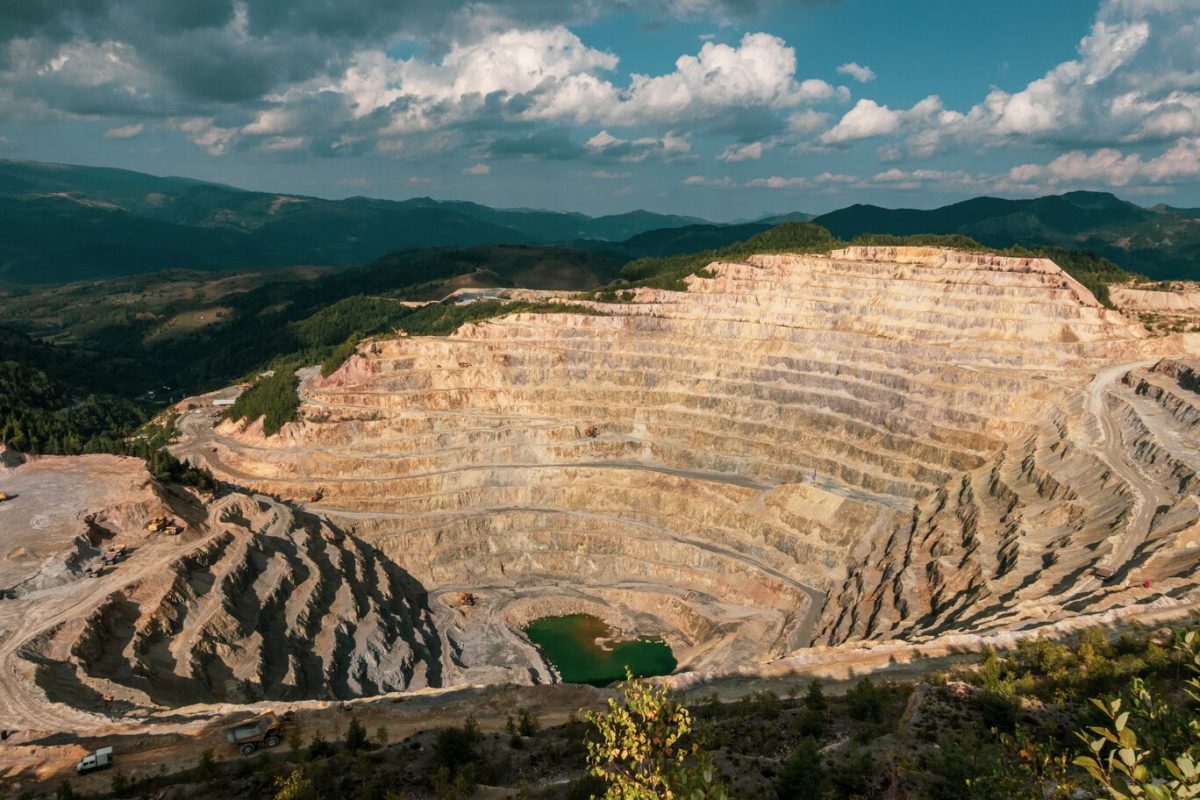
An open-pit copper mine supplying a critical material for global electrification and industrial growth.
The "Drift" in the mining sector is moving away from the ESG-mandated divestments of the early 2020s toward a hard-power focus on scale and liquidity. We are witnessing a slow-moving but inevitable shift where the "clean" energy narrative is being subsumed by the "secure" energy narrative.
Institutional investors are no longer rewarding companies for shrinking their footprints; they are rewarding them for securing the physical materials that power the future state. This merger validates the "Bigger is Better" mantra, forcing smaller players into a position of perpetual vulnerability where they can no longer compete on capital expenditure or technological integration.
| Current Market State | 2026–2030 Predicted State |
|---|---|
| Fragmented supply chains with high reliance on spot-market pricing. | Integrated resource fortresses dictating long-term contract terms. |
| Divestment from carbon-intensive assets due to ESG pressure. | Strategic spin-offs and tax-efficient coal entities under renewed energy-security frameworks. |
| Volatile, mid-cap dominance in critical mineral extraction. | Massive institutional liquidity and high-multiple “super-major” dominance. |
| Competitive tension between mining, trading, and logistics arms. | Full-stack vertical integration from the mine face to the trading floor. |
| Regionalized mineral security with high vendor dependency. | Transnational resource sovereignty led by a small number of global mining titans. |
| Just-in-time inventory management for industrial metals. | Strategic mineral stockpiling as a core corporate treasury function. |
Geopolitical Displacement and the Carbon-Energy Paradox
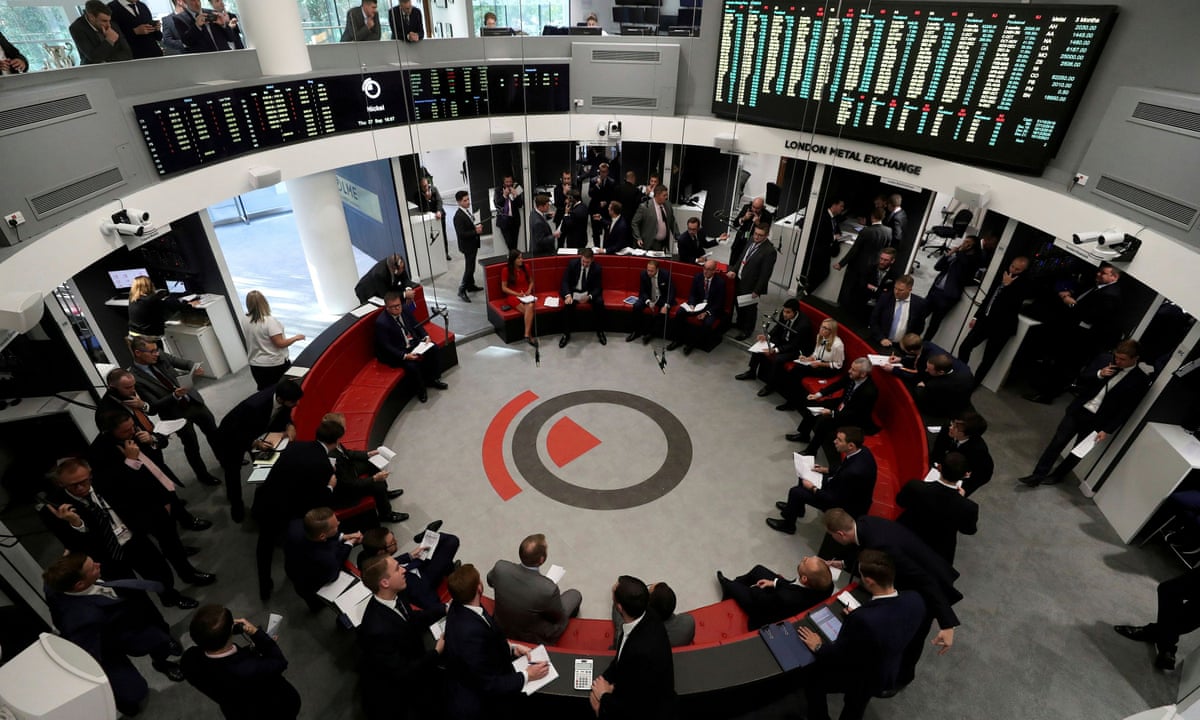
The London Metal Exchange plays a central role in global industrial metals pricing.
The second-order exposure of this merger lies in how it navigates the friction between Western decarbonization goals and the reality of carbon-intensive extraction.
Glencore’s coal business, often described as the "dirty secret" of the commodity world, is poised for a strategic tax-free spin-off that aligns perfectly with shifting fiscal policies in the United States and Australia.
This move allows the core Rio-Glencore entity to scrub its balance sheet of emissions while retaining the massive cash flows required to fund the $260 billion integration. The consequence for the global energy transition is a bifurcation of the market: a "green" mining giant on the surface, supported by a "grey" energy powerhouse in the background.
This paradox creates a "Governance Gap" for institutional shareholders who must balance carbon neutrality commitments against the necessity of resource security.
If the merger proceeds, the resulting entity will likely utilize its coal cash flows to aggressively outbid competitors for emerging copper and lithium deposits in sub-Saharan Africa and Latin America.
This "Grey-to-Green" recycling of capital is becoming the standard operating procedure for the world's most powerful commodity actors, effectively bypassing traditional ESG constraints through structural engineering.
Industrial Exposure: The Tech and Automotive Chokepoints

A metal smelting facility where raw ore is processed into usable industrial materials.
The disruption density of this event is most acute in the high-tech and automotive sectors, where the reliance on copper and lithium is absolute. For a CEO at a Tier 1 automotive manufacturer, the Rio-Glencore merger represents a catastrophic loss of supply-side competition. When two of the world’s three largest producers of battery-grade minerals merge, the ability to negotiate long-term price ceilings disappears.
We are entering a period of "Price Volatility Paralysis," where the cost of raw materials can fluctuate by 40% in a single quarter, rendering traditional manufacturing margins obsolete.
In the technology sector, the exposure is even more profound as AI-driven data centers demand unprecedented amounts of copper for power distribution and cooling systems. Entities like Microsoft, OpenAI, and Alphabet are now competing directly with the automotive industry for the same finite pool of minerals.
The Rio-Glencore entity will sit at the center of this "Demand Collision," possessing the authority to prioritize supply based on geopolitical alignment or institutional profit margins. This is the new "Strategic Scarcity"—a market environment where access to the material is more important than the price of the asset.
-
Rio Tinto (RIO-GB): Positioning as the dominant acquirer to secure a "Future-State" mineral portfolio.
-
Glencore PLC: Facing a 10% share price surge as its trading-led model is absorbed into institutional scale.
-
London Stock Exchange (LSE): Witnessing a massive concentration of liquidity into a single commodity-oriented security.
-
The G7 & EU Commission: Monitoring the merger for its impact on the critical minerals supply chain and trade security.
-
Antofagasta & Anglo American: Forced into a "consolidate or die" scenario as the competitive bar for scale is raised.
-
The IMF & World Bank: Evaluating how this monopoly power affects emerging market debt and resource pricing.
-
Bank of England: Watching the inflationary impact of record-high copper prices on global industrial manufacturing.
-
Stoxx Europe Basic Resources Index: Reflecting the broader market shift toward heavy industry and raw material assets.
-
Smead Capital Management: Highlighting the necessity of liquidity for large-scale institutional fund managers.
-
LME (London Metal Exchange): Navigating the pricing pressure as copper hits historic highs of $13,000 per ton.
-
The White House: Influencing the coal spin-off narrative through a renewed focus on domestic industrial energy.
-
Teck Resources: Serving as a benchmark for the "Mega-Merger" mania sweeping the industrial sector.
-
IEA (International Energy Agency): Predicting a 40% shortfall in copper production relative to 2030 climate goals.
-
Sovereign Wealth Funds (PIF, GIC): Seeking direct equity stakes in the new entity to hedge against national resource scarcity.
-
BHP Group: The only remaining peer capable of challenging the Rio-Glencore dominance in the copper-iron-lithium triangle.
The foresight required to navigate this shift is immense and demands an immediate audit of all Tier 3 and Tier 4 suppliers. Every sentence in a board-level briefing must reflect the reality that the "Legacy Miner" is an endangered species.
The visionary trait for the next five years is the ability to aggregate market power before the copper supply gap becomes an insurmountable barrier to entry. The consequence of delay is a permanent exclusion from the primary wealth-generation engine of the late 2020s.
The Oracle’s Directive: Navigating the Resource Monopoly
For the CEO and the board, the foresight directive is absolute: you must hedge against the consolidation of the raw material sector by securing long-term offtake agreements today.
The formation of a $260 billion mining fortress is the final signal that the period of cheap, accessible minerals has ended. Institutional leaders must pivot their capital allocation toward securing physical supply chains, treating commodity access as a primary fiscal moat rather than a secondary operational cost.
The future of global industry will be dictated by those who own the "Electric Gold" at the source. This is not a possibility; it is an operational inevitability driven by the compounding demands of the AI energy crunch and the global energy transition.
CEOs who wait for the merger to conclude before adjusting their strategic procurement will find themselves paying a permanent "Monopoly Tax" to the world's new resource sovereigns.
Frequently Asked Questions on the Rio Tinto–Glencore Merger
Is the Rio Tinto and Glencore merger finalized in 2026?
No. As of January 9, 2026, the companies have only confirmed "preliminary discussions." Under UK Takeover Code, Rio Tinto faces a "put up or shut up" deadline of 5:00 PM on February 5, 2026. By this date, they must either announce a firm intention to make an offer or withdraw from the process for at least six months.
How does the Glencore merger affect global copper prices?
The news alone has helped push copper prices past a record $13,300 per tonne. A successful merger would consolidate approximately 1.6 million tonnes of annual production under one entity, creating a "Resource Fortress." This concentration of supply effectively removes competitive pricing pressure, allowing a single boardroom to dictate global contract terms for the "Electric Gold" required for the energy transition.
What is the "Electric Gold" race for 2030?
"Electric Gold" is the 2026 industry term for copper. The "race" refers to the global scramble to secure physical supply before the projected 10-million-tonne shortfall by 2040. With the RACE for 2030 initiative and national frameworks prioritizing electrification, copper has replaced oil as the primary currency of geopolitical power and industrial survival.
Why did Rio Tinto and Glencore resume merger talks?
The primary catalyst is the AI-driven demand shock. While Rio Tinto is heavily reliant on iron ore—currently threatened by a cooling Chinese property sector—Glencore offers a pipeline to produce 1.6 million tonnes of copper annually by 2035. Rio Tinto views this acquisition as a mandatory pivot to survive in a decarbonizing, high-tech global economy.
Will Glencore spin off its coal business in 2026?
This remains the most contentious "sticking point." While Rio Tinto previously exited coal in 2018, recent reports suggest the firm may now be open to retaining Glencore’s coal assets. This strategic U-turn is influenced by the "Trump Framework," which has softened the regulatory backlash against fossil fuels in favor of immediate energy security and cash-flow generation.
What is the market cap of the combined Rio Tinto and Glencore?
If finalized, the combined entity would have an enterprise value exceeding $260 billion (£190 billion). This would immediately displace BHP as the world's largest mining company, creating a dominant "Super-Major" with unprecedented liquidity for institutional investors.
How does the Trump framework affect mining mergers?
The landmark US-Australia Critical Minerals Framework (signed January 2026) prioritizes "Resource Sovereignty" to counter China’s supply chain dominance. This policy shift encourages mega-mergers that secure Western control over "Electric Gold" and rare earths, often providing price-support mechanisms and fast-tracked permitting that make massive consolidations more bankable.
What are the risks of a $260 billion mining monopoly?
The primary risk is "Systemic Pricing Power." A Rio-Glencore monopoly could create a bottleneck for global technological advancement. Downstream sectors—particularly Automotive and Big Tech—would face a "Monopoly Tax" on raw materials, while antitrust regulators in the EU and China may block the deal to prevent a total Western stranglehold on copper and cobalt markets.
How does the copper shortage affect AI data center expansion?
Copper is the "connective artery" of the AI age. S&P Global reports that data center capacity will reach 550 gigawatts by 2040, requiring massive amounts of copper for power distribution and cooling. A supply deficit acts as a hard ceiling on AI computation; without enough copper, the physical expansion of digital intelligence simply stalls.
Will BHP Group launch a counter-bid for Glencore in 2026?
Rumors are intensifying. Having failed to acquire Anglo American in 2024, BHP is "waiting in the wings" to expand its own copper exposure. If negotiations between Rio and Glencore falter over valuation or the coal spin-off, BHP is the only other "Primary Power" with the balance sheet capable of launching an interloper bid.
Inside Business Feature: 👉👉👉 OpenAI Shifts Healthcare Liability with ChatGPT Health Launch 👈👈👈