
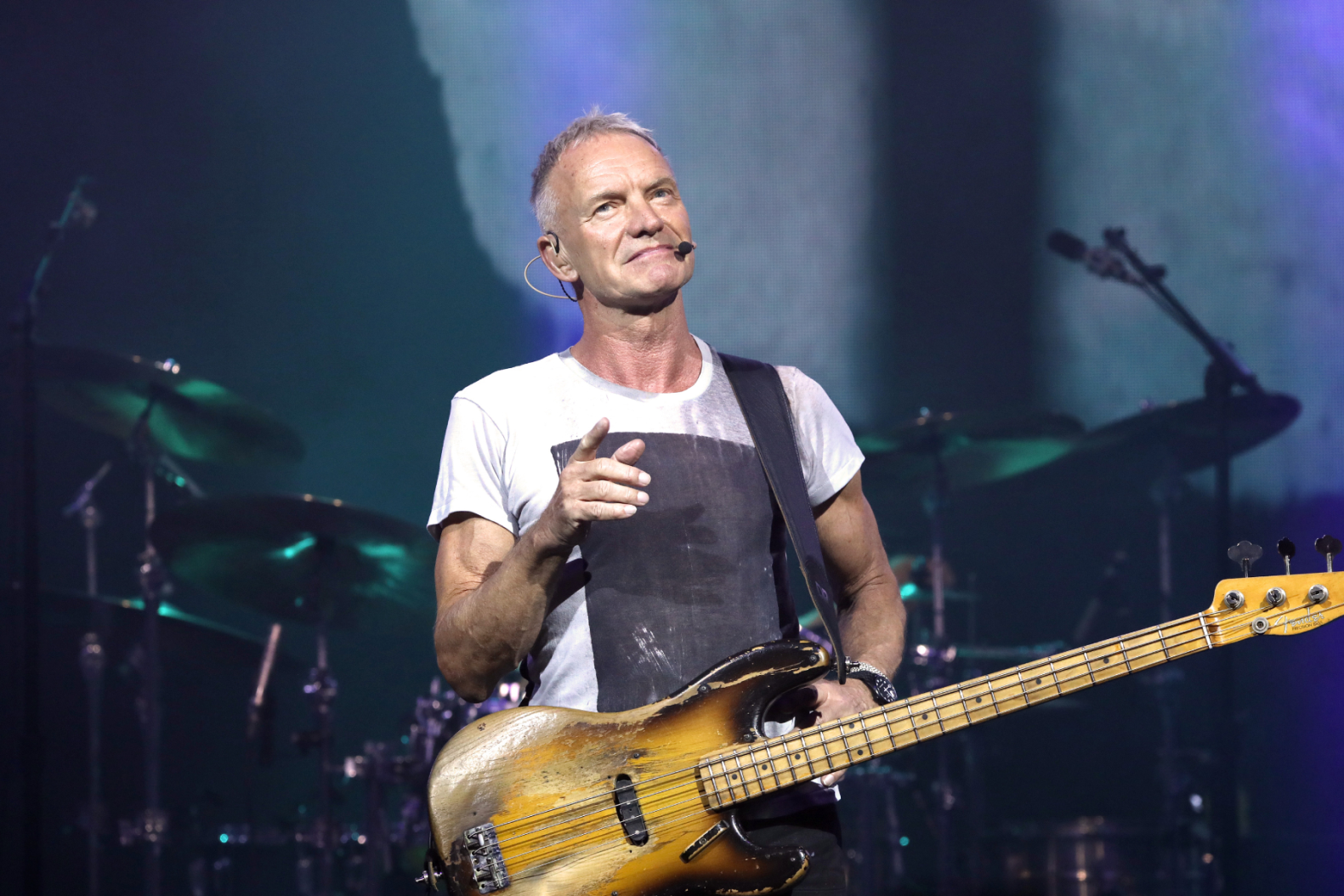
Net Worth Snapshot
Sting’s net worth is estimated at around $550 million as of 2025, built over five decades through
songwriting ownership, global touring, strategic catalogue deals, and long-term investments beyond music.
- Estimated net worth: ~$550 million
- Primary wealth driver: Songwriting and publishing ownership
- Major liquidity event: Sale of his full music catalogue to Universal Music Publishing Group (2022)
- Other income streams: Touring, royalties, licensing, real estate, wine production
- Notable assets: Il Palagio wine estate in Tuscany, international property portfolio
Figures are based on publicly reported data and industry estimates. Exact private holdings may vary.
From Rock Stardom to Riches: Sting’s Financial Journey
Best known as the frontman of The Police, Sting (born Gordon Matthew Thomas Sumner) has built a global empire spanning music, touring, real estate, and wine. His fortune was dramatically accelerated in 2022 when he completed a landmark music catalog sale to Universal Music Group, one of the most lucrative rights deals in modern music history. The agreement secured long-term income from timeless works such as Every Breath You Take and Roxanne, cementing his financial legacy well beyond active touring.
One of the clearest examples of Sting’s enduring publishing power comes from Every Breath You Take, which continues to generate substantial royalty income decades after its release. The song’s high-profile sampling in Diddy’s 1997 hit I’ll Be Missing You turned it into a recurring revenue stream that has become emblematic of the long-term value of songwriting ownership. Few artists have monetised legacy, artistry, and longevity as effectively as Sting.
Together with The Police, Sting sold more than 75 million records worldwide, including the 8×-platinum Synchronicity (1983), widely regarded as one of the defining albums of its era. His solo career added a further 30 million albums sold, bringing his total career tally to over 100 million records globally — a level of commercial success matched by only a handful of artists in modern music history.
Sting’s earning power has remained remarkably resilient. In recent years, Sting has headlined the Latitude Festival, delivering a cross-generational set that spanned his entire career, from Message in a Bottle to Every Breath You Take. At 73, he drew praise for his vocal strength, stage presence, and continued ability to connect with audiences across generations.
Beyond music, Sting has built a diverse creative portfolio. He has appeared in films such as Quadrophenia, Dune, and Lock, Stock and Two Smoking Barrels, authored multiple books, and written for Broadway. In 2003, he was appointed a Commander of the Order of the British Empire (CBE) in recognition of his contributions to music and charity, reinforcing his status not just as a performer, but as a cultural figure with lasting influence.
How Did Sting Make His Money
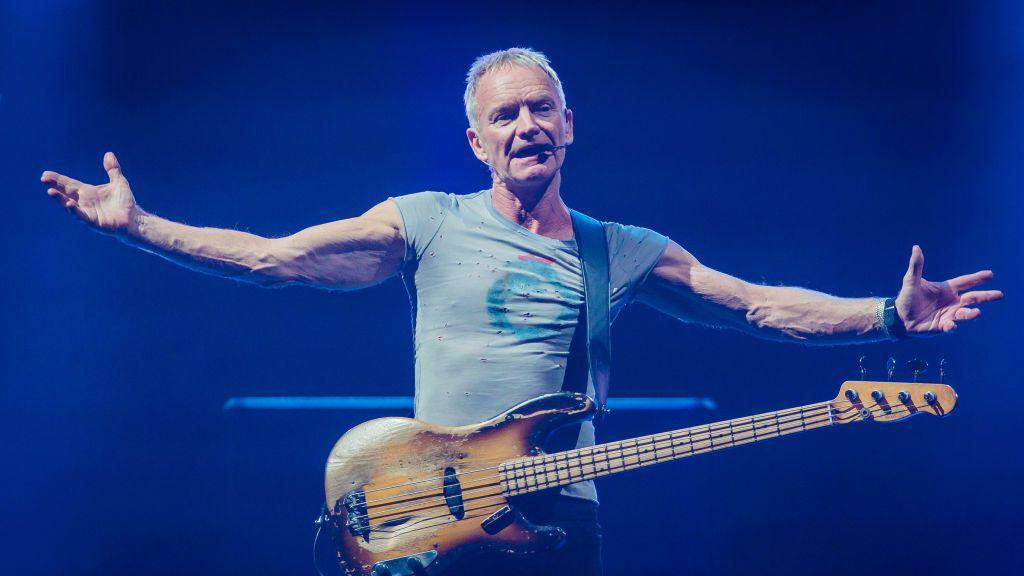
Sting captivates the crowd at Latitude Festival 2025 with a powerful performance and signature stage presence.
Sting didn’t just stumble into a fortune—he built it methodically, across decades, through creative control, smart ownership decisions, and relentless reinvention.
His first major income source came in the late 1970s with The Police, who quickly became one of the biggest bands in the world. Their early success brought in millions in album sales, publishing royalties, and live tour revenue. But Sting’s real financial power emerged when he went solo—and maintained full ownership of his songwriting catalog, a decision that would pay off for decades.
In 2022, Sting completed a landmark sale of his songwriting catalog in a deal widely regarded as one of the most valuable in modern music.
Beyond royalties, Sting has consistently earned tens of millions through global touring, often selling out stadiums across North America and Europe. His 2007–08 Police Reunion Tour alone grossed over $362 million, making it one of the highest-grossing tours of that decade according to Chartmasters.
Beyond music, Sting has diversified his income through a range of creative and commercial projects. He has written for Broadway, most notably with The Last Ship (2014), appeared in film and television roles including Dune and Lock, Stock and Two Smoking Barrels, and generated publishing income through books such as his memoir Broken Music.
Additional revenue has come from voice work, selective brand appearances, and participation in high-profile charity concerts, further reinforcing the breadth of his earning power outside traditional recording and touring.
On top of that, Sting is a savvy investor. He co-owns Il Palagio, a sprawling wine estate in Tuscany that exports globally and contributes a steady stream of passive income. Sting purchased the Tuscan estate back in 2002 for $6.16 million, according to Decanter, and its value has appreciated significantly since. Combined with his real estate holdings, art collection, and organic wine business, Sting has built a diversified portfolio that extends far beyond music.
In short, Sting's wealth is the result of artistic brilliance, long-term rights ownership, and a refusal to let other people control the value of his work.
The Police Years: Fame, Fortune, and Live Aid
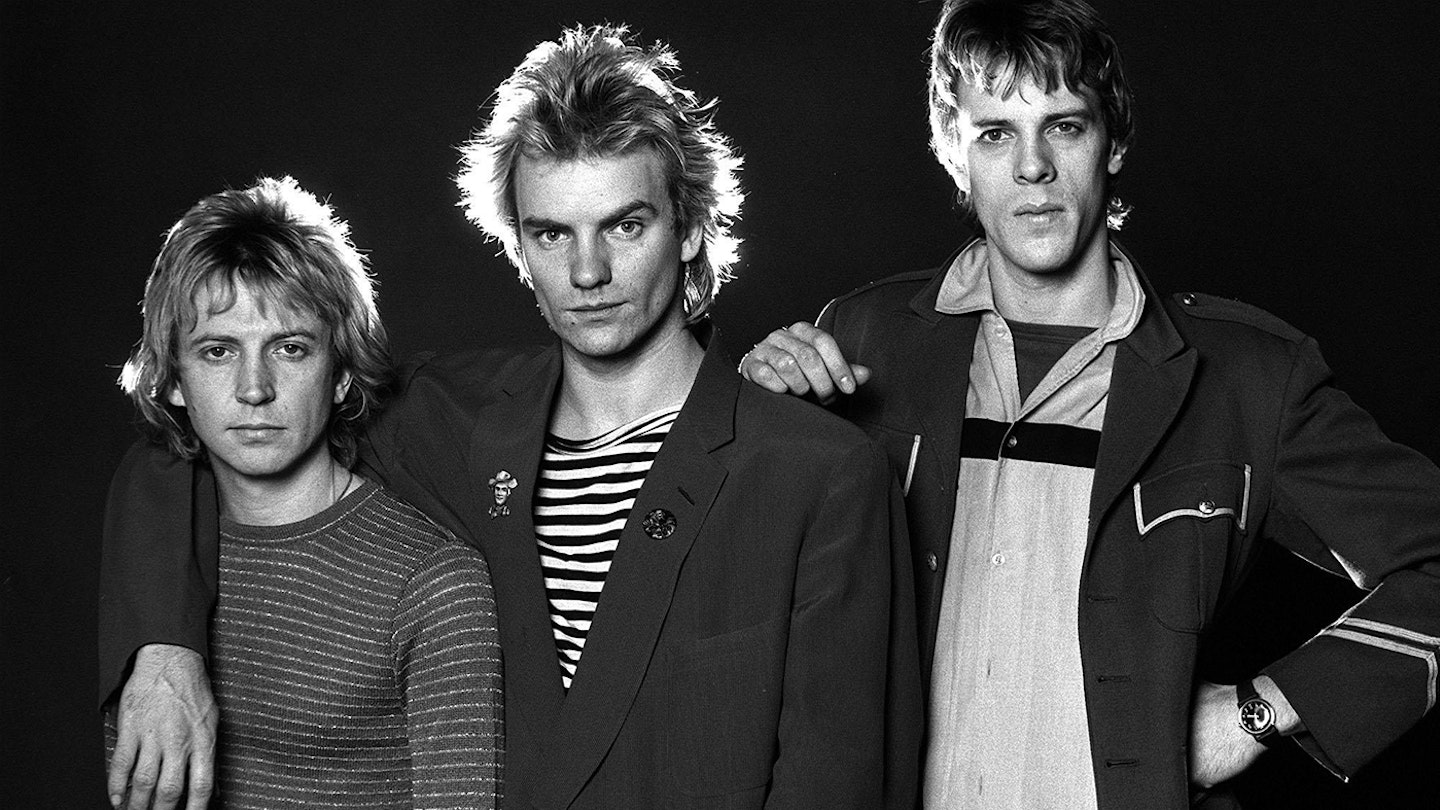
The Police—Andy Summers, Sting, and Stewart Copeland—defined late ’70s and early ’80s rock with their genre-blending sound and global hits.
Before launching one of the most successful solo careers in music history, Sting rose to fame as the frontman and bassist of The Police, a genre-defining rock trio he formed in 1977 with drummer Stewart Copeland and guitarist Andy Summers. Their sound—a bold fusion of punk, reggae, and new wave—quickly made them one of the most innovative acts of the era.
Between 1978 and 1983, The Police released five studio albums and sold over 75 million records worldwide as confirmed by Grammy. Their final album, Synchronicity, was a massive critical and commercial success, going 8x Platinum in the U.S. and producing their biggest hit, “Every Breath You Take.” The single became one of the most played songs in radio history and remains a publishing goldmine to this day.
In July 1985, Sting performed solo at Live Aid, the legendary global charity concert watched by over 1.5 billion people across 150 countries as reported by the BBC. His moving set—featuring “Driven to Tears” with Phil Collins—marked a turning point, symbolizing his transformation from bandleader to humanitarian artist.
The Police disbanded the following year, in 1986, at the height of their fame. Though the breakup was amicable, it was driven by Sting’s desire for creative freedom. With a solid financial foundation from record sales, radio royalties, and touring revenue, he entered the next chapter of his career on his own terms—with total control of his music and his message.
Sting Solo Career: Reinvention and Longevity
After The Police disbanded, Sting carved out a solo career defined by innovation and global appeal. His debut, The Dream of the Blue Turtles (1985), signaled a shift into jazz and world music, while later albums like Ten Summoner’s Tales and Brand New Day produced enduring hits like “Fields of Gold” and “Desert Rose.”
Sting has won 17 Grammy Awards as a solo artist and toured the world for decades, consistently earning tens of millions per tour. In the streaming age, his catalog remains strong—tracks like “Shape of My Heart” and “Englishman in New York” helped generate over 1.76 million EAS globally.
Few artists have aged as well or diversified as gracefully—Sting’s solo career remains as artistically and financially successful as his time with The Police.
Real Estate, Assets, and Investments

Sting’s Il Palagio—his 16th-century Tuscan villa and organic vineyard—has become a luxurious retreat and creative sanctuary.
Sting has long used his wealth to build a diverse portfolio of physical assets, ranging from luxury properties to vineyards and fine art.
He owns multiple residences around the world, including a historic $16 million townhouse in London’s Westminster, a $56 million Manhattan penthouse overlooking Central Park, and a Malibu beach retreat he was renting in 2017 for $161,000 per month. But his most iconic property is Il Palagio, a 16th-century Tuscan estate he purchased in 2002 for $6.16 million, which has since been transformed into an award-winning organic vineyard and wine brand.

Sting and Trudie Styler’s sleek Central Park West apartment, once listed for $56 million, offers panoramic city views and refined modern design.
Beyond real estate, Sting is a passionate collector of modern art, and he's known to invest in ethical funds and environmental ventures that align with his philanthropic values. While exact valuations are private, estimates place the value of his physical assets—property, land, wine production, and art—well into the eight-figure range, forming a substantial part of his net worth.
Personal Life, Family, and the Tantric Sex Myth
Sting has been married to actress and producer Trudie Styler since 1992, though their relationship began more than a decade earlier. Together, they have four children, and Sting has two more from his first marriage to Frances Tomelty, bringing his total to six children.
The couple’s long-standing relationship has drawn media fascination—not just for its longevity, but also for one of the most infamous soundbites of the '90s. In an interview, Sting jokingly claimed that he and Trudie practiced seven-hour tantric sex, a line he later clarified was a tongue-in-cheek comment that spiraled into pop culture myth reported by ABC News (2014).
Despite his immense wealth, Sting has said publicly that his children won’t inherit vast fortunes. “They have to work,” he told The Daily Mail in a 2014 interview, adding that he planned to spend most of his money during his lifetime and didn’t want to leave behind “trust funds that are albatrosses around their necks” he told Forbes back in 2014.
Grounded in family, disciplined in parenting, and unbothered by myth-making, Sting’s personal life reflects the same intentionality that built his music empire.
Philanthropy, Legacy, and What’s Next for Sting
Sting’s impact extends far beyond music. For over three decades, he has been a committed advocate for environmental and human rights causes, channeling his platform into global action. In 1989, he co-founded the Rainforest Foundation with his wife Trudie Styler, a charity dedicated to preserving Indigenous lands and fighting deforestation in the Amazon basin and beyond (Rainforest Foundation). He has also supported campaigns for Amnesty International, participated in Live Earth, and consistently used his voice to speak out on sustainability, peace, and justice.
This activism is more than a celebrity sideline—it’s a cornerstone of Sting’s public identity. His alignment with ethical causes reinforces his trustworthiness and authority, adding real-world weight to his reputation as both artist and global citizen.
As he enters the later stages of his career, Sting continues to defy expectations. At 73, he remains an in-demand live performer. His headlining set at Latitude Festival earned rave reviews for its energy, vocal clarity, and cross-generational appeal. Meanwhile, his music catalog continues to generate income through streaming, licensing, and sync deals across film and television.
There are also whispers of a potential Broadway revival, new collaborations, and continued work with environmental organizations. Far from retreating from the spotlight, Sting is still shaping his legacy in real time—artistically, financially, and socially.
The Lasting Power of Sting

Sting brings raw energy and musicianship to the stage—still touring and captivating audiences well into his 70s.
Few artists have navigated the music industry with as much longevity, creative control, and personal conviction as Sting. From pioneering punk-reggae fusion with The Police to pushing artistic boundaries as a solo artist, his evolution has been as intentional as it has been enduring.
His estimated $550 million net worth isn’t just a reflection of fame—it’s the result of decades of smart business choices, including catalog ownership, global touring, and investments in wine, real estate, and philanthropy. His 2025 headlining set at Latitude Festival proved that at 73, he can still command a stage with the same energy and voice that made him iconic.
Offstage, Sting has made his mark through environmental activism, co-founding the Rainforest Foundation and supporting human rights initiatives for over 30 years. These choices reinforce not just his reputation—but the public’s trust in him as a thoughtful, purpose-driven figure.
Whether performing, writing, or quietly tending vines in Tuscany, Sting continues to grow his legacy on his own terms—one note, one cause, and one generation at a time.
Sting’s Favorite Songs and Musical Influences
As the creative force behind The Police, Sting helped craft timeless hits like “Every Breath You Take,” “Message in a Bottle,” “Roxanne,” “Every Little Thing She Does Is Magic,” “Don’t Stand So Close to Me,” “King of Pain,” “Can’t Stand Losing You,” “So Lonely,” “Walking on the Moon,” and “Synchronicity II.” But when it comes to his personal listening, his tastes reflect a deep love for soul, reggae, synth-pop, and emotional storytelling—just as eclectic as his own catalog.
According to a curated Spotify playlist, here are 10 of Sting’s favorite tracks:
-
“Sitting on the Dock of the Bay” – Otis Redding
-
“A Whiter Shade of Pale” – Procol Harum
-
“No Woman, No Cry” – Bob Marley & The Wailers
-
“Baker Street” – Gerry Rafferty
-
“West End Girls” – Pet Shop Boys
-
“Careless Whisper” – George Michael
-
“Here Comes the Rain Again” – Eurythmics
-
“Don’t You Want Me” – The Human League
-
“Sledgehammer” – Peter Gabriel
-
“It Wasn’t Me” – Shaggy
Source: Spotify – Sting’s Favorites
Sting FAQs
What illness does Sting have?
Sting has spoken publicly about occasional health challenges such as voice strain and touring fatigue, which are common among long-performing musicians. As of 2025, there are no confirmed reports of any chronic or serious illness, and he remains active as a live performer.
Is Sting still with his wife?
Yes. Sting has been married to actress and producer Trudie Styler since 1992. Their relationship, which began in the early 1980s, is widely regarded as one of the longest-lasting partnerships in the entertainment industry.
How did Sting build his net worth?
Sting’s estimated net worth in 2025 is approximately $550 million, built primarily through songwriting and publishing ownership, global touring, and a landmark music catalog sale reportedly worth up to $300 million, alongside income from real estate, licensing, and long-term investments.
What does the name Sting mean?
“Sting” is the stage name of Gordon Matthew Thomas Sumner, the British musician best known as the lead singer of The Police and a Grammy-winning solo artist.
Explore More Celebrity Net Worth Journeys
If you’re curious about other fascinating financial stories, check out these net worth deep-dives:
-
James Hetfield Net Worth — The Metallica frontman has turned heavy metal anthems into a multimillion-dollar empire of albums, tours, and real estate.
-
Paris Jackson Net Worth — Michael Jackson’s daughter is forging her own path in music, fashion, and acting while navigating her father’s billion-dollar legacy.
-
Kai Trump Net Worth — Donald Trump’s granddaughter may be young, but her family’s fortune, inheritance questions, and public profile are already sparking interest.
From rock icons to celebrity heirs, these journeys reveal the very different ways wealth is built—and sometimes challenged—in the spotlight.