
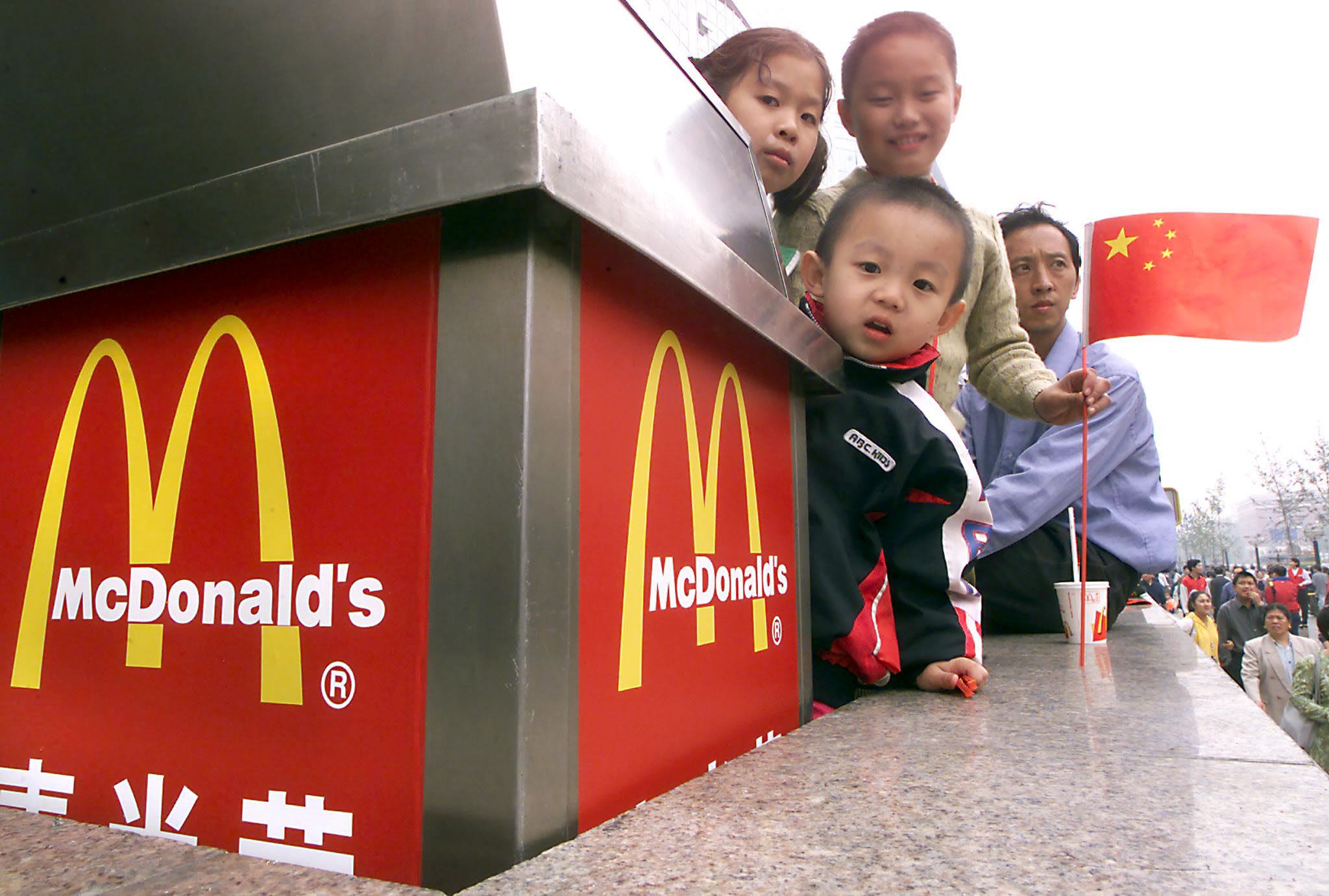
Why McDonald’s and KFC are growing in China isn’t just about brand power or rising demand—it’s about where growth actually forms first.
Growth isn’t happening where competition is highest. It’s happening where habits haven’t been set yet.
On a cold afternoon in Hanchuan—a largely rural city in central China—the first McDonald's opened its doors and immediately filled up.
This wasn’t a wealthy city. It wasn’t a major hub. And that’s exactly why it matters.
If you’re trying to grow a business, expand into a new market, or find your next opportunity, you’re probably looking in the wrong place. Because if you’re asking why McDonald’s and KFC are growing in China, the real answer has less to do with brand power—and more to do with where they chose to grow.
Growth isn’t being won where everyone is already competing.
It’s being captured where no one has defined the default yet.
The Growth Trap Most Businesses Fall Into
Most businesses follow the same instinct. They go where demand is already visible—bigger cities, higher incomes, markets that look proven on paper.
It feels rational. It feels lower risk.
But what they are really doing is entering environments where behaviour is already set.
Customers already have preferences. They already have routines. They already know where to go, what to buy, and how much they’re willing to pay. That means every new entrant isn’t building demand—they’re trying to displace it.
And displacement is expensive.
It requires more marketing, more incentives, more differentiation, and more time, just to change habits that are already embedded. Growth in these environments doesn’t compound easily because every gain comes at someone else’s expense.
Meanwhile, entire markets sit just outside that competitive pressure.
Not because people aren’t spending, but because no one has yet shaped how they spend. The behaviour isn’t fixed. The default hasn’t been set. And that changes the economics of growth entirely.
Why the Obvious Explanation Doesn’t Hold Up
It’s easy to assume that chains like KFC and McDonald's are growing in China because of global brand strength or aspirational appeal.
That explanation sounds convincing, because brand clearly matters. It creates trust, signals quality, and lowers the barrier to trial.
But it doesn’t explain where growth is actually happening.
If brand were the primary driver, expansion would concentrate in the most developed, highest-income cities where consumer awareness and spending power are already strongest. Instead, much of the fastest growth is happening outside those markets—into smaller cities and rural areas where behaviour is still forming.
That’s the gap the “brand explanation” can’t account for.
Brand can attract attention. It can even accelerate early adoption. But it doesn’t determine long-term behaviour in a market that hasn’t yet decided what its default looks like.
What matters more is timing.
When a company enters a market before habits are fixed, it is no longer competing for share—it is shaping how that category works. It becomes the place people default to, not because it is the best option, but because it is the first option that fits.
That is a fundamentally different growth dynamic.
What’s Actually Driving the Growth
The real shift isn’t just geographic. It’s structural.
Growth is moving into lower-tier cities where incomes are rising, options are limited, and—most importantly—consumption habits are still forming. That combination creates a very different kind of market.
In established cities, businesses compete against existing preferences. In these markets, there often aren’t any.
That changes the job of the business entirely.
Instead of trying to win customers from competitors, companies like McDonald's and KFC are shaping how the category is experienced from the start. The first option that is accessible, reliable, and easy to repeat becomes the default—not because it is perfect, but because it is present at the moment behaviour is being formed.
And that is where the system begins to compound.
Early entry creates familiarity. Familiarity lowers decision friction. Lower friction increases frequency. And frequency turns a one-time visit into a habit. Once that loop is established, competitors are no longer entering an open market—they are trying to break an existing routine.
Everything else reinforces that loop.
Menus are adapted to local tastes so the product feels immediately relevant. Pricing is engineered around value so it fits everyday spending behaviour. Supply chains are built locally to ensure consistency and scale. Store formats are designed around how people actually move, eat, and spend time in those environments.
The business doesn’t just arrive into the market.
It aligns with it at the exact moment the market is still deciding what “normal” looks like—and then quietly defines it.
The Mechanism Most People Miss
When a company enters an underserved market early, aligns with how people already behave, and scales before alternatives emerge, it stops competing in a category.
It begins to define it.
In established markets, customers compare options because they already have them. In emerging markets, the first option that works becomes the reference point. It sets expectations for price, speed, convenience, and experience—not through superiority, but through repetition.
That repetition is what turns usage into habit.
Once a behaviour becomes habitual, the decision-making process disappears. People don’t actively choose the brand again—they return to it automatically, because it has become part of how they already operate. The cost of switching is no longer financial. It’s cognitive.
And that is where the advantage compounds.
Because every repeat interaction reinforces familiarity. Familiarity increases trust. Trust increases frequency. And frequency deepens the habit. By the time competitors arrive, they are not offering a better option—they are asking customers to break a routine that already works.
That is significantly harder than winning attention.
This is why growth accelerates so quickly in these environments. The business is no longer acquiring customers one by one—it is embedding itself into daily behaviour at scale.
And once a company becomes part of that routine, it is no longer just a brand.
It becomes the default.
Why This Is Happening at Scale
This isn’t a niche strategy or a short-term experiment. It is being deployed at scale.
McDonald's plans to open more than 9,000 new restaurants globally by 2027, with over a third of them in China. That level of expansion is not speculative—it reflects a clear conviction about where future growth is most predictable.
And it’s not just about opening more locations. It’s about how those locations are designed to win.
Inside China, the model is being rebuilt around local conditions rather than exported from the West. Supply chains are predominantly domestic, which lowers costs and improves consistency at scale. Menus are adapted to local tastes, increasing immediate relevance. Pricing is engineered around everyday affordability, making repeat behaviour more likely rather than occasional.
Distribution is doing the rest.
Expansion is concentrated in third- and fourth-tier cities where competition is still forming, which allows the business to establish presence before alternatives reach scale. At the same time, digital ordering and self-service systems are being embedded into the experience, reducing friction and increasing frequency.
Individually, these decisions look tactical.
Together, they form a system.
Enter early. Align with local behaviour. Remove friction. Scale before the market matures. By the time competitors arrive, the infrastructure is already in place, the habits are already formed, and the cost of displacement is significantly higher.
What looks like expansion from the outside is actually execution of a repeatable growth model—one that is already compounding.
What This Looks Like in Practice
In smaller cities, where economic activity is spread across local industries and daily routines are less standardised, the arrival of a consistent, predictable option doesn’t just add another choice.
It changes how people decide.
Instead of weighing multiple options each time, customers begin to default to what they know will work. A quick meal becomes the same place. A familiar stop becomes part of the route home. Convenience is no longer evaluated—it’s assumed.
That’s where the shift happens.
Because once a decision becomes automatic, frequency increases without effort. What starts as occasional usage becomes part of routine, and routine is what drives volume.
As more locations open, that effect compounds. Access improves, wait times fall, supply chains become more efficient, and the experience becomes more reliable at scale. At the same time, familiarity builds across the market, reinforcing the behaviour with every interaction.
From the outside, it looks like demand is suddenly accelerating.
In reality, the system has reached the point where behaviour and infrastructure are aligned—and growth begins to scale on its own.
Why This Matters Beyond Fast Food
This isn’t about burgers or chicken. It’s about how growth actually happens—and why so many businesses get it wrong.
Most people try to grow by pushing harder in markets where behaviour is already fixed and competition is fully optimised. They invest more in marketing, more in differentiation, and more in execution, assuming that effort alone will unlock results.
But in those environments, growth is constrained by what already exists. Every gain comes from displacing someone else, and every improvement becomes incrementally harder.
At the same time, other markets remain open—not because demand is lower, but because behaviour hasn’t been defined yet. The opportunity isn’t to compete more effectively. It’s to arrive at the moment when decisions are still being formed, and shape them.
That is a fundamentally different approach to growth.
It shifts the focus from intensity to positioning, from competing for share to defining the default, and from short-term wins to long-term lock-in.
Because once a behaviour becomes routine, growth stops being something you have to fight for.
It becomes something the system produces.
The Advantage Most People Miss
Every market has a window before it becomes competitive.
In that window, behaviour is still forming, expectations are still flexible, and the first option that works has an outsized influence on what comes next.
If you enter early enough, align with how people already behave, and scale before alternatives emerge, you don’t just participate in growth.
You shape it.
And that creates a fundamentally different outcome.
Instead of chasing attention, you become the place people return to without thinking. Instead of competing on price, you benefit from familiarity. Instead of reacting to demand, you define what demand looks like in the first place.
That is the advantage companies like McDonald's and KFC are capturing.
Not because they are better at competing.
But because they chose where competition hadn’t fully formed yet.
And that is the part most people miss—because they are still trying to win in markets where the outcome has already been decided.
The Real Takeaway
The question isn’t just why McDonald's and KFC are growing in China.
It’s why so many businesses keep looking for growth in markets where behaviour is already fixed, competition is already optimised, and outcomes are largely decided.
Because growth rarely comes from entering the most obvious place.
It comes from entering at the moment when people haven’t yet decided what “normal” looks like—and becoming that default.
And once a business becomes the default in an underserved market, growth stops being something you have to chase.
It becomes something the system delivers.