TL;DR
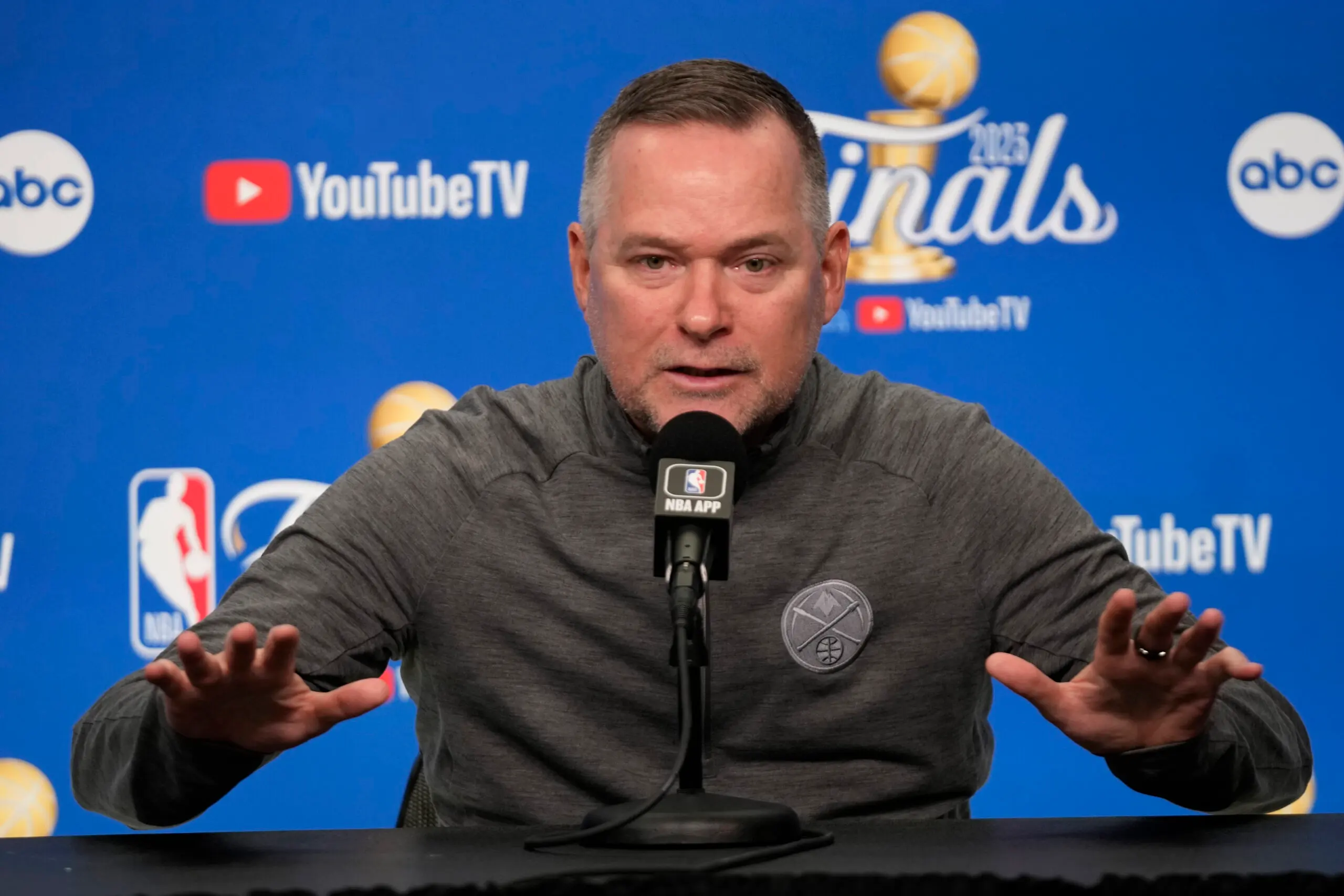
- Outcome: North Carolina intends to hire NBA championship coach Michael Malone as head coach after firing Hubert Davis.
- Mechanism: UNC is prioritising NBA-level tactical control and leadership as college basketball becomes more like the professional game.
- Implication: Elite college programs are shifting away from traditional NCAA experience and toward transferable, pro-level coaching models.
North Carolina is set to hire former NBA championship coach Michael Malone as its next head coach — a move that looks surprising at first glance.
But it isn’t.
This isn’t just a coaching change. It’s a signal that college basketball is starting to operate more like the NBA — and that shift is quietly changing who gets hired, how teams are built, and what elite programs actually value.
According to ESPN, UNC turned to Malone after firing Hubert Davis on March 24 following another early NCAA tournament exit. Malone, who hasn’t coached in college since 2001, brings a résumé built almost entirely in the NBA — including a championship with the Denver Nuggets in 2023 and more than 900 games as a head coach.
That gap used to matter. Now, it may matter less than ever.
Why Did UNC Make This Move Now?
On the surface, the hire looks unconventional. Malone’s experience is overwhelmingly professional, not collegiate. His last college role came more than two decades ago.
But the logic behind the decision is clearer when you look at what UNC was actually trying to solve.
The program had stability under Hubert Davis. A 125–54 record over five seasons is strong by most standards. But at North Carolina, expectations are not measured by competence — they are measured by ceiling.
Two straight first-round NCAA tournament exits. Four seasons without advancing beyond the Sweet 16. That resets the threshold.
UNC wasn’t just replacing a coach. It was reassessing what kind of leadership wins at the highest level now.
What Changed in College Basketball?
The key shift is structural.
College basketball is increasingly resembling the professional game — not in branding, but in how teams are managed, coached, and structured. That’s the assumption embedded in this hire.
If that’s true, then the skillset required to win changes.
Instead of prioritising:
- long-term college recruiting cycles
- system continuity within the NCAA ecosystem
Programs may now value:
- tactical sophistication
- roster management at scale
- authority over complex, shifting team structures
That is where Malone’s profile fits.
He spent nearly 25 years inside NBA systems. He coached 904 games as a head coach. He led a team to a championship. ESPN describes him as one of the league’s most respected tacticians.
That experience doesn’t guarantee success in college.
But it does align with a different version of what the job has become.
What Decision Did UNC Actually Make?
This wasn’t simply a bold gamble. It was a recalibration.
UNC had been linked to established college coaches including Dusty May, Tommy Lloyd, and T.J. Otzelberger. All chose to remain at their current programs.
That matters.
Because it shows this wasn’t the first path — but it was still a deliberate one.
UNC effectively faced two questions:
| Decision Question | Outcome |
|---|---|
| Can we land a top-tier college coach right now? | No, based on reported targets staying put |
| Can we still hire someone with elite credibility and control? | Yes — through an NBA-proven coach |
Malone satisfies the second condition.
His credibility is not built on recent NCAA experience. It is built on authority, results, and reputation at the highest level of the sport.
That’s a different kind of legitimacy — but still legitimacy.
What Did People Get Wrong About This Hire?
The instinct is to frame this as a “shock move.”
It isn’t. It’s a response to a changing system.
The misunderstanding comes from assuming college basketball still operates under the same constraints it did a decade ago. If that were true, this hire would look misaligned.
But the source itself points in another direction — that the sport is becoming more like professional basketball.
If that’s the case, then this decision becomes easier to explain.
| Perception | What This Actually Reflects |
|---|---|
| UNC made a surprising, risky hire | UNC adjusted to a changing version of the sport |
| Lack of college experience is the defining issue | Transferable NBA experience is now seen as relevant |
| This is about replacing Hubert Davis | This is about redefining what a coach needs to be |
Once you shift the lens, the move stops looking unusual. It starts looking timely.
What Does This Reveal About Elite Programs?
It reveals how top institutions behave under pressure.
North Carolina is not just hiring for performance. It is hiring for control, credibility, and acceptance inside its own ecosystem.
According to ESPN, Malone’s standing with figures like Michael Jordan and Roy Williams played a role. That detail matters because it reflects a common pattern in high-stakes decisions.
When risk is high, institutions don’t just ask, “Is this the best candidate?”
They ask, “Is this the candidate trusted by the people who define success here?”
That reduces internal friction. It stabilises the decision.
At the same time, performance pressure is non-negotiable. A strong overall record was not enough to preserve Hubert Davis’ position. The gap between expectation and outcome — particularly in tournament performance — drove the change.
Elite programs don’t optimise for “good.”
They optimise for “enough to win at the highest level.”
Why This Matters Beyond UNC
This isn’t just about one hire. It’s about direction.
If a program like North Carolina is willing to hire an NBA coach with no recent college experience, it signals a broader shift in how leadership is evaluated.
Not every program will follow this path. But the criteria at the top of the market may already be changing.
The emphasis appears to be moving toward:
- high-level tactical control
- experience managing elite talent
- authority that translates across systems
Once that shift takes hold, hiring patterns tend to follow.
What looks unconventional today often becomes standard tomorrow.
The Strategic Pivot
This is the real takeaway.
North Carolina didn’t just hire Michael Malone. It redefined what “qualified” looks like in modern college basketball.
The old model prioritised continuity within the college system. The emerging model appears to prioritise control, structure, and adaptability — even if that experience comes from outside it.
That doesn’t guarantee success. It does explain the decision.
And it points to what matters going forward:
When a system changes, the winners aren’t the ones who preserve tradition.
They’re the ones who recognise the shift early — and hire for what the game has become, not what it used to be.