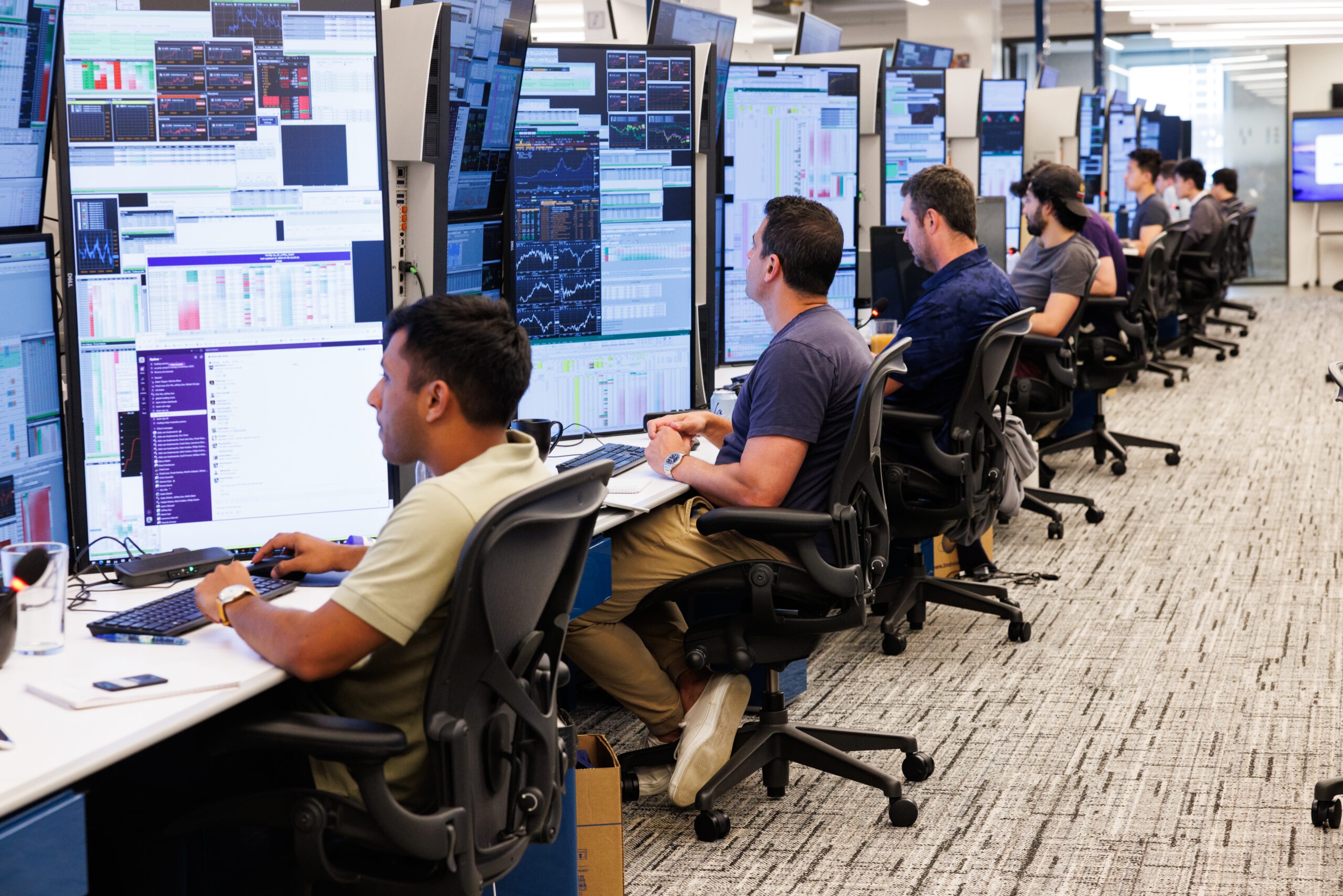
Trend-Responsive Forex Algorithms in Automated Trading
Foreign exchange is now large enough, fast enough and electronically mediated enough that automation is no longer a niche advantage but a baseline capability. With average daily FX turnover at $9.6 trillion in April 2025, the strategic question is less “whether to automate” and more “which algorithms adapt well under shifting market regimes and how you govern them.”
You can treat the FX market as the world’s most continuous real-time pricing mechanism. It is also a market where macro shocks, policy divergence and funding conditions can change liquidity quickly, particularly for emerging-market currencies. That reality explains why trend responsiveness has become a serious design goal in automated trading. When market conditions move from range-bound to directional, or from orderly to stressed, a static rule set can become brittle.
The BIS Triennial Survey reports that average daily turnover rose from $7.5 trillion in April 2022 to $9.6 trillion in April 2025, an increase of 28%. Within that, spot and outright forwards grew their shares, while FX swaps fell from 51% in 2022 to 42% in 2025. Even for leaders who never touch a trading terminal, these shifts matter. They indicate where hedging demand concentrates and where execution quality will be tested. The US dollar remains central, appearing on one side of 89.2% of trades in April 2025.
Why Trend Responsiveness Matters in a Market That Keeps Changing Regimes
Trend responsiveness is not a slogan. It is an attempt to make an automated system less fragile when the market’s state changes. One intellectual foundation comes from research into time-series momentum, which documents return persistence across asset classes, including currency futures over horizons such as one to twelve months, with partial reversal over longer periods. The narrower point is that directional persistence appears often enough to influence how systematic managers design signals, position sizing and risk controls.
If you are evaluating tools that operationalize this idea, a trend-responsive forex robotsuch as the structured system outlined by Trendonex provides a practical illustration of how trend detection, entry logic and embedded risk controls are translated into rule-based execution. Product documentation for such systems describes indicator-driven trend identification, entries aligned with directional bias and predefined risk controls including stop loss, take profit, breakeven and trailing stop functions alongside adjustable lot sizing. These design elements are not marketing language. They indicate whether the system treats trend as a signal or as a broader decision framework that anticipates failure and contains it.
Time horizon is equally important. Many structured systems are designed around specific intraday or multi-hour intervals such as M30 and H1. Whether or not those horizons align with your own mandate, the broader lesson is that trend responsiveness should be evaluated within a timeframe your governance and monitoring structure can realistically support.
Do Not Confuse Trading Algorithms With Execution Algorithms
Serious analysis of automated FX trading makes a critical distinction. Trading algorithms determine when to take risk. Execution algorithms determine how that risk is transacted in the market.
This distinction matters because a trend-responsive signal can be correct in direction yet deliver a poor outcome if execution is careless, liquidity thins or spreads widen. Performance is typically the product of signal quality and execution quality, not signal quality alone.
Central banks and market practitioners have concluded that FX execution algorithms can support price discovery in fragmented markets while also introducing new operational risks as their scale expands. For decision-makers, automation is therefore both an efficiency tool and a governance responsibility.
Governance, Validation and the Hard Part Everyone Skips
Algorithmic trading is model-driven decision-making. That requires model risk discipline and a clear understanding of how financial institutions structure data access and operational accountability.
Supervisory guidance on model risk management emphasizes robust development, effective validation and strong governance because model outputs can be misused in ways that create financial loss. In practical terms, before allocating capital to any systematic approach, you should interrogate the market regime assumptions embedded in its signal logic, examine how parameters are selected and re-optimized and understand what explicit controls exist if a trend signal lags during reversal.
The risk of overfitting is real. Research on backtest overfitting demonstrates how easy it is to generate impressive historical performance after testing many variations, even when the underlying edge is weak. If a selection process rewards the most attractive backtest rather than the most defensible hypothesis, it is selecting noise.
This is where reviewing the underlying documentation of a systematic trading framework becomes valuable. Examining how configurable parameters, embedded risk controls and execution logic are structured helps clarify whether adaptability is disciplined or merely reactive. The same structured FX automation model referenced earlier illustrates how such features are presented, but the responsibility for validation and oversight always remains with the capital allocator.
What You Can Conclude, Responsibly
Trend-responsive algorithms are not shortcuts to certainty. They are attempts to build systems that react coherently when market behavior changes. In a $9.6 trillion-a-day market, as documented in the BIS Triennial Survey, where instrument shares and hedging patterns continue to evolve, the strategic advantage comes from pairing adaptive logic with execution discipline and governance mature enough to withstand stress.