

Most companies arrive at new technology waves chasing efficiency. A smaller group arrives chasing control. Datavault AI Inc. (NASDAQ: DVLT) belongs firmly in the second camp, and that distinction explains why the company, through one of the most forward-thinking CEO's in technology, is drawing accelerating attention from enterprise players who do not move on hype or timely buzzwords.
That distinction matters, particularly as “edge computing” has become a widely used label, even when the underlying execution remains thin.
Edge computing has spent years being framed as a performance upgrade, faster response times, lower latency, reduced cloud costs. That narrative was always incomplete. The real inflection point at the edge is not speed. It is authority. Authority over where data is created, how it is secured, how it is valued, and when it becomes economically usable.
That is the lens Nate Bradley has applied from the start, long before edge computing became a daily talking point on financial television. And it is why Datavault’s strategy now looks less like a bet on a trend and more like a blueprint for how data economics are evolving.
The Cloud Was Built for Storage, The Edge Is Being Built for Trust
Centralized cloud infrastructure was designed around aggregation. Data is collected, shipped, processed, scored, and monetized later, often far from where it originates. At scale, that model introduces latency, compliance risk, expanding attack surfaces, and a growing disconnect between data ownership and data value.
Bradley’s insight was not that the cloud was broken, but that it was incomplete.
As AI workloads intensified and regulation tightened, the weakest point in the data lifecycle became obvious: the gap between creation and control. Once data leaves its point of origin, its evidentiary value degrades. Ownership becomes murky. Monetization becomes delayed. Trust becomes something you attempt to reconstruct after the fact.
Datavault’s architecture flips that sequence.
By deploying its Information Data Exchange and DataScore agents directly inside a zero-trust, GPU-rich edge environment, data is authenticated, scored, and economically structured at the moment it comes into existence. There is no waiting room. No handoff to a third-party pipeline. No delay between creation and control.
This is not an incremental improvement. It is a structural correction with a potentially enormous payday.
Edge Market Size Strengthens the Thesis
The global edge computing market is widely projected to reach $250 billion–$350 billion over the next decade, driven by AI inference, enterprise digitization, and the physical limits of centralized cloud models. That scale matters, not because Datavault is trying to own all of it, but because it defines the volume of data events that will require trust, attribution, and economic structure.
As edge deployments multiply, the economic question shifts. It is no longer how much data can be processed, but how much data value can be preserved.
Within the broader edge ecosystem, enterprise-grade data with ownership, compliance, and resale implications represents an estimated $50 billion to $80 billion in annual economic activity. Historically, 5%–15% of that value is spent on authentication, verification, rights management, and monetization infrastructure.
That places Datavault’s direct attack surface at approximately $2.5 billion to $12 billion annually, embedded inside one of the fastest-growing infrastructure markets in the world. While the word “billion” gets tossed around much more frequently these days, don't underestimate the value impact to companies like Datavault. Even a small slice can be transformative.
Crucially, this opportunity scales automatically. Every new edge deployment increases the volume of data that must be trusted and economically defensible. In other words, Datavault does not shrink as the market grows. It compounds with it.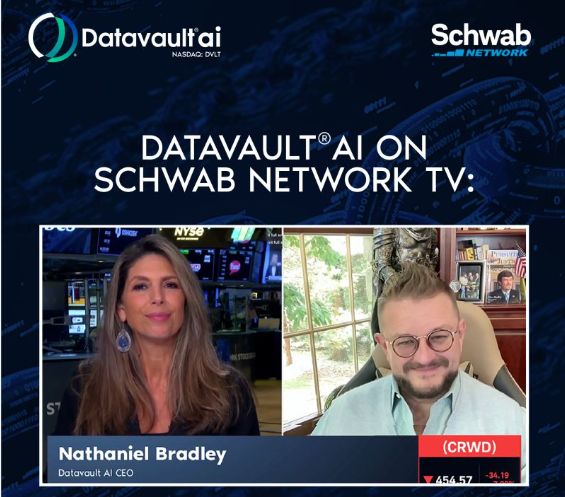
Why Large Enterprise Pays Attention to This Kind of Leadership
As noted, large enterprise players do not engage because of buzzwords. They engage because the strategy aligns with where their customers are already headed.
The collaboration with IBM and others reflects that alignment. Bradley’s vision anticipated three realities enterprises are now confronting simultaneously. Data sovereignty is becoming non-negotiable. AI workloads cannot live exclusively in centralized clouds. And data value must be preserved at the point of creation, not reconstructed later.
By now operating within Available Infrastructure’s secure edge environment, Datavault pairs its economic data layer with enterprise-grade deployment standards. IBM brings scale, distribution, and credibility. Datavault brings a framework for turning edge data into defensible economic assets.
This is not competition. It is complementary. And it starts at the leadership level.
Deploying in the Northeast Corridor Matters
DataVault's initial deployment across the Northeast corridor may sound geographically modest. In reality, it is anything but.
These metros sit at the intersection of media, finance, healthcare, government, and live sports commerce. They are among the most data-dense corridors in the United States. Proving real-time, edge-native data monetization here is not a pilot. It is a stress test.
Through its collaboration with Available Infrastructure, Datavault operates inside environments designed to meet national security-grade standards. This is not consumer AI. It is infrastructure built for institutions that cannot afford mistakes.
That distinction matters because the next phase of AI adoption will not be driven by novelty. It will be driven by organizations that require proof, accountability, and control at scale.

A Visionary Who Speaks in Sequences, Not Soundbites
Bradley’s frequent appearances on nationally syndicated financial programming, including Schwab Network’s Morning Trade Live and Markets & Industries, as well as other major financial news channels, reinforce this positioning. He does not sell urgency for its own sake. He speaks in sequences that align with an emerging global narrative around data economics.
First comes data integrity. Then comes ownership. Then comes monetization. Only after that comes scale.
That sequencing mirrors how institutional buyers think. It also explains why Datavault often appears ahead of the market rather than reactive to it. The company was built for a world where data is treated as property, not exhaust. That world is now arriving.
Visionaries are often mistaken for being early. In reality, they are simply prepared for conditions others have not yet fully priced in.
Leadership as a Competitive Advantage
As edge computing expands from hundreds of billions toward a trillion-dollar infrastructure category, the defining question is shifting. It is no longer who can deploy infrastructure fastest. It is who can preserve economic value most effectively as data moves closer to the edge.
Bradley has positioned Datavault to answer that question before it becomes urgent for everyone else.
That is why the company is earning attention from IBM and other enterprise players. Not because Datavault is chasing the future, but because its leadership has been quietly building for it all along.
The edge computing gold rush is underway. Datavault is not digging randomly. Under Nate Bradley’s vision, it's the structure that decides who gets paid.
Sources and References:
The market context and estimates referenced in this article reflect widely cited industry research and enterprise adoption trends, including projections that place the global edge computing market on a trajectory toward $250–$350 billion over the next decade, driven by AI inference, distributed workloads, and the physical limits of centralized cloud infrastructure.
Industry research firms including MarketsandMarkets, Grand View Research, and Mordor Intelligence have consistently published analyses highlighting rapid growth in enterprise edge deployments, edge AI, and data-intensive applications across regulated and latency-sensitive industries.
Estimates regarding the economic layer of enterprise edge data, including authentication, verification, rights management, and monetization infrastructure, are derived from historical enterprise spending patterns on data governance, compliance, and digital rights systems, as well as public commentary from enterprise technology providers and infrastructure operators.
For readers seeking additional market context, the following publicly available research summaries provide representative framing:
- MarketsandMarkets, Edge Computing Market – Global Forecast to 2030
- Grand View Research, Edge Computing Market Size, Share & Trends Analysis - https://www.grandviewresearch.com/industry-analysis/edge-computing-market
- Edge Computing Market Size, Trends, Forecast Report — Mordor Intelligence (estimates 2025–2030)- https://www.mordorintelligence.com/industry-reports/edge-computing-market