
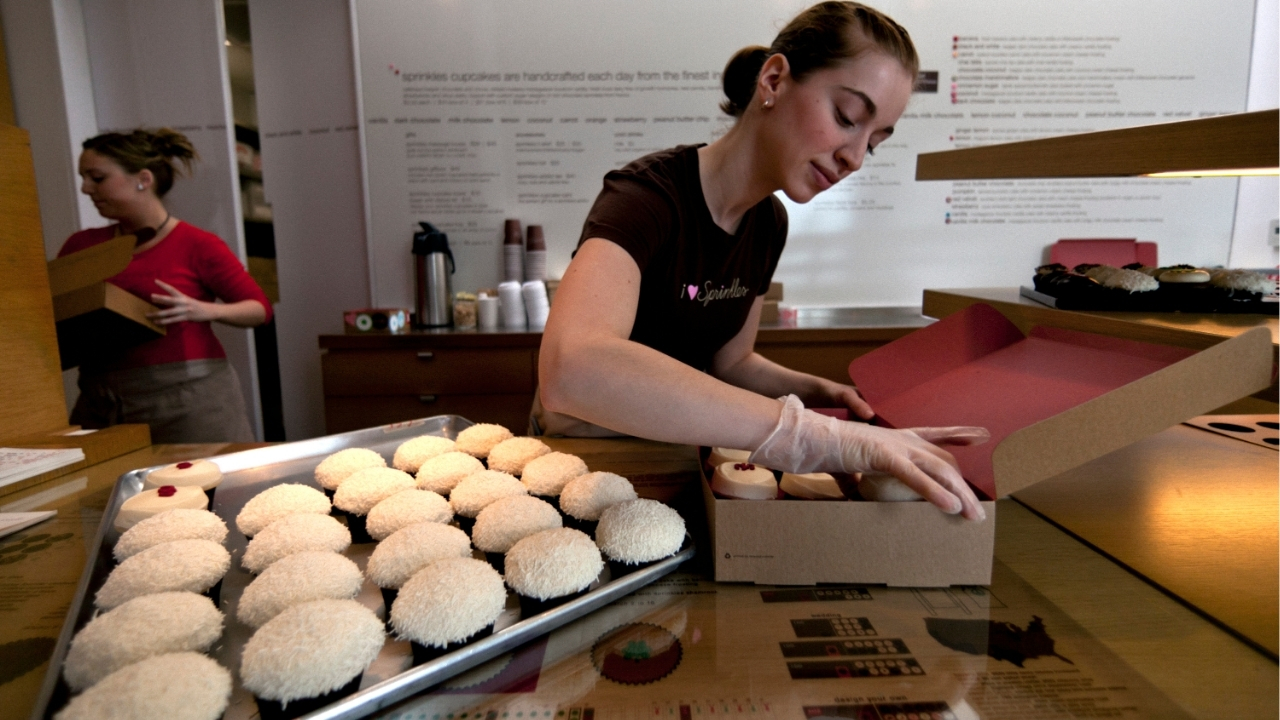
The 2026 Liquidity Veto: Why Sprinkles Fell — and the Rise of Successor Liability
Sprinkles Cupcakes didn’t fade because people stopped loving the product; it failed because the market stopped loving the math. The brand went dark on January 3, 2026, marking a moment where credit conditions, automation CAPEX, and liquidity discipline collided with brutal force.
The 2026 market now enforces a terminal valuation floor for automated retail brands that substitute social media vanity for sustainable unit economics.
What had once been a retail icon became a symbol of how fast a beloved founder-led business can collapse when preservation systems break down. Candace Nelson originally built an icon of the creator economy, yet her creation became a casualty of the very capital structures meant to scale it.
KarpReilly LLC presided over a quiet evaporation of value that mirrors the recent bankruptcy filings of TGI Fridays and Red Lobster. Investors are now aggressively repricing assets that rely on high-friction physical hardware like the famous cupcake vending machines. A fundamental policy shift in credit markets has made the cost of maintaining specialized, low-margin robotics unfeasible for debt-heavy portfolios.
The Practitioner’s Blind Spot and the Cost of Passive Neglect
The narrative began as a quintessential success story born from the wreckage of the 2005 tech bust. Nelson transformed a humble Beverly Hills storefront into a global beacon for luxury confectionery and high-tech delivery.
The mechanical arm of the vending machine became a physical manifestation of the brand’s digital dominance on platforms like TikTok and Instagram. However, the transition from founder-led passion to institutional management in 2012 introduced a terminal divergence in strategy.
Private equity often treats unique hospitality brands as standardized widgets, stripping the experience premium to service acquisition interest. The total cessation of operations confirms that even the most recognizable retail entities cannot survive a total collapse of physical infrastructure neglect. Fans who once queued for a $5 treat now find themselves mourning a ghost brand that vanished without a formal press release.
The 2026 Power Delta reveals a massive mispricing of automated luxury that savvy competitors are already beginning to exploit. While Sprinkles struggled under the weight of its aging ATM fleet, agile players moved toward modular, low-CAPEX distribution models.
Modern retail dominance now requires a seamless integration of localized micro-fulfillment and high-margin digital loyalty programs.
The failure to modernize the Sprinkles back-end left the company vulnerable to rising logistics costs and the high failure rate of its proprietary vending hardware. KarpReilly’s silence during this collapse suggests a broader strategic retreat from the novelty tech sector in favor of high-turnover health assets. This pivot leaves a significant vacuum in the transit hubs and luxury malls where the brand once reigned.
The market is now looking for a successor that can marry the charm of the original boutique with 2026-grade operational efficiency.
Successor Liability and the Vulture Capital Playbook
Successor liability serves as the primary financial chokepoint in this post-mortem analysis. When a private equity firm buys a founder out, the transition often severs the emotional tether that keeps a premium brand alive.
The aggressive expansion of private equity into the restaurant space has created a landscape of hollowed-out legacy icons. PitchBook data suggests that firms often prioritize short-term cash flow over the long-term capital expenditure required to keep mechanical retail fresh.
The sudden deletion of the digital footprint indicates a complete liquidation rather than a strategic restructuring or a pre-packaged bankruptcy. This scorched-earth approach to brand management creates a massive opening for independent operators who prioritize organic growth. Capital is flowing back toward authentic, practitioner-led ventures that shun the vulture capital playbook of debt-fueled growth.
The mechanics of this failure offer a masterclass in how institutional neglect can dismantle twenty years of relevance in a single fiscal quarter. Sprinkles failed to update its core value proposition as the novelty of cupcakes from a wall began to fade into a common commodity.
A strategic failure to invest in a proprietary mobile app ecosystem left the brand dependent on third-party aggregators and foot traffic. While Nelson moved on to new ventures, her original brainchild became a line item on a spreadsheet in Greenwich.
The lack of a resilient successor plan meant that once the jingle stopped playing, there was no narrative left to sustain the company. Consumers in 2026 are increasingly hostile toward brands perceived as corporate husks.
This sentiment is reflected in the social media backlash where fans blame private equity for killing the joy of the original experience.
| Old Way | New Way |
| Debt-fueled expansion of physical novelty hardware | Asset-light modular fulfillment and digital loyalty |
| Passive founder exits to high-leverage PE firms | Active secondary buyouts and practitioner-led scaling |
| Reliance on viral social media vanity metrics | Prioritizing unit economics and liquidity moats |
| Proprietary closed-loop vending ecosystems | Open-stack integration with multi-platform delivery |
| Static retail locations in high-rent districts | Dynamic pop-up micro-units with AI-driven inventory |
Venture Leverage: Exploiting Distressed Intellectual Property
Venture leverage in the current climate favors those who can acquire distressed intellectual property without the associated physical debt.
The Sprinkles trademark still carries significant weight in the $14 billion global dessert market despite the current operational blackout. A strategic buyer could potentially relaunch the brand as a premium D2C player, stripping away the expensive vending machines in favor of a high-efficiency shipping model.
The collapse creates a jurisdictional arbitrage opportunity for international franchisees who can now renegotiate terms or rebrand entirely. The key for the next owner will be avoiding the succession liability that plagued the previous tenure by reinstating a human face for the brand. This is a classic buy the dip scenario for a lifestyle conglomerate looking to bolster its luxury portfolio with a recognizable asset.
The infrastructure required to maintain 24/7 cupcake vending in high-traffic hubs proved to be a fatal overhead burden. In a high-interest environment, the cost of repairing custom mechanical components often exceeds the lifetime value of a single customer transaction.
The inability to pivot toward a more durable AI-driven supply chain meant that spoilage and downtime eroded thin margins. The 2026 regulatory environment has also increased the compliance costs for automated food service, adding another layer of friction. Strategic analysis suggests that the brand failed to utilize Section 280A(g) or similar tax preservation strategies to offset its massive physical footprint.
By ignoring the preservation side of the ledger, the leadership allowed liquidity to be drained by routine operational inefficiencies. This lack of financial discipline is a recurring theme among backed brands that prioritize top-line growth over bottom-line stability.
Market Repricing and the Boardroom Roadmap
Future M&A activity in the sector will see a move toward regulated authenticity where founders retain significant voting blocks. The death of Sprinkles serves as a deterrent to the clean break exit strategy that once dominated the entrepreneur mindset.
Founders are now negotiating for legacy protection clauses that prevent private equity firms from gutting the brand's core values. The 2026 Power Delta shifts leverage back to the creators who can prove a direct relationship with their audience.
Competitors are already positioned to capture the market share left behind by the recent retreat. The smart money is currently betting on human-centric retail that uses technology to enhance the physical experience of luxury. This shift is a direct response to the uncanny valley of automated vending that the industry eventually fell into.
The Boardroom Roadmap for the mid-2020s demands a total rejection of passive neglect in favor of aggressive operational curiosity. CEOs must stop viewing their financial structures as a black box and start interrogating the systemic assumptions of their partners.
Failure to understand the hidden rules of debt service and tax structure is no longer a localized mistake; it is a terminal business risk.
The Sprinkles case proves that no amount of brand equity can save a company that has lost control of its primary systems of preservation. Strategic leaders will now prioritize liquidity moats and the elimination of vampire debt as the core pillars of their long-term survival.
The consequence of ignoring these structural shifts is a total loss of market relevance and the eventual deletion of the legacy. A company that fails to adapt its physical infrastructure to the 2026 reality of high-cost maintenance will be liquidated by the market.
The era of the viral novelty is being replaced by the era of the resilient operator who understands that profit is a byproduct of sound systems. The most significant business move for any leader today is to conduct a systemic audit to identify where their own company might be hiding a vulnerability. Protecting the brand means protecting the mechanics that make the brand possible.
Sprinkles FAQ
What caused Sprinkles Cupcakes to close in 2026?
A liquidity squeeze driven by aging proprietary robotics, rising debt service costs, high maintenance CAPEX, spoilage risk, and lack of direct loyalty margin capture.
How did private equity ownership impact Sprinkles?
KarpReilly LLC expanded the automation fleet and retail footprint, but delayed reinvestment into maintenance infrastructure and never built a mobile-first loyalty moat.
Did Candace Nelson still own Sprinkles when it closed?
No. She had exited ownership long before the 2026 shutdown.
What is successor liability in brand acquisitions?
It is the legal and financial exposure a buyer may inherit from prior operations, contracts, debt instruments, franchise obligations, or compliance failures tied to the acquired entity.
What is the 2026 valuation floor for automated retail brands?
The market now requires sustainable unit economics, low-CAPEX fulfillment, liquidity reserves, governance continuity, and digital loyalty margins before awarding exit premiums.
Are automated vending machine retail models profitable in 2026?
They can be — but only when robotics infrastructure is asset-light, modular, well-maintained, and paired with direct margin-retaining loyalty ecosystems.
Who could relaunch Sprinkles successfully?
A lifestyle or hospitality conglomerate or independent operator able to acquire the trademark without inheriting mechanical debt or governance liabilities, while restoring a human continuity narrative and building digital loyalty margins.
Latest: 👉 The 2026 Power Delta: How a Wall Street Analyst Built a $4 Billion Metabolic Fortress