
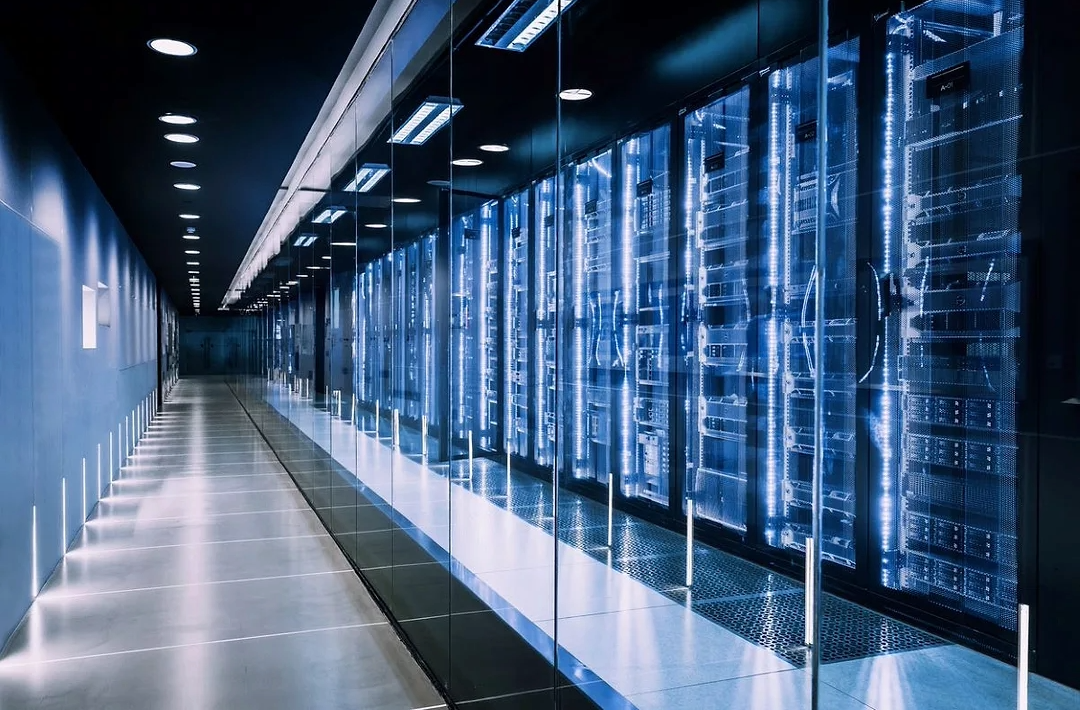
The Stargate Sentinel: SoftBank’s $4bn DigitalBridge Pivot and the Sovereignty of Silicon
The global digital economy has reached a terminal velocity where software capabilities are no longer the primary differentiator of industrial power.
Masayoshi Son’s $4 billion acquisition of DigitalBridge through SoftBank Group signals an aggressive departure from speculative venture capital toward the brutal physical realities of the AI era.
This transition marks the end of the "asset-light" era and the birth of "Sovereign Infrastructure," where controlling the data center backbone is a prerequisite for national and corporate survival.
The market displacement risk is absolute: legacy firms unable to secure direct access to high-density compute will face operational obsolescence as AI-driven agents reshape global trade flows.
The Industrialization of Intelligence
By absorbing DigitalBridge’s $108 billion asset portfolio, SoftBank is effectively underwriting the physical layer of the 2026–2030 AI investment supercycle.
This deal is not merely a purchase of real estate; it is a tactical seizure of 5.4GW in existing and planned power capacity. As the International Energy Agency (IEA) warns of data center electricity demand doubling by 2026, the scarcity of grid-ready land has become the new global currency. SoftBank is positioning itself as the primary landlord for the "Stargate" era, where trillion-dollar AI clusters require multi-gigawatt feeds that municipal grids were never designed to support.
Kinetic Infrastructure and the Great Decoupling
The SoftBank-DigitalBridge merger represents a structural drift toward "Kinetic Infrastructure"—assets that are not just passive hosts but active components of an integrated AI system.
We are witnessing a fundamental pivot where digital communications and energy generation are merging into a single, inseparable utility. This shift is driven by the reality that AI training and inference require power densities five to ten times greater than traditional cloud workloads.
Legacy operators who view towers and fiber as neutral commodities are failing to see the inevitable friction: the emergence of "closed-loop" ecosystems where compute, connectivity, and power are owned by the same entity.
Structural Drift: The AI Infrastructure Gap
The following shift illustrates how AI infrastructure economics are expected to reprice over the next investment cycle.
| Current Market State (2025) | 2026-2030 Predicted State |
| Data centers as passive real estate rentals | Infrastructure as integrated "AI Power Plants" |
| 1.5% global electricity consumption | Projected 3% to 4.5% of global demand |
| Fragmented fiber and tower ownership | Consolidated "Sovereign Backbones" |
| Air-cooled facilities with low power density | Liquid-cooled hubs supporting 100kW+ racks |
| Reliance on public utility grid queues | Direct investment in modular nuclear/renewables |
Geopolitical Friction and the Data Sovereignty Wall
The next four years will be defined by "Disruption Density," where the second-order effects of this infrastructure land grab trigger intense geopolitical friction. The IMF and the OECD are already monitoring the fiscal impact of massive AI capital expenditures on emerging market debt and energy stability.
As SoftBank scales its footprint across G7 and BRICS+ territories, it will encounter a "Sovereignty Wall" where nations mandate local data processing to protect national security and labor markets. The European Commission is already drafting the 2026 Data Centre Energy Efficiency Package, which will essentially act as a carbon-based tariff on inefficient American and Japanese hyperscalers.
Institutional players like the G7 and the newly expanded BRICS+ are competing for "Compute Hegemony." In this environment, every H100 GPU deployed is a tool of statecraft.
The World Bank has noted that the digital divide is now a "Compute Divide," where countries lacking fiber-dense networks and stable power grids are relegated to the periphery of the AI economy. SoftBank’s move to retain DigitalBridge as a standalone platform under CEO Marc Ganzi is a strategic attempt to navigate these national security reviews, particularly those conducted by CFIUS in the United States and similar bodies in the EU.
The Synthetic Labor Shift
A critical second-order effect of SoftBank’s infrastructure bet is the transformation of the global labor market. The MIT Media Lab and researchers at CERN have highlighted the "Productivity Paradox," where initial AI adoption leads to temporary performance declines as legacy workflows are redesigned.
However, as the DigitalBridge backbone enables "Agentic AI"—systems that plan and execute tasks autonomously—the demand for physical scale will be replaced by a demand for "System Integration" expertise. For the global CEO, the consequence is clear: the cost of human labor is being decoupled from output, replaced by the cost of kilowatt-hours and FLOPs.
The IMF’s 2026 outlook emphasizes that trade tariffs may soon extend to "Inference Units," as governments struggle to tax intangible AI services produced in foreign data centers.
Sovereign Wealth Funds in the Middle East and Southeast Asia are already pivoting their portfolios away from traditional tech and toward the "Power-and-Pipe" play that SoftBank has now validated. This is a macro-consequence that mandates a shift in capital allocation: if you do not own a portion of the infrastructure stack, you are merely a tenant in a world where the rent is about to skyrocket.
The Strategic Foresight Directive
To survive the 2026–2030 cycle, a CEO must treat energy and compute as core strategic risks, not procurement line items. SoftBank’s $4 billion wager proves that the "first-mover" advantage in AI infrastructure is the only moat left. Organizations should immediately begin auditing their "Compute-to-Power" ratio and seek long-term partnerships with distributed infrastructure providers.
The goal is "Resource Autonomy"—ensuring your AI agents can operate regardless of public grid instability or sudden regulatory shifts. Pivot today toward a "Compute-First" capital strategy, or prepare to be outscaled by those who own the backbone of the next industrial revolution.
Key Questions Executives Are Asking About SoftBank’s AI Infrastructure Pivot
Why did SoftBank buy DigitalBridge for $4 billion?
SoftBank Group’s $4 billion move into DigitalBridge reflects a strategic pivot away from speculative, asset-light technology investments toward owning the physical backbone of the AI economy. As AI models scale, access to power-dense, grid-connected data centers has become a structural bottleneck. DigitalBridge offers SoftBank immediate exposure to that constraint, positioning it upstream of the AI value chain where pricing power and strategic leverage are increasingly concentrated.
What are the 2026 predictions for AI data-center power demand?
Industry forecasts, including warnings from the International Energy Agency, suggest that global data-center electricity demand could double by 2026, driven primarily by AI training and inference workloads. Power density per rack is rising sharply, and grid-ready capacity—not compute hardware—is now the limiting factor. By the late 2020s, AI infrastructure is expected to consume between 3% and 4.5% of global electricity, up from roughly 1.5% today.
How does the SoftBank deal impact global AI infrastructure?
The deal accelerates the shift from fragmented data-center ownership toward integrated, sovereign infrastructure platforms. By backing DigitalBridge at scale, SoftBank is helping normalize a model where power, connectivity, and compute are treated as a single strategic asset. This raises the competitive bar for hyperscalers and enterprises that previously relied on short-term colocation and public cloud capacity.
What is the role of DigitalBridge in the AI economy?
DigitalBridge functions as an infrastructure aggregator, owning and operating data centers, fiber networks, and tower assets across multiple regions. In the AI economy, its role is evolving from passive landlord to strategic enabler, providing the physical environments capable of supporting liquid cooling, high-density racks, and long-term power access required by next-generation AI systems.
Will there be an energy shortage due to AI data centers by 2030?
Not a universal shortage, but a localized and strategic one. Regions without surplus generation capacity, grid resilience, or fast permitting processes are likely to face severe constraints. This is why major infrastructure players are increasingly investing directly in renewables, modular nuclear, and on-site generation. Energy scarcity is becoming a location-specific competitive risk, not a generalized global crisis.
How is Masayoshi Son’s strategy changing in 2026?
Masayoshi Son is shifting from a venture-capital model centered on platform optionality to a capital-intensive, infrastructure-first strategy. Rather than betting on which AI application wins, SoftBank is positioning itself to profit from the universal inputs—power, land, and connectivity—that all AI systems require, regardless of use case or geography.
What is the difference between traditional and AI data centers?
Traditional data centers are designed for general cloud workloads, with relatively low power density and air-based cooling. AI data centers, by contrast, are engineered for extreme compute intensity, often exceeding 100 kW per rack and requiring liquid cooling, specialized power delivery, and proximity to high-capacity grids. They function less like warehouses and more like industrial power plants for computation.
How are G7 and BRICS countries competing for AI infrastructure?
Competition is increasingly focused on compute sovereignty. G7 nations are tightening energy-efficiency and security standards to protect domestic grids, while BRICS countries are leveraging lower-cost energy and land to attract AI infrastructure investment. The result is a bifurcated landscape where access to AI capacity is shaped as much by geopolitics as by capital availability.
What is the impact of data-center regulation in the EU for 2026?
The European Union is preparing stricter energy-efficiency and reporting requirements for large data centers, effectively introducing a carbon-based cost floor. While designed to curb emissions, these rules may disadvantage foreign hyperscalers operating inefficient facilities and accelerate investment in newer, power-optimized infrastructure within compliant jurisdictions.
Can AI productivity gains offset its energy consumption costs?
Over time, potentially yes—but not immediately. Early AI adoption often increases energy use faster than productivity gains materialize. The long-term economic benefit depends on improvements in model efficiency, hardware utilization, and infrastructure design. In the near term, however, energy and compute costs are becoming primary balance-sheet considerations, not marginal operating expenses.
Exclusive: 👉👉👉 The Great Consolidation: Rio-Glencore and the 2030 Race for Resource Sovereignty 👈👈👈