
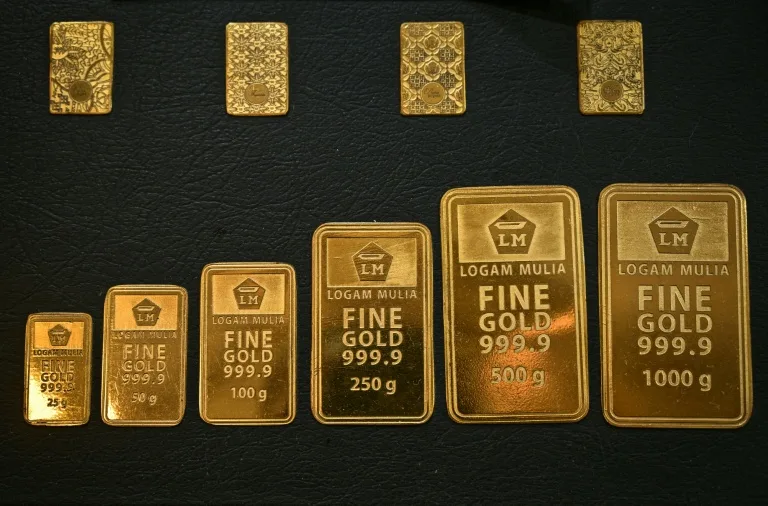
When Gold Smashes $5,100, It’s Not Just a Market Story — It’s a Commitment Story
Gold breaking through $5,100 an ounce looks, on the surface, like a familiar safe-haven rally. Investors flee uncertainty, central banks accumulate reserves, and momentum traders pile in. The headlines frame it as fear meeting opportunity.
But the more interesting question isn’t why gold is rising. It’s what quietly becomes harder to undo once prices move this far, this fast — and who finds themselves locked into decisions they didn’t realise they were making.
This isn’t just about bullion. It’s about commitment under pressure.
Where things start to tighten
At extreme price levels, gold stops being a flexible hedge and starts becoming a statement.
Central banks buying at these levels are no longer “diversifying reserves” in the abstract. They are committing real capital at historic prices, in size, with limited room to quietly reverse course without political or reputational fallout. Once accumulation becomes visible, stopping looks like a signal — not a neutral adjustment.
For institutions and funds, the pressure is different but just as real. When gold moves 60% in a year and keeps climbing, sitting out starts to feel like a decision in itself. Allocations get justified as “risk management,” but the longer prices hold, the more those allocations harden into expectations. A hedge becomes a performance contributor. A protection trade becomes something clients watch.
And for corporates exposed to metals — from manufacturers to luxury goods — pricing decisions made months ago start to bite. Hedging strategies that looked conservative suddenly feel expensive to unwind. Passing costs through to customers becomes politically and commercially awkward just as consumer sentiment is already fragile.
This is the point where optionality narrows.
The decisions that quietly change how this plays out
The most common misjudgment at moments like this is assuming that momentum equals stability.
Leaders often tell themselves they’re responding to conditions, when in reality they’re locking in assumptions: that volatility will persist, that policy uncertainty won’t resolve quickly, that today’s stress scenario is the new normal. Those assumptions don’t show up on a balance sheet, but they shape budgets, forecasts, and internal confidence.
Delay is another trap. Waiting for “a clearer signal” before adjusting exposure, pricing, or strategy usually means acting after flexibility has already gone. When everyone is watching the same charts, the window for calm, reversible decisions closes quietly.
There’s also the human factor. Teams under pressure gravitate toward what looks defensible. “Everyone is buying gold” feels safer than explaining why you didn’t. That mindset doesn’t require panic — just a subtle shift from judgement to cover.
What usually happens next
When prices stay elevated, the strain moves inward.
Finance teams wrestle with mismatches between assumed protection and actual cash impact. Procurement and pricing teams face customers who resist increases even as input costs surge. Investment committees find themselves managing not just exposure, but expectations they helped create.
If prices correct sharply — which they often do after stress-driven surges — the problem flips. Explaining why protection suddenly looks like overexposure is harder than explaining caution upfront. Trust erodes not because decisions were irrational, but because they were made too visibly, too confidently, too late.
And if prices don’t correct? The cost is subtler: capital tied up, strategies constrained, fewer options when the next shock arrives.
Editorial takeaway: what this moment really tests
Gold at $5,100 isn’t testing fear. It’s testing discipline.
The real risk isn’t buying or not buying. It’s mistaking a response to uncertainty for a long-term position without acknowledging what you’re giving up in flexibility, credibility, and room to maneuver.
Moments like this reward leaders who stay explicit about what is temporary, what is conditional, and what they are prepared to reverse — even when reversal feels uncomfortable.
Because once a hedge becomes a belief, and a belief becomes public, the hardest asset to recover isn’t money. It’s optionality.