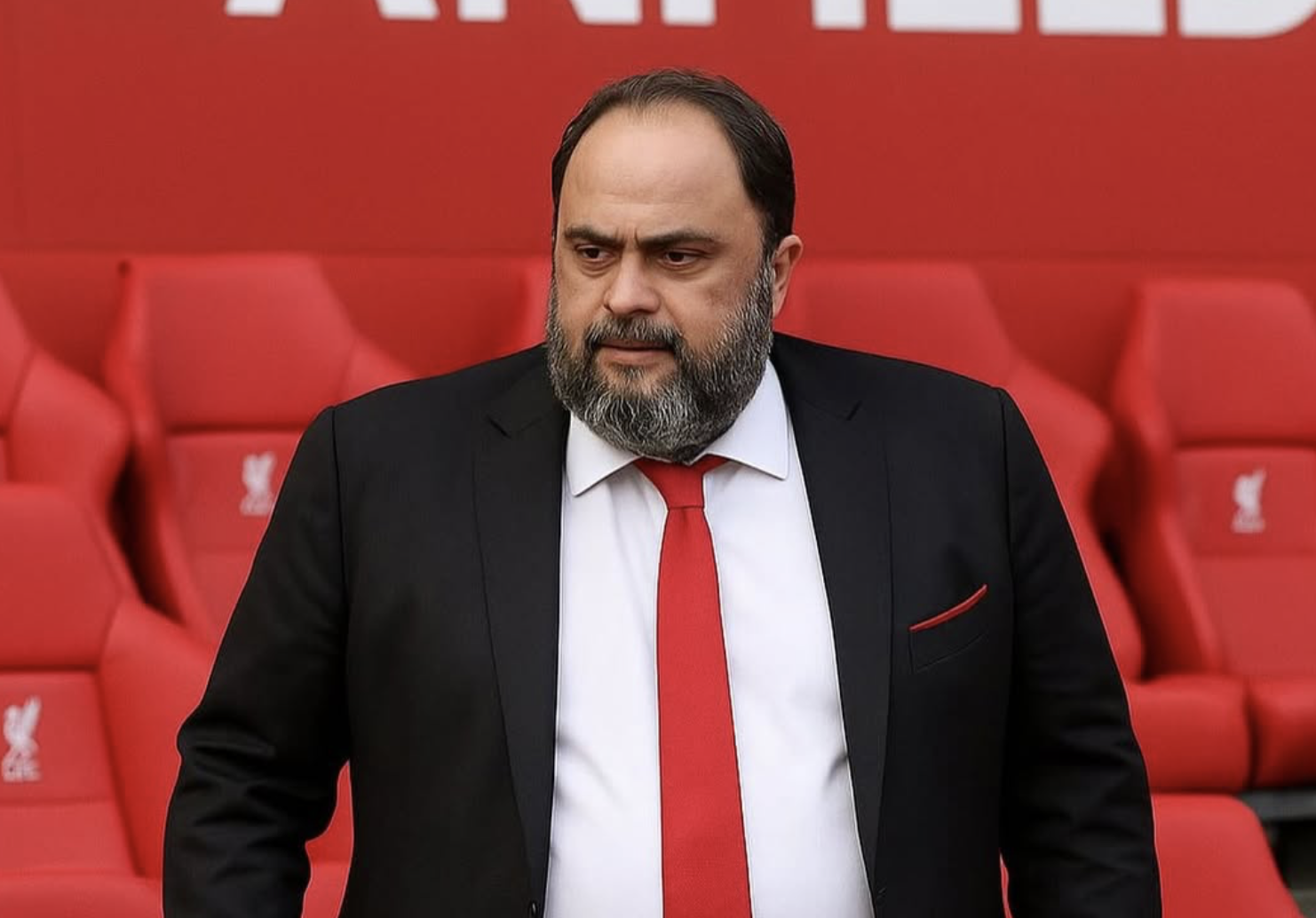
Evangelos Marinakis: The Billionaire Owner Reshaping Premier League Football
Current Titles
-
Owner, Nottingham Forest Football Club (Premier League)
-
Majority Owner & President, Olympiacos FC
-
Investor, Rio Ave FC
-
Founder & Chairman, Capital Maritime & Trading Corp
-
Owner, Alter Ego Media Group
A Premier League Owner With a Multi-Club Vision
As a Premier League club owner, Evangelos Marinakis represents a distinctly modern form of football power: globally diversified, capital-backed, and operationally involved. His ownership of Nottingham Forest places him at the heart of English football’s most commercially influential league, but his reach extends well beyond England. With significant interests in Greece and Portugal, Marinakis operates football clubs not as isolated assets, but as parts of a wider international portfolio.
Unlike passive investors, Marinakis is visible and engaged. His tenure in the Premier League has been marked by direct intervention, strong public positions, and a willingness to deploy capital to accelerate competitive progress. That approach has made him one of the more closely watched owners in English football.
Foundations in Shipping and Global Trade
Marinakis’ wealth is rooted in international shipping, a sector defined by scale, regulation, and long investment cycles. In 2005, he founded Capital Maritime & Trading Corp, building a fleet that spans oil tankers, LNG carriers, and dry bulk vessels. Shipping remains one of the few industries capable of generating vast, globally diversified cash flows outside traditional financial markets, and it provided Marinakis with both capital and strategic patience.
The shipping industry rewards discipline over speculation. Fleet management, charter structures, and exposure to global energy markets require tolerance for volatility and long planning horizons. These characteristics have influenced Marinakis’ approach to football ownership, where infrastructure, squad depth, and long-term positioning are prioritised over short-term optics.
Media Ownership and Influence
Beyond shipping, Marinakis controls Alter Ego Media, one of Greece’s most influential media groups. Its portfolio includes major newspapers, television interests, and digital platforms. This arm of his empire adds a layer of public influence that few football owners possess, reinforcing his prominence in both business and civic life.
Media ownership does not simply diversify income; it shapes narrative power. While Marinakis has largely kept his English football operations separate from his Greek media interests, the combination underscores his position as a figure comfortable operating at the intersection of commerce, public opinion, and sport.
Billionaire Status and Capital Structure
Marinakis is widely recognised as a billionaire, with estimates placing his family wealth in the multi-billion-dollar range. Crucially, his capital base is not concentrated in a single speculative asset. Shipping, media, and football form a portfolio with different risk profiles, allowing him to absorb downturns in one sector without destabilising the others.
This matters in the Premier League, where ownership failures are often linked to over-reliance on leveraged financing or unstable revenue assumptions. Marinakis’ model is comparatively robust, underpinned by industries that operate independently of football’s economic cycles.
Olympiacos: Establishing a Football Blueprint
Marinakis first tested his ownership philosophy at Olympiacos, acquiring control in 2010. The club was already dominant domestically, but his tenure reinforced its institutional strength. Olympiacos continued to collect league titles and cups while also improving its European standing.
The club’s eventual triumph in the UEFA Europa Conference League marked a symbolic milestone: proof that a club outside Europe’s wealthiest leagues could still compete internationally with the right governance and investment. Olympiacos became the proving ground for Marinakis’ football strategy before its application in the Premier League.
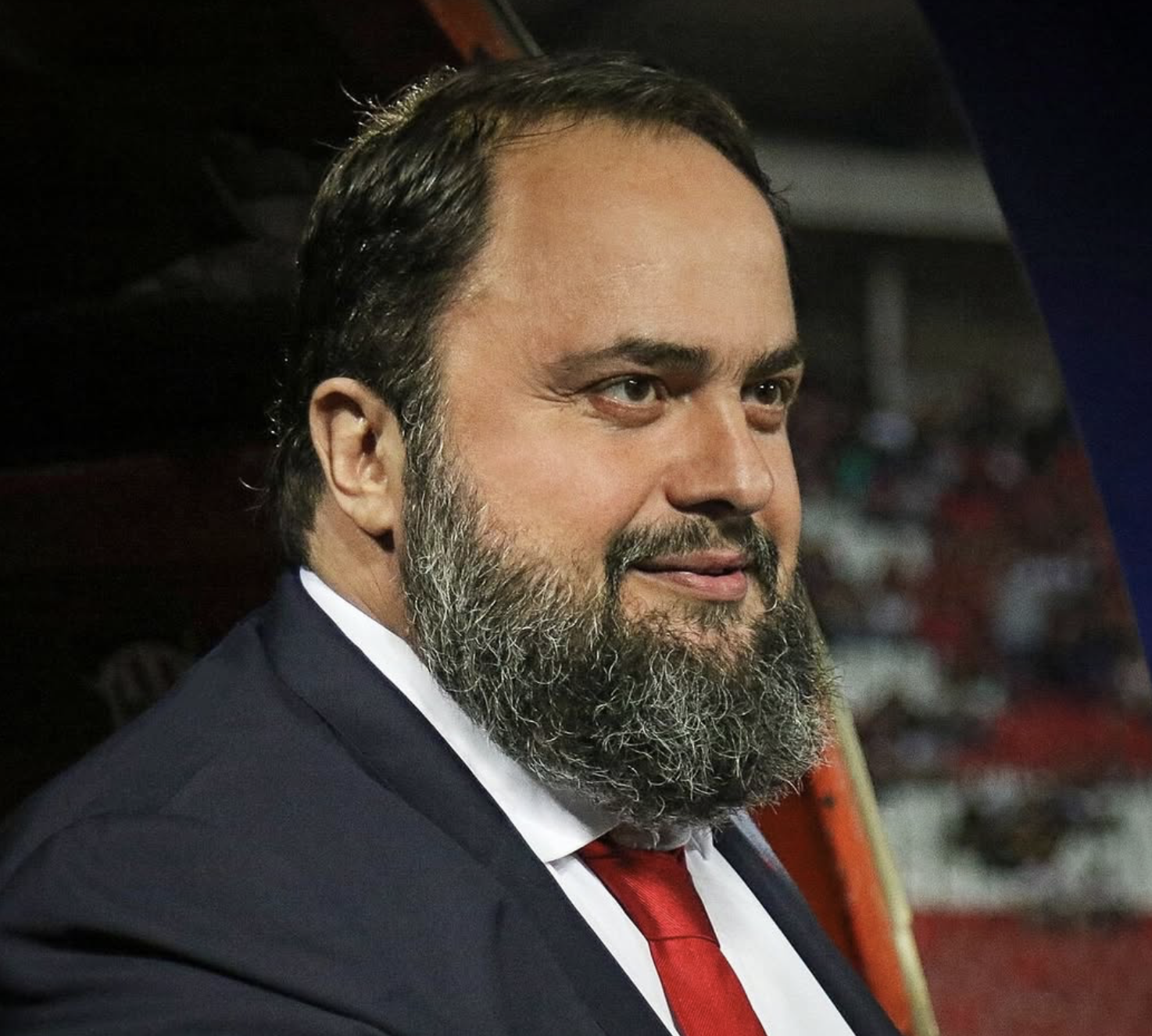
Nottingham Forest and the Premier League Challenge
When Marinakis acquired Nottingham Forest in 2017, the club was a historic name disconnected from modern elite football. Promotion to the Premier League in 2022 ended a 23-year absence and transformed the club’s financial and competitive landscape.
Survival in the Premier League required rapid squad investment, and Marinakis sanctioned aggressive recruitment to give Forest a fighting chance. While this approach attracted scrutiny under profitability and sustainability rules, it reflected a calculated risk: securing Premier League status first, then stabilising.
Forest’s subsequent consolidation suggests that strategy is evolving from urgency to structure. Investment has shifted toward squad balance, coaching continuity, and compliance with regulatory frameworks increasingly central to English football governance.
Multi-Club Ownership and Regulatory Pressure
Marinakis’ ownership of clubs in Greece, England, and Portugal places him squarely within the global trend toward multi-club networks. These structures offer advantages in scouting, player development, and commercial reach, but they also attract regulatory attention.
UEFA’s restrictions on clubs under common control competing in the same European tournaments have forced operational adjustments, including the use of blind trusts. These constraints highlight a broader reality: owners like Marinakis are operating at the frontier of football regulation, where governance frameworks are still catching up with capital flows.
Leadership Style and Public Scrutiny
Marinakis is not a background figure. He communicates directly, reacts publicly, and is willing to challenge officials and institutions when he believes his clubs are disadvantaged. That visibility brings both loyalty and criticism.
In England, his approach contrasts with the quieter styles favoured by some American owners. Supporters often see engagement as a sign of commitment, while critics argue it can invite unnecessary controversy. Either way, it reinforces Marinakis’ identity as an owner who views football clubs as active enterprises rather than passive investments.
Personal Life and Public Identity
Despite his prominence, Marinakis maintains a relatively private personal life. He resides primarily in Greece and has historically combined business leadership with civic involvement. While his public profile is shaped largely by football and business, he has avoided the celebrity culture that often surrounds billionaire sports owners.
A Distinct Ownership Archetype
Evangelos Marinakis embodies a specific ownership model increasingly visible in elite football: industrial wealth translated into sporting ambition, managed through direct involvement rather than delegation alone. His Premier League presence is not driven by branding exercises or short-term valuation flips, but by a belief that football clubs can be strengthened through capital, control, and institutional discipline.
As regulation tightens and financial scrutiny increases, owners with diversified wealth and long planning horizons are likely to become more influential. In that environment, Marinakis’ blend of shipping-era patience and Premier League ambition positions him as one of the more consequential figures shaping modern football ownership.