
Ashley Hurst: High Court Reverses Regulatory Sanction Over Privileged Pre-Action Correspondence
The High Court has overturned a £50,000 fine against Osborne Clarke partner Ashley Hurst, ruling that solicitors may advance contestable legal arguments without breaching professional standards. Mrs Justice Collins Rice found the Solicitors Disciplinary Tribunal failed to prove the lawyer acted with a lack of integrity when marking correspondence as "without prejudice." This judgment reaffirms the protection of "properly arguable" legal positions in pre-action communications, even when those positions are unlikely to succeed.
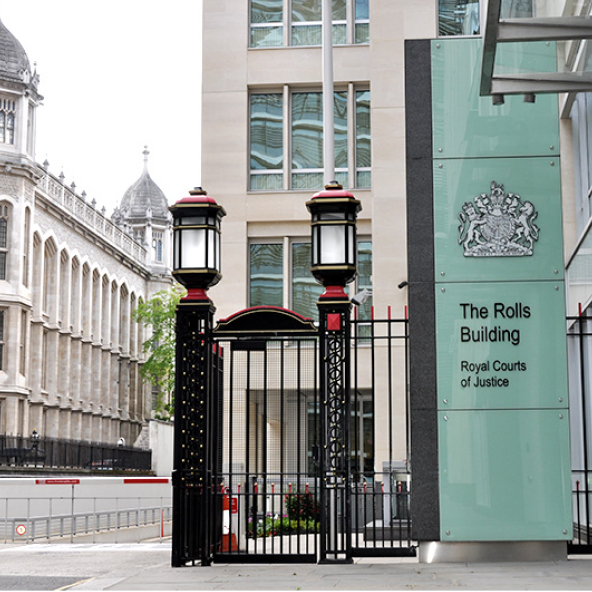
The High Court has formally exonerated Osborne Clarke partner Ashley Hurst, setting aside a Solicitors Disciplinary Tribunal (SDT) decision that had previously imposed a £50,000 fine and significant costs.
The case centered on an email sent by Hurst to tax blogger Dan Neidle on behalf of then-Lord Chancellor Nadhim Zahawi, which was marked "confidential and without prejudice." While the SDT originally characterized this as an improper attempt to suppress public interest reporting, the Administrative Court found that the tribunal misapplied the regulatory threshold for professional misconduct.
This ruling clarifies the jurisdiction of regulators when scrutinizing the strategic choices made by solicitors during the early stages of a legal dispute.
By focusing on whether a legal position is "properly arguable" rather than whether it is ultimately correct, the court has reinforced the boundary between aggressive advocacy and regulatory breach.
The decision marks a significant moment for the legal profession, establishing that a solicitor’s duty to their client includes the right to advance weak or contestable arguments without fear of personal financial sanction.
What we know so far
In 2023, the SDT sanctioned Ashley Hurst following a complaint regarding his correspondence with Dan Neidle, a former Magic Circle partner.
Neidle had been investigating Nadhim Zahawi’s tax affairs, leading Hurst to send an email asserting that the communication was subject to "without prejudice" privilege. The SDT found that because there was no active negotiation at the time, the use of the label was an improper attempt to stifle publication.
The tribunal concluded that Hurst had shown a lack of integrity, ordering a £50,000 fine and £260,000 in costs.
However, Hurst appealed the decision to the High Court, arguing that the tribunal had fundamentally misunderstood the role of a solicitor in pre-action scenarios. Mrs Justice Collins Rice presided over the appeal, scrutinizing the evidence and the underlying regulatory logic used to penalize the partner.
The legal issue at the centre
The core of this case rests on the standard of integrity required of solicitors under the SRA Code of Conduct when asserting legal privileges.
The High Court examined whether asserting "without prejudice" status—even if technically incorrect under evidentiary rules—amounts to professional misconduct. Under applicable regulatory standards, a solicitor is permitted to advance any argument that is not "legally unrecognisable."
The court focused on the probable cause threshold for disciplinary action, noting that regulators must not conflate a losing legal argument with a lack of professional integrity.
By overturning the fine, the court established that solicitors are not the guarantors of their client's ultimate legal success at the pre-action stage. Instead, the court confirmed that the regulatory focus must remain on whether the lawyer’s position was "properly arguable" within the broad scope of the law.
Key questions people are asking
What constitutes a "properly arguable" legal position?
A properly arguable position is one that a regulated professional can advance without acting improperly, regardless of its eventual success. The court held that a solicitor is entitled to put forward even weak arguments to protect a client’s interests. Professional misconduct only occurs if the legal assertion is so baseless that no competent solicitor could reasonably make it.
Why did the High Court criticize the SDT’s reasoning?
The judge found that the SDT adopted a narrative of "secrecy and stifling" without sufficient evidentiary support. The tribunal focused on whether the email was actually confidential, rather than whether Hurst’s belief in its confidentiality was a permissible legal stance. This shift in focus led the tribunal to ask the wrong regulatory questions, resulting in an unfair finding of "fabricated" obligations.
Does this ruling protect lawyers from SLAPP allegations?
While the SDT explicitly stated this was not a Strategic Lawsuit Against Public Participation (SLAPP), the ruling provides a buffer for lawyers facing such claims. It confirms that the mere act of sending a firm pre-action letter does not inherently constitute a regulatory breach. As long as the lawyer operates within the bounds of "arguable" law, their professional standing remains protected from regulatory overreach.
The evolving definition of legal integrity
This judgment highlights a widening gap between regulatory expectations and judicial standards for professional conduct.
The Solicitors Regulation Authority (SRA) has increasingly prioritized the "public interest" and transparency, particularly in cases involving high-profile figures.
However, the High Court has reasserted that the foundational principle of the legal profession is the solicitor's duty to provide robust, fearless representation.
The decision serves as a check on "regulatory overreach" by clarifying that "integrity" does not require a solicitor to be objectively correct in every legal assertion.
If the SRA were to penalize every lawyer whose pre-action arguments were eventually rejected, the ability of citizens to seek legal advice would be chilled. This case reinforces that the definition of integrity must allow for the "properly arguable" defense of a client, even when that client is a public figure facing intense scrutiny.
Public impact and the precedent for legal advocacy
This case illuminates the legal principle that the justice system relies on robust representation for all parties, regardless of their public standing.
For the general public, the ruling ensures that the fear of personal professional ruin does not prevent lawyers from zealously advocating for their clients. It maintains the "without prejudice" rule as a tool for attempting to resolve disputes privately before they escalate into costly public litigation.
However, it also highlights the risk that high-profile figures may use legal correspondence to discourage scrutiny, a tactic that remains a point of intense public debate.
Regardless of the specific outcome for Mr. Hurst, the case demonstrates that the "without prejudice" label is not a magic wand that can disappear public facts.
It is a procedural tool subject to strict judicial oversight, ensuring that the right to publish and the right to legal counsel remain in a delicate, supervised balance.
The High Court’s decision to overturn the sanction effectively ends the current disciplinary proceedings against Hurst. Because the judge found the tribunal’s reasoning "insufficiently examined" and legally flawed, the original fine and costs order are vacated.
The SRA now faces a choice between accepting the judgment or seeking leave to appeal to the Court of Appeal if they believe a point of law of general public importance is at stake.
In most cases of this nature, the High Court’s thorough analysis of the "properly arguable" standard serves as the final word on the matter.
For Ashley Hurst, the next procedural step is the recovery of legal costs incurred during the appeal process. The judgment serves as a binding precedent for the SDT, limiting their ability to penalize solicitors for aggressive but legally grounded pre-action strategies in the future.
Ashley Hurst has been fully exonerated, with the High Court ruling that his actions did not fall below the required standard of professional integrity. This case matters because it prevents the SRA from using the disciplinary process to "make an example" of lawyers involved in high-profile political disputes.
It reinforces the principle that a solicitor’s duty is to their client’s legal position, provided that position remains within the wide boundaries of what is legally recognizable.