
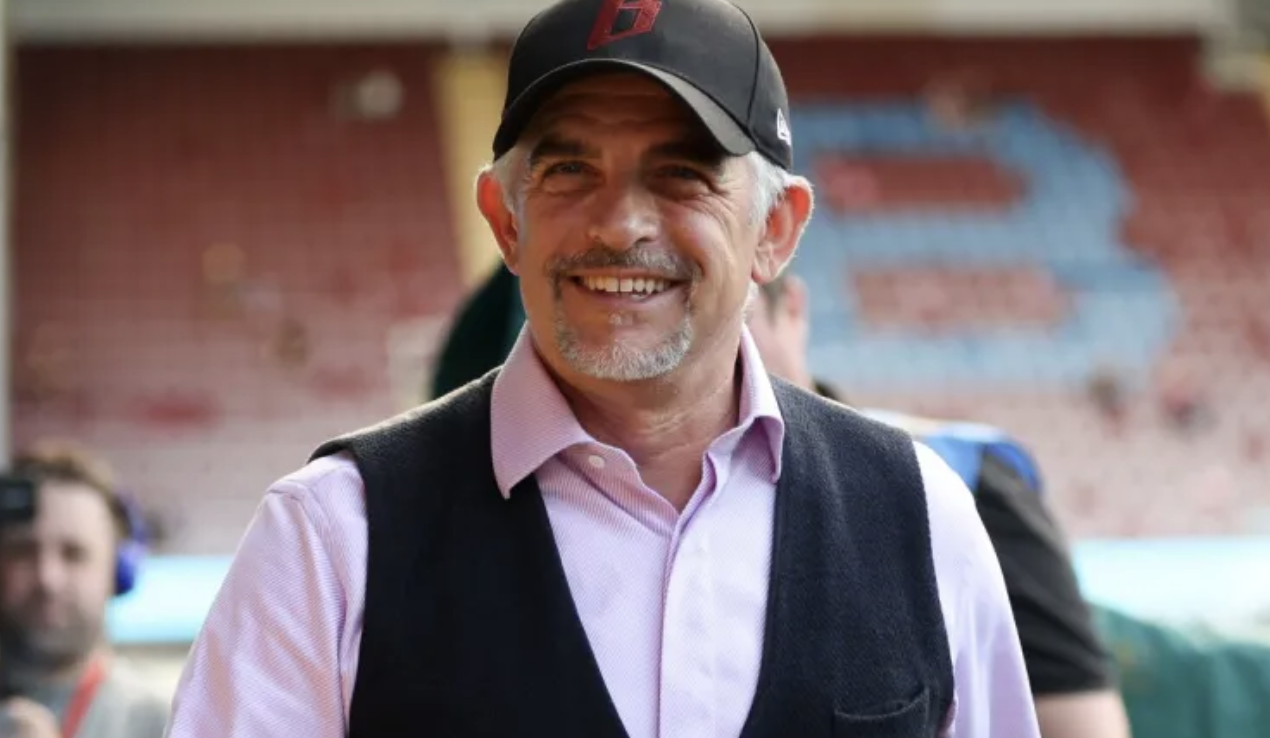
Alan Pace: The Financial Strategist Rewriting Football Ownership
Current Titles
Chairman, Burnley Football Club
Managing Partner, ALK Capital
Founder, Citadel Capital (former)
A Different Kind of Power in Modern Football
Alan Pace is not the archetypal football owner. He does not arrive with celebrity status, personal billions to burn, or a desire to dominate headlines. His influence comes from something quieter and more disruptive: an institutional investment mindset applied to one of the most emotionally driven industries in the world.
As chairman of Burnley Football Club, Pace represents a new ownership model inside the Premier League—one shaped by private equity discipline, regulatory awareness, and capital efficiency. His importance lies not in how much he spends, but in how deliberately he chooses not to.
Where His Leverage Comes From
Pace’s authority does not stem from legacy wealth or inherited capital. It comes from understanding how capital behaves under pressure—and how to protect it.
Managing Capital, Not Chasing It
Unlike billionaire owners deploying personal fortunes, Pace operates as a steward of institutional capital through ALK Capital. This distinction defines his approach. Investment decisions are framed around durability, downside protection, and governance rather than immediate gratification.
This structure also grants patience. Capital is not deployed to win approval cycles but to survive them—whether that means weathering relegation risk or resisting inflated transfer markets.
Turning a Football Club into a Platform
Burnley is not a global giant, but within the Premier League ecosystem it functions as a predictable, regulated revenue platform. Broadcast distributions, commercial partnerships, and infrastructure investment provide steady income when managed carefully.
Pace’s strategy treats the club less as a passion project and more as an operating business—one that must remain solvent regardless of on-pitch volatility.
Ownership Without Interference
Control sits firmly with ALK Capital. There is no public shareholder base and no activist pathway into the club’s governance. Decision-making is centralized, professionalized, and shielded from reactionary pressure—a feature that has defined Pace’s tenure from the outset.

The Man Behind the Model
Core Facts
-
Full Name: Alan Pace
-
Age: Early 50s
-
Primary Base: United States, with extensive UK operations
-
Wealth Profile: Influence driven by managed capital rather than disclosed personal net worth
-
Ownership Structure: Private equity–aligned, institutionally backed
Building the Mindset Before the Club
Pace’s career was forged far from football grounds. Educated and trained in the United States, he built his reputation in investment banking and private equity before founding Citadel Capital, a firm focused on infrastructure, energy, and industrial assets in emerging markets.
These sectors demand patience, regulatory fluency, and operational discipline. Returns are earned over years, not seasons. That background fundamentally shaped how Pace views football ownership—not as entertainment, but as a long-duration asset class.
Inside the Business Portfolio
The Capital Engine
ALK Capital sits at the center of Pace’s professional life. The firm applies private equity principles to complex assets, emphasizing governance, balance-sheet control, and risk-adjusted returns.
This experience gave Pace the confidence to enter football without abandoning financial discipline.
Football as an Influence Asset
Burnley FC is Pace’s most visible holding. As a Premier League club, it delivers global exposure far beyond its size. Broadcast reach, digital distribution, and international fan access transform even mid-table clubs into worldwide brands.
While minority investors have attracted public curiosity, operational control remains firmly with ALK Capital.
Optionality, Not Vanity
Football represents optional upside rather than a dependency. Pace does not require the club to deliver outsized financial returns. Its value lies in longevity, global relevance, and strategic positioning within a tightly regulated league.
The Operating Philosophy
Patience as a Competitive Advantage
Pace is willing to endure criticism and short-term instability if it preserves long-term solvency. This includes resisting inflated wages, avoiding panic signings, and accepting the financial reality of performance cycles.
Recycling Capital, Not Burning It
Resources are directed toward infrastructure, analytics, and sustainable recruitment models rather than marquee purchases. This mirrors trends across elite football, where financial controls are tightening and penalties for excess are becoming real.
Staying Quiet While Others React
Pace rarely seeks the spotlight. He allows executives and managers to operate publicly while ownership remains strategically distant—a deliberate choice in a league where noise often drives bad decisions.
Pressure Points and Trade-Offs
Regulation as Both Risk and Shield
The Premier League’s evolving financial rules align broadly with Pace’s philosophy, but enforcement remains unpredictable. Compliance is a strength—but not a guarantee.
The Key-Man Question
While ALK Capital is institutionally structured, Pace’s vision remains central. A shift in leadership philosophy would materially alter the ownership model.
Balancing Sport and Stewardship
Football success demands ambition. Capital stewardship demands restraint. Managing that tension is the defining challenge of Pace’s ownership.
How Personality Shapes Ownership
Pace is defined by control, discretion, and emotional distance. He does not seek fan approval or media validation. That temperament allows him to absorb pressure without reacting publicly—a rare advantage in football.
His style favors systems over sentiment and process over spectacle.
The Model That Changed How Clubs Are Run
Alan Pace is not trying to outspend football’s elite. He is testing whether discipline can survive in a league built on excess.
Burnley under his ownership has become a case study in institutional football governance—proof that clubs can be run as businesses without abandoning competitive ambition.
Whether the model ultimately dominates or coexists with billionaire ownership, Pace has already left his mark. He represents a future where football clubs are no longer toys of wealth, but instruments of strategy.