A big red button sits within arm's reach of Meganne Money at every single performance.
Most nights, she never touches it. But knowing it's there, and that some unethical operators don't have one at all, keeps her sharp.
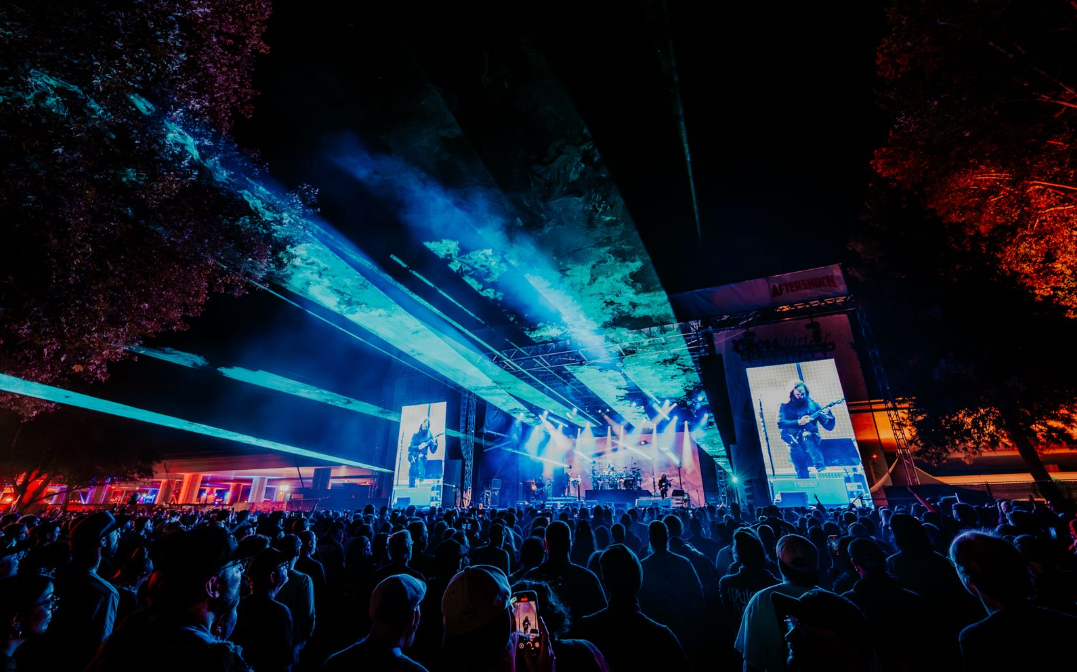
Laser FX programming looks glamorous from the crowd. Beams slice through arena fog, dancing perfectly in sync with thundering basslines and soaring guitar solos.
What spectators don't see is the invisible architecture of safety protocols that separates legitimate productions from dangerous shortcuts.
The E-stop button represents the final safeguard, a last-ditch effort when something goes catastrophically wrong.
And in an industry where operators sometimes skip it entirely, that distinction matters more than audiences realize.
The Button Nobody Wants to Press
During a typical show, Meganne Money's hands stay busy. Operating lasers in real-time demands constant attention: triggering cues, adjusting parameters, and watching termination points.
Her current tour has spanned 123 shows over an entire year, and throughout that run, the E-stop has remained what it should be: emergency backup, not standard operating procedure.
The button exists precisely so she doesn't need it. Proper zoning, careful programming, and vigilant operation handle 99% of potential issues before they become crises.
But not every tour allows that luxury.
When the Rig Fights Back
The Missy Elliott Out of This World tour told a different story. Eleven laser units hung from the production, some mounted on motorized winches suspended from trapezes. When all the automated lights moved together, the entire grid structure shook.
"The trapeze shakes a little, and there's a laser hanging off of this trapeze," Money describes. The beam termination point sat on the banner area between seating sections. Every time the rig rocked, that termination point drifted, up toward the ceiling, and down toward the audience.
"I had my hand on the E-stop button the entire tour."
She means that literally.
One hand firing cues, the other hovering over emergency shutdown.
"There were maybe two shows where I didn't have to stop the lasers at some point."
The margin between spectacular visual effect and potential disaster measured in fractions of seconds and inches of beam drift.
Lasers Are Not Lights
Most people lump lasers into the same mental category as stage lighting. A beam of color, sure, but fundamentally harmless, like a really powerful flashlight. Meganne Money wants to dispel that notion immediately.
"People think lasers are light," she explains. "What they're not getting is I'm using a very dangerous and powerful tool that if I wanted to manipulate in a certain way, I could burn a hole through your shirt easily." She doesn't stop there. "I could blind you. It's not fun and games. It's dangerous and it has to be treated with the respect of any other kind of pyrotechnic special effects. It can hurt people."
Legal requirements mandate at least one E-stop button on every laser installation. Zoning protocols dictate that beams stay three meters (around ten feet) above any surface where someone could stand and one meter away from anything someone could reach horizontally. "We're basically always on the lookout to make sure that laser is never going to touch anybody," she says. "And there's not even going to be the risk of an issue."
Cheap operators cutting corners sometimes skip these fundamentals entirely. Productions running illegal laser setups without proper E-stops, FDA variances, or zoning procedures fly under the radar, gambling with audience safety to save money. These practices infuriate professionals who understand what's actually at stake.
The Invisible Line Between Pro and Amateur
Besides human safety, there's equipment to consider. A stray beam can destroy cameras, projectors, and anything with optical components. "It could be very expensive, very quickly if you accidentally hit a row of $100,000 projectors," Money notes.
Historic theaters add another layer of complexity. Reflective surfaces, gilded moldings, mirrored panels, and decorative metalwork can bounce a laser beam in unpredictable directions. What looks stunning to an architect becomes a potential liability to a laser technician scanning the room.
The tension between spectacle and safety defines Meganne Money's entire profession. She creates moments of genuine wonder while managing equipment that demands absolute respect. That E-stop button embodies the philosophy that separates legitimate operators from those gambling with people's eyesight.