
Customer Focus in the Art Business: Experience and Recommendations by Valerii Sirko
The article explores the concept of customer focus in the context of the art business, with particular emphasis on the tattoo industry as a unique segment that combines creativity and service. The purpose of the study is to analyze and systematize practical approaches to building long-term relationships with clients, based on the experience of professionals with outstanding achievements in the business aspects of this field. The paper examines the theoretical foundations of customer focus, analyzes industry-specific methods of application within the tattoo sector, presents interaction models, and discusses the outcomes of implementing customer-oriented strategies. The findings demonstrate that the transition from the “artist-as-creator” model to the “artist-as-partner” model significantly enhances commercial success and competitiveness in the art business. The practical significance of the article lies in offering concrete recommendations for artists and art managers aimed at optimizing service processes and increasing customer satisfaction.
The relevance of studying customer focus in the art business is driven by the transformation of market relations and the growing level of competition within creative industries. In an environment where the consumer is no longer merely a buyer but an active participant in the value creation process, traditional interaction models focused exclusively on the product (the artifact) are losing their effectiveness. The tattoo industry is of particular interest in this regard, as the artwork is created directly on the client’s body, making the service process inseparable from the final result and requiring the highest level of mutual understanding and trust.
The global tattoo market demonstrates steady growth, further increasing the need for the professionalization of business processes. The purpose of this article is to develop and substantiate a system of recommendations for implementing a customer-focused approach in the art business, based on an analysis of theoretical concepts and the practical experience of leading professionals in the tattoo industry.
Foundations of Customer Focus in Creative Industries
The concept of customer focus, or customer orientation, implies structuring all business processes around the needs and expectations of the target audience. Unlike a product-oriented approach, which prioritizes the creation and promotion of a product, a customer-focused strategy emphasizes the development of long-term, mutually beneficial relationships.
According to the research of Don Peppers and Martha Rogers, pioneers of the “one-to-one” marketing concept, business success directly depends on the ability to identify, differentiate, and interact with each customer individually, as well as to adapt products and services to their specific needs [1].
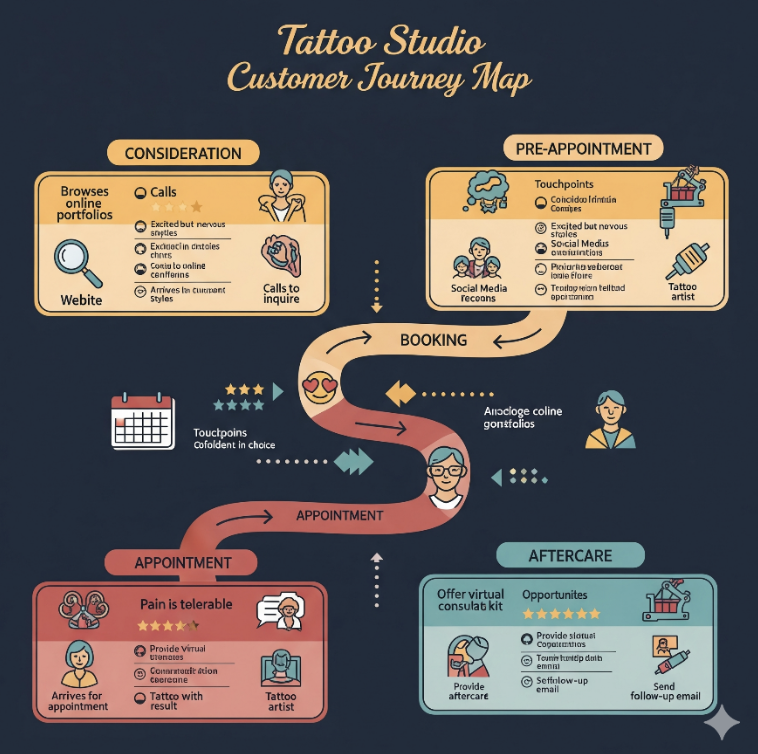
In the field of art, this concept acquires particular significance. The process of acquiring an art object or commissioning a service such as a tattoo is often associated with deep emotional experiences and serves as a form of self-expression for the client. Consequently, standard service models are insufficient in this context. Researcher Michael A. Peters notes that in creative industries, consumer value is shaped not only by the quality of the final product but also by the unique experience gained through interaction with the creator [2]. Thus, the customer journey—from initial contact to post-service follow-up—becomes an element of the offering that is as important as the artwork itself.
Implementation of a Customer-Focused Approach in the Tattoo Industry
In the tattoo industry, where the level of service personalization reaches its maximum, a customer-focused approach is implemented through several interrelated stages.
Initial Consultation and Co-Creation of the Design.
Professional studios shift the emphasis from simply offering ready-made designs to deep immersion in the client’s idea. The consultation is transformed into a co-creation session, in which the artist acts not only as an executor but also as an expert who helps verbalize and visualize the client’s concept. This stage requires well-developed communication skills, empathy, and the ability to ask the right questions to uncover the client’s underlying motivations. Successful consultations form the foundation of trust and psychological comfort.
Creating a Safe and Comfortable Environment.
The tattooing process involves physical discomfort and requires a degree of vulnerability from the client. Leading studios place heightened emphasis on creating an atmosphere that minimizes stress. This includes not only strict adherence to sanitary standards but also thoughtful interior design, comfortable furniture, appropriate music, and the offering of beverages. A crucial aspect is transparent communication throughout the entire session: informing the client about upcoming steps, explaining sensations, and continuously checking their well-being.
Post-Service Follow-Up.
Interaction with the client does not end after the session is completed. A customer-focused approach involves providing detailed aftercare instructions, offering high-quality healing products, and organizing follow-up visits to assess results. Some artists maintain contact with clients via social media, checking on the healing process and building a community around their work. This approach demonstrates care and increases the likelihood of repeat visits and referrals. As Bernd Schmitt notes in his work on customer experience management, post-purchase service strengthens emotional bonds and increases Customer Lifetime Value [3].
Effectiveness Analysis and Interaction Models
The effectiveness of implementing customer-focused strategies can be assessed through several indicators. These include not only direct financial metrics, such as increased average transaction value and frequency of repeat visits, but also indirect indicators: growth in referral-based clients (word of mouth), an increase in positive reviews on online platforms, and enhanced recognition of the artist’s personal brand.
Two primary interaction models can be identified in the tattoo business:
- Transactional Model.
The artist focuses on fulfilling a specific order. Communication is limited to discussing the design and price, and the relationship with the client is one-time in nature. This model is typical of beginner artists or studios oriented toward high tourist traffic. - Relational Model.
The artist seeks to build long-term relationships. Each client is viewed as a potential repeat customer and brand ambassador. The artist invests time in understanding the client’s personality, values, and aesthetic preferences. This model forms the foundation of a customer-focused approach and ensures sustainable business growth in the long term.
The transition from a transactional to a relational model requires the artist to develop not only artistic but also entrepreneurial competencies, including skills in marketing, communication psychology, and service design.
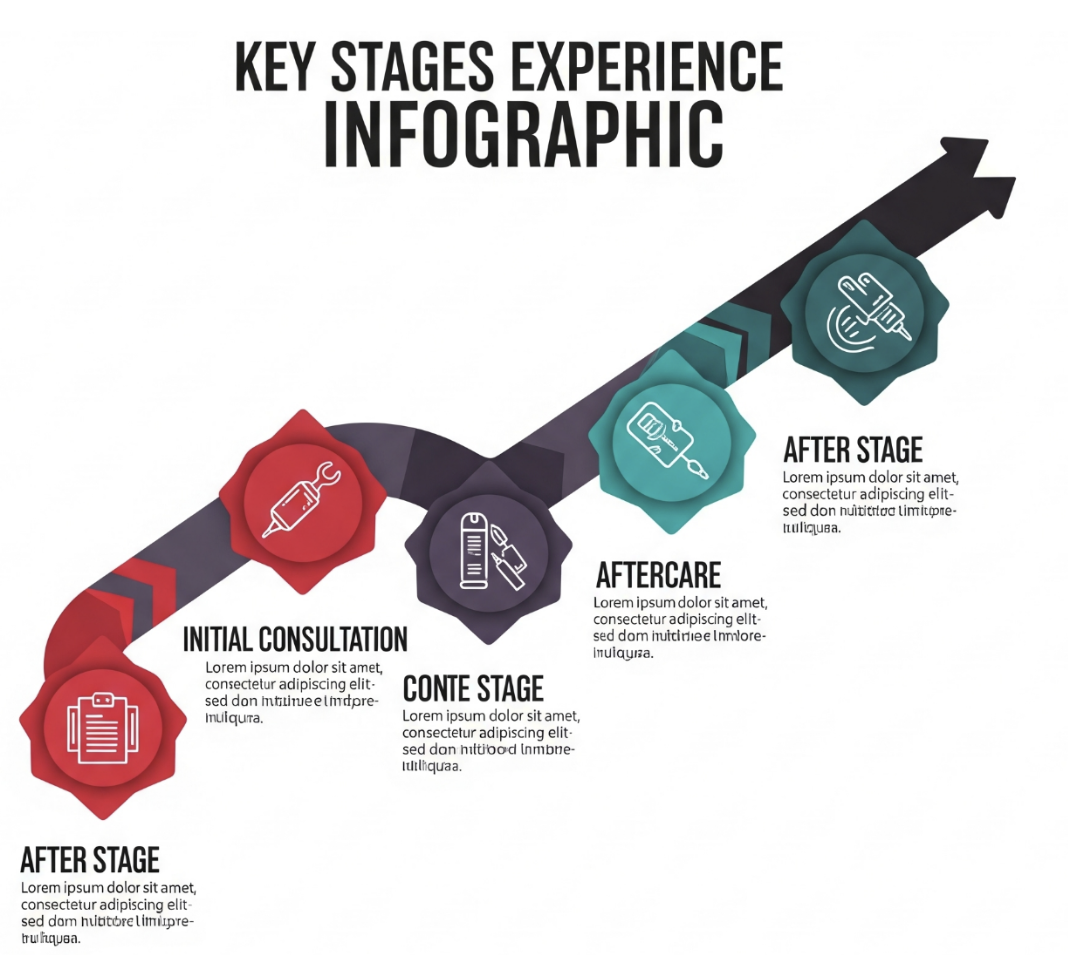
The conducted analysis demonstrates that the integration of customer-oriented principles into the art business, and the tattoo industry in particular, is a strategic factor for success. A systematic approach to customer experience management at all stages of interaction—from the initial consultation to post-service follow-up—allows not only for increased customer satisfaction and loyalty but also for the formation of a unique value proposition that differentiates the artist from competitors.
References:
- Peppers, D., Rogers, M. The One to One Future: Building Relationships One Customer at a Time. – New York : Doubleday, 1993. – 443 p.
- B. Joseph Pine II, James H. Gilmore. The Experience Economy: Work Is Theater & Every Business a Stage. – Boston : Harvard Business School Press, 1999. – 272 p.
- Schmitt, B. H. Customer Experience Management: A Revolutionary Approach to Connecting with Your Customers. – Hoboken, New Jersey : Wiley, 2003. – 288 p.
- Gentile, C., Spiller, N., Noci, G. How to Sustain the Customer Experience: An Overview of Experience Components that Co-create Value With the Customer // European Management Journal. – 2007. – Vol. 25, No. 5. – P. 395–410.
- Pine, B. J., Gilmore, J. H. Welcome to the Experience Economy // Harvard Business Review. – 1998. – Vol. 76, No. 4. – P. 97–105.